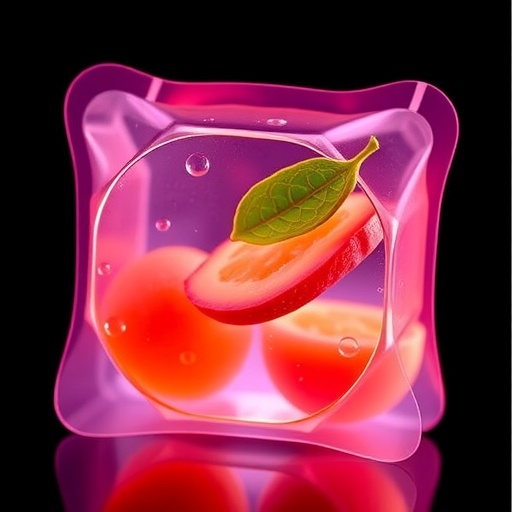
A new “smart” food-packaging material developed by researchers at Kyushu University can change color as meat begins to spoil—and repair itself after being cut. The flexible, biodegradable hydrogel is designed to detect the chemical signature of bacterial growth while helping prevent further contamination, potentially giving shoppers a simple visual warning before spoiled food is opened.
The material responds to changes in acidity and alkalinity inside food packages. Fresh meat is mildly acidic, but as bacteria multiply, they break down proteins and release alkaline compounds, including volatile substances that gradually raise the package’s internal pH. That shift can occur before spoilage becomes obvious from a change in appearance or smell, making pH a useful early indicator of declining freshness.
To convert this invisible chemical change into a visible signal, the researchers used anthocyanins, a group of natural pigments found in foods such as purple sweet potatoes, red cabbage, and berries. Anthocyanins alter their molecular structure as pH changes, producing a range of colors. In the new packaging system, the pigment shifts from purple-red under acidic conditions toward yellow-green as the environment becomes more alkaline, creating a visual record of the food’s changing condition.
Natural pigments, however, are not always reliable sensors. Anthocyanins can degrade or change color when exposed to heat, oxygen, and light, potentially producing misleading readings during storage or transportation. The Kyushu University team addressed this problem by immobilizing the pigment on UiO-66-NH₂, a metal-organic framework, or MOF, known for its highly porous structure and strong thermal and chemical stability.
MOFs are crystalline materials made from metal ions or clusters connected by organic molecules. Their nanoscale pores and chemically active surfaces allow them to capture and organize other molecules. In this case, anthocyanin molecules attach to the surface of UiO-66-NH₂ through several chemical interactions. This anchoring reduces the pigment’s mobility and shields it from environmental stresses while preserving its ability to respond to pH.
The researchers produced the stabilized pigment from purple sweet potatoes, grinding and freeze-drying the crop into a powder before combining it with the MOF. They then embedded the anthocyanin-loaded particles into a cellulose-based hydrogel. The resulting film is soft, flexible, and shapeable, allowing it to function as a packaging component rather than as a rigid sensor or electronic device.
Tests using pork showed that the film tracked spoilage continuously. As bacterial activity increased and alkaline gases accumulated inside the package, the hydrogel changed gradually from purple-red to yellow-green. This progressive color response could allow consumers, food distributors, and retailers to distinguish between recently packaged meat and products approaching or reaching spoilage without opening the package or using specialized equipment.
The material also demonstrated an unexpected preservation benefit. Pork packaged with the hydrogel remained acceptable for approximately 12 hours longer than untreated samples, according to the researchers. The film may help slow contamination by creating a physical barrier, while its biodegradable, largely plant-derived composition could offer an alternative to some conventional petroleum-based packaging materials.
Its most unusual feature is the ability to heal after damage. When the hydrogel was cut and the separated surfaces were pressed together, the wound became nearly invisible within minutes. After two hours, the material recovered 99 percent of its tensile strength. In ordinary packaging, a crack remains a permanent opening through which microorganisms can enter. The self-healing behavior could help preserve the package’s protective function after minor damage during handling, shipping, or storage.
The team, led by researchers including Kyushu University scientists Xirui Yan, Fumina Tanaka, and Fumihiko Tanaka, is now considering a smartphone-based system that could interpret the film’s color more objectively. A mobile application could help manufacturers monitor products through distribution networks, assist retailers in checking inventory, and provide shoppers with a standardized freshness assessment. The researchers also suggest that the same combination of natural pigments, porous nanomaterials, and self-healing polymers could eventually be adapted for other forms of chemical sensing and sustainable smart materials.
Subject of Research: Experimental study
Article Title: Self-Healing Cellulose-based Hydrogel Smart Packaging Embedded with Anthocyanin-Immobilized Metal-Organic Frameworks for Food Preservation and Freshness Monitoring
News Publication Date: 15-Jun-2026
Web References: https://doi.org/10.1016/j.cej.2026.176764; https://ag.kyushu-u.ac.jp/english/
References: Fanze Meng, Xirui Yan, Shinobu Yasuo, Tiantian Ma, Jiao Zeng, Donghui Luo, Tran Thi Van, Reshaka Kavindi Malawara Arachchige, Laras Putri Wigati, Phuong Thi Hang Nguyen, Ata Aditya Wardana, Fumina Tanaka, and Fumihiko Tanaka, “Self-Healing Cellulose-based Hydrogel Smart Packaging Embedded with Anthocyanin-Immobilized Metal-Organic Frameworks for Food Preservation and Freshness Monitoring,” Chemical Engineering Journal, DOI: 10.1016/j.cej.2026.176764.
Image Credits: Fumihiko Tanaka / Kyushu University
Keywords
Smart packaging, self-healing hydrogel, food freshness, anthocyanins, metal-organic frameworks, cellulose hydrogel, spoilage detection, food preservation, pH sensor, Kyushu University
Tags: bacterial growth detection in foodbiodegradable food packaging materialscolor-changing food freshness indicatorsearly spoilage warning systemsenvironmentally friendly packaging solutionsfood contamination preventionnatural pigment-based food sensorspH-sensitive food indicatorsself-repairing hydrogel technologySmart hydrogel food packagingspoilage detectionvisible indicators of food freshness