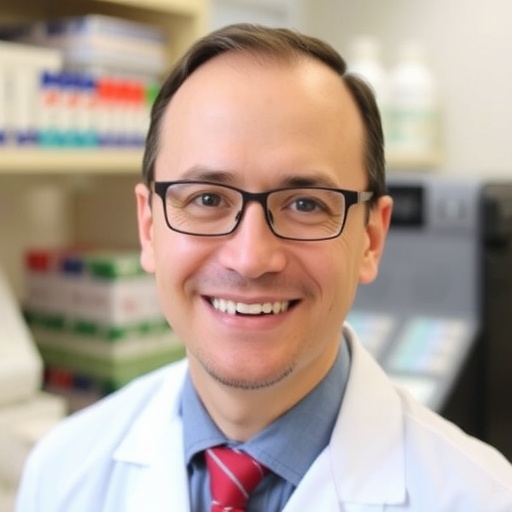
A University of Maryland, Baltimore County (UMBC) scientist has received a two-year grant from the National Institute of Allergy and Infectious Diseases (NIAID) to explore how two key HIV prevention drugs work inside the body—specifically in colon tissue, where HIV transmission risk is especially high. The project, led by Herana Kamal Seneviratne, assistant professor of chemistry and biochemistry, seeks to explain why these drugs protect some people better than others and could help make prevention tools more reliable.
HIV continues to pose a major global health challenge, with about 1.3 million new infections reported annually worldwide in recent years. One of the most important prevention strategies is pre-exposure prophylaxis, or PrEP. Healthy individuals at risk of HIV take a daily pill containing two antiretroviral drugs—tenofovir (TFV) and emtricitabine (FTC)—to block the virus before it can take hold.
These drugs only become protective after they are modified inside cells, specifically by adding a phosphate group in a step called “phosphorylation.” This activation turns them into their working forms. However, people’s responses to the drugs vary widely, sometimes leading to reduced protection.
“One of the reasons for PrEP failure is the huge variability observed among individuals,” Seneviratne explains. This variability is concerning, because someone might partake in riskier behavior based on a belief that they are safer than they actually are.
Seneviratne’s work focuses on the colon, because unprotected anal sex carries an 18-fold higher risk of HIV transmission than vaginal sex. Oral PrEP spreads through the bloodstream, but the amount of active drug that reaches colon tissue is not well studied, and could be one of the reasons for variable drug responses. Understanding what happens in these tissues is therefore crucial for improving PrEP, Seneviratne says, particularly for men who have sex with men.
Mapping cellular machinery
Previous work, including from Seneviratne’s group, has shown that certain enzymes are involved in activating and deactivating PrEP drugs in the blood by adding and removing phosphate groups. Certain kinases add a phosphate group, and certain nucleotidases remove it. However, the activity of these enzymes in colon tissue is unknown.
“What matters is the drug metabolite concentrations in specific sites like in colon. That’s the point that we’re trying to make,” Seneviratne says.
To address that knowledge gap, Seneviratne’s team will grow human colon cells in the lab and use genetic tools to modify the expression of these kinases and nucleotidases one at a time. Then they will measure how those changes affect the drugs’ phosphorylation status. The project will take an innovative approach using mass spectrometry imaging, a technique that lets researchers see where molecules are located and active inside tissues.
“Our group is trying to contribute to overall improved HIV prevention,” Seneviratnes says. To that end, “understanding the metabolism of these two drugs in colon tissue is important.”
In conjunction with the lab’s work with human cells, Seneviratne’s team will examine mouse colon tissue to map these enzymes’ presence and activity across different cell types and tissue regions. The project will combine traditional techniques—specifically enzyme histochemistry and mass spectrometry—in novel ways. The dual approach will allow the team to observe enzymatic activity directly in its natural tissue environment rather than in a test tube, Seneviratne explains.
The NIAID grant type supporting the work, an R21, supports innovative high-risk, high-reward ideas that push scientific boundaries. Work is already underway on this approximately $440,000, two-year award. Graduate students Korin Murray and Nimalee Jayasekera and research fellow Christian Oh will take leading roles. Jayasekera will focus on the cell and molecular biology aspects, Murray will work on advanced imaging and tissue analysis, and Oh will support both students. There will be opportunities for undergraduates as well. Overall, the project expands the group’s focus on the negative side effects of drugs that treat HIV (including a study led by chemistry Ph.D. student Nav Raj Phulara on the brain) into the effectiveness of HIV prevention drugs.
From the bench to better PrEP
By revealing how these enzymes control drug activation and deactivation in specific parts of the colon, the project aims to provide knowledge that could lead to better dosing strategies, improved formulations, or other ways to make PrEP more effective. “The data that we generate from this work, we can leverage to optimize the therapeutic efficacy of the HIV PrEP drugs,” Seneviratne said. “These two drugs set the foundation for HIV prevention.”
Seneviratne’s interest in this area grew from his postdoctoral training at Johns Hopkins University, where he worked closely with clinicians to identify pressing real-world problems, leading him to ask, “How can I use my bioanalytical chemistry expertise to address those questions?” His chemistry expertise, combined with early publications on these enzymes, provided the foundation for the proposal.
This kind of fundamental research strengthens public health tools like PrEP, helping more people stay protected against HIV. The findings could eventually support more personalized or reliable prevention approaches across diverse populations.
Media Contact
Sarah Hansen
University of Maryland Baltimore County
Office: 410-455-2271
Tags: antiretroviral drug activationbiomedical research on HIVHIV drug side effectsHIV global health challengesHIV prevention drug researchHIV transmission in colon tissueHIV transmission risk factorsimproving HIV prophylaxisNIAID HIV grantpersonalized HIV prevention strategiesphosphorylation of HIV drugsPrEP efficacy and variability