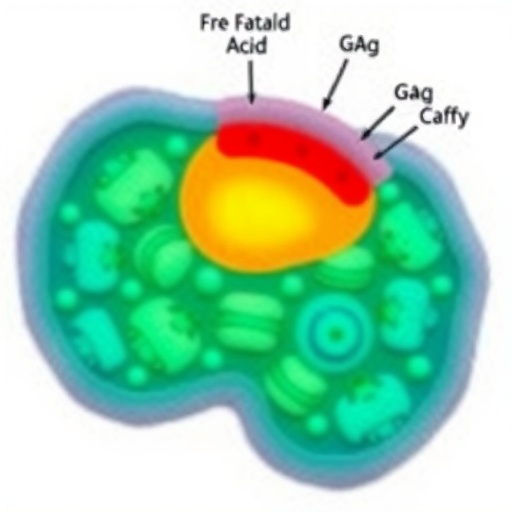
In a study poised to reshape how scientists think about diet-linked metabolic disease, researchers report that activating free fatty acid receptor 4 (FFAR4) can meaningfully reduce metabolic dysfunction. The work, published in Nature Communications (2026), pinpoints a signaling route involving Gαq and the Nr1h3–PPARγ regulatory axis.
FFAR4 is a membrane receptor that senses long-chain fatty acids, classically implicated in metabolic control. Here, the team shows that when FFAR4 signals through Gαq, downstream pathways change gene-expression programs tied to lipid handling and insulin sensitivity. Instead of merely adjusting energy balance, the mechanism interrupts a transcriptional network that normally supports metabolic imbalance.
A central finding is that FFAR4–Gαq activation perturbs Nr1h3 (also known as LXRα) signaling, thereby disturbing the downstream communication to PPARγ. PPARγ is a master regulator of adipocyte differentiation and lipid uptake, and it is frequently discussed in the context of insulin resistance and metabolic syndrome. By disrupting this axis, FFAR4 activation shifts metabolic behavior toward a more protected state.
Mechanistically, the authors connect receptor-level signaling to nuclear transcriptional outcomes. The study suggests that changes in Nr1h3 activity alter PPARγ-driven transcription, reducing the expression of gene programs that contribute to dysfunctional metabolic phenotypes. This provides a coherent pathway linking extracellular fatty acid detection to intracellular, genome-scale metabolic control.
The researchers also emphasize functional outcomes in metabolic systems, reporting improvements consistent with suppressed disease-associated dysfunction. While the specific experimental models span multiple layers of validation, the theme is consistent: FFAR4 engagement through Gαq produces protective metabolic effects.
Importantly for translational interest, the findings highlight a direction for therapeutic strategy: rather than broadly modulating fatty acid receptors, selectively steering FFAR4 signaling toward Gαq could achieve more targeted rewiring of transcriptional control.
Overall, the study presents FFAR4–Gαq as a lever that can disrupt the Nr1h3–PPARγ axis, offering a viral-sounding new angle on metabolic disease intervention. By connecting membrane sensing to nuclear metabolic regulation, it expands the repertoire of actionable nodes within the fatty acid signaling network.
Subject of Research: Metabolic dysfunction; fatty acid receptor signaling; transcriptional regulation (Nr1h3–PPARγ axis).
Article Title: Gαq activation of free fatty acid receptor 4 suppresses metabolic dysfunction by disrupting Nr1h3-PPARγ axis.
Article References: Kong, Y., Wang, J., Wang, Z. et al. Gαq activation of free fatty acid receptor 4 suppresses metabolic dysfunction by disrupting Nr1h3-PPARγ axis. Nat Commun (2026). https://doi.org/10.1038/s41467-026-75589-2
Image Credits: AI Generated
Tags: diet-linked metabolic diseasefatty acid sensing receptorFFAR4 activationGαq signaling pathwayinsulin sensitivity improvementlipid metabolism regulationmetabolic dysfunction suppressionNr1h3 (LXRα) signaling disruptionnuclear receptor-mediated metabolic regulationPPARγ regulation in adipocytessignaling pathways in obesitytranscriptional control of metabolic genes