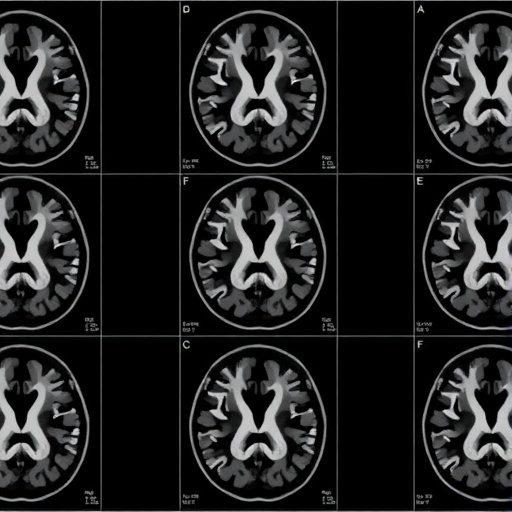
In a groundbreaking advancement for medical imaging, researchers have unveiled MARS, a large-scale foundation model designed to revolutionize multi-sequence magnetic resonance imaging (MRI) analysis. This novel approach addresses a fundamental challenge in clinical MRI—the vast heterogeneity arising from different anatomical structures and diverse MRI sequences—that has traditionally hampered the development of deep learning models capable of broad clinical utility.
MRI’s unparalleled ability to detail complex anatomy across multiple sequences makes it indispensable for diagnosis. However, the variability intrinsic to these sequences introduces significant obstacles for artificial intelligence, limiting the models’ generalizability and often confining their application to narrow clinical contexts. MARS tackles this by employing a unique pretraining strategy that disentangles anatomy-invariant features from sequence-specific variations. This key innovation allows the model to learn robust, transferable representations that retain critical clinical information across diverse imaging conditions.
The team amassed an unprecedented dataset for pretraining MARS, gathering 336,476 volumetric scans from 34 datasets encompassing 10 different anatomical regions and multiple MRI sequences. These data were drawn from a blend of eight public and 26 private collections, forming a comprehensive multi-organ, multi-sequence corpus unparalleled in scale and diversity. Such extensive and heterogeneous input enables MARS to internalize the wide spectrum of MRI variability, bolstering its adaptability to real-world clinical scenarios.
To rigorously evaluate the model’s versatility, researchers established a benchmark suite encompassing 44 downstream tasks. These spanned a broad array of clinical functions: disease diagnosis, anatomical segmentation, spatial registration, disease progression prediction, and automated report generation. Demonstrating remarkable breadth, MARS secured the top ranking in 41 out of 44 challenges, often with statistically significant performance improvements over existing methods.
One of the most impressive aspects of MARS is its strong generalization capability, particularly when tested on external datasets that differ substantially from the pretraining data—a critical attribute for clinical translation. By capturing anatomy-invariant patterns, the model overcomes the idiosyncrasies introduced by varying MRI protocols, patient populations, and scanner technologies. This robustness paves the way for wider adoption of AI-driven MRI analysis tools in healthcare settings globally.
These findings have immediate implications for both clinical practice and future AI model development. MARS represents a scalable foundation potentially transformable into numerous diagnostic and prognostic applications, streamlining radiological workflows and elevating diagnostic accuracy. Moreover, the methodological framework of disentangling sequence-specific variation offers a blueprint for addressing similar heterogeneity challenges across other medical imaging modalities.
Looking ahead, the research community anticipates that MARS will catalyze innovation in multi-modal medical imaging and multimodal AI integration, driving forward precision medicine initiatives. By bridging the gap between big data in clinical imaging and generalizable machine learning models, this work marks a significant leap toward AI systems capable of comprehensive, real-world medical image interpretation.
As healthcare increasingly embraces AI-driven diagnostics, MARS stands out as a pioneering example of how large-scale, heterogeneous data combined with sophisticated model design can surmount longstanding challenges, promising to reshape the future landscape of medical imaging analysis.
Subject of Research: Multi-sequence MRI analysis using large-scale deep learning foundation models for clinical applications.
Article Title: Large-scale multi-sequence pretraining for generalizable MRI analysis in versatile clinical applications.
Article References:
Qiu, Z., Wang, X., Xie, Z. et al. Large-scale multi-sequence pretraining for generalizable MRI analysis in versatile clinical applications. Nat. Biomed. Eng (2026). https://doi.org/10.1038/s41551-026-01740-5
DOI: https://doi.org/10.1038/s41551-026-01740-5
Tags: anatomy-invariant feature learningclinical applications of MRI analysisdeep learning in medical imagingfoundation models for MRIheterogeneity in clinical MRIlarge-scale MRI datasetsMedical ImagingMRI sequence variabilitymulti-organ MRI analysismulti-sequence MRI analysispretraining strategies for medical imagestransfer learning in MRI