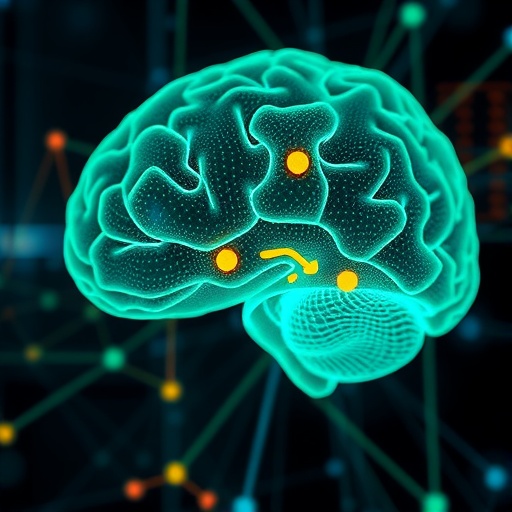
Artificial intelligence (AI) is rapidly transforming the landscape of cancer treatment, particularly in the realm of radiopharmaceutical therapy. This targeted approach, which uses radioactive substances to selectively destroy cancer cells, faces challenges due to the lengthy and resource-intensive nature of drug development. However, the integration of machine learning, especially deep learning and generative AI, is revolutionizing this process, accelerating the discovery and optimization of novel radiopharmaceuticals.
At the forefront of this innovation, AI-driven computational models can sift through vast chemical and biological datasets to identify promising drug candidates swiftly and accurately. These models predict molecular interactions and engineer compounds with enhanced stability and efficacy, significantly reducing the time traditionally required for preclinical experimentation. Sofia Michopoulou, PhD, a leading expert in Nuclear Medicine Physics, emphasizes that such AI methods pinpoint the most viable therapeutic agents earlier, streamlining early-phase clinical evaluations.
Beyond drug discovery, AI enhances treatment personalization through advanced dosimetry techniques. Precise calculation of radiation dose absorbed by various tissues is critical to maximizing tumor eradication while minimizing harm to healthy organs. Leveraging 3D convolutional neural networks, researchers analyze detailed medical imaging data to forecast how radiopharmaceuticals distribute throughout the body. This data-driven insight informs optimized, patient-specific dosing regimens.
A particularly promising development is the creation of digital twins — highly detailed computational replicas of individual patients. These digital models allow oncologists to simulate and adjust treatment plans in silico, tailoring therapies with unprecedented precision. This approach holds the potential to improve therapeutic outcomes dramatically by aligning treatment parameters with the unique physiological characteristics of each patient.
Despite these advances, several barriers hinder the seamless transition of AI-designed radiopharmaceuticals into clinical practice. Chief among them is the scarcity of comprehensive, standardized datasets necessary to train robust AI models. Protecting patient confidentiality and data security across multiple healthcare institutions complicates data aggregation. Federated learning techniques offer a partial solution by enabling AI training on distributed data without sharing sensitive information.
Moreover, extensive experimental validation remains indispensable to confirm the safety and effectiveness of AI-generated predictions. This underscores the importance of integrating computational methods with rigorous laboratory and clinical research to build confidence in these novel therapies.
As the fusion of AI and nuclear medicine progresses, the oncology field stands on the cusp of a paradigm shift. Machine learning not only expedites drug development but also empowers clinicians with sophisticated tools to personalize cancer treatment. This convergence promises to redefine precision oncology, offering hope for enhanced efficacy and reduced side effects in radiopharmaceutical cancer therapy.
Subject of Research: People
Article Title: AI-Designed Radiopharmaceuticals: How Machine Learning Is Redefining Precision Cancer Therapy
News Publication Date: July 9, 2026
Web References: https://www.jmir.org/2026/1/e106201
References: Cuffari B. AI-Designed Radiopharmaceuticals: How Machine Learning Is Redefining Precision Cancer Therapy. J Med Internet Res 2026;28:e106201. doi:10.2196/106201
Image Credits: Image provided by the author, Benedette Cuffari, MSc
Keywords: Deep learning, Machine learning, Generative AI, Artificial intelligence, Drug development, Drug discovery, Cancer
Tags: 3D convolutional neural networks in medical imaging analysisAI optimization of radiation dose calculationAI-based dosimetry and personalized radiation therapyAI-driven molecular interaction prediction for cancer therapycomputational models for accelerated drug developmentdeep learning for radiopharmaceutical stability enhancementgenerative AI in radiopharmaceutical compound designmachine learning for early-phase clinical trial planningpersonalized radiopharmaceutical treatment planning with AIradiopharmaceutical drug discovery using machine learningrapid identification of therapeutic agents in nuclear medicine