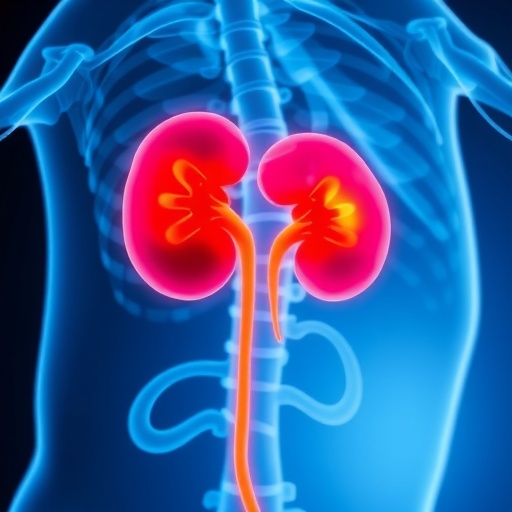
In a groundbreaking advancement within critical care medicine, a team of researchers has unveiled an interpretable prediction model designed to forecast severe sepsis-associated acute kidney injury (AKI) in older intensive care unit (ICU) patients suffering from sepsis. This ambitious study represents a significant leap forward in the early identification and management of one of the most lethal complications faced by older adults in critical care settings.
Sepsis, a life-threatening organ dysfunction caused by a dysregulated host response to infection, remains a global health crisis. It disproportionately affects frail and elderly populations, often leading to devastating outcomes, including acute kidney injury. The kidneys, being highly vulnerable to ischemic injury and inflammatory insults during sepsis, frequently suffer damage that complicates patient outcomes. Timely detection of AKI in this cohort is paramount but has been clinically challenging due to the complexity of the underlying pathophysiology and heterogeneity of patient presentations.
This prospective multicenter cohort study, conducted across several intensive care units, emphasizes the nuances involved in predicting severe AKI onset in an aging demographic burdened by sepsis. The rationale underpinning this research is that an interpretable model—one that clinicians can understand and trust—can revolutionize bedside decision-making. This contrasts with many current predictive tools that often function as inscrutable “black boxes,” limiting their clinical utility.
Crucially, the model developed integrates multimodal clinical parameters, laboratory findings, and demographic data, feeding these variables into sophisticated machine learning algorithms. This approach leverages the power of artificial intelligence while maintaining a level of transparency about how predictions are derived. This transparency is essential in critical care environments where decisions must be both rapid and justifiable.
What sets this model apart is its ability to provide a risk stratification that clinicians can interpret intuitively. Unlike conventional scoring systems, which often offer blunt assessments, this novel algorithm outputs a granular risk profile for each individual patient. This allows for more personalized therapeutic strategies which can include the preemptive optimization of renal perfusion and timely initiation of renal replacement therapies.
The prospective nature of the study ensures the robustness of findings by enrolling older ICU patients diagnosed with sepsis at admission and following their clinical course rigorously, recording incidence and severity of AKI events. This ensures that the model is grounded in real-world clinical practice and reflects contemporary standards of care.
The implications of such a predictive model are profound. Acute kidney injury during sepsis increases morbidity, prolongs ICU and hospital stay lengths, and significantly elevates mortality rates. By enabling clinicians to identify at-risk patients before AKI becomes clinically apparent, this innovation paves the way for proactive interventions that may mitigate renal damage and improve survival outcomes.
Mechanistically, the model points to several key pathophysiological indicators that drive the progression of sepsis-associated AKI in elderly patients. These include markers of inflammation, hemodynamic instability, and biochemical evidence of renal stress. By highlighting these variables, the model not only functions as a prognostic tool but also deepens clinical insight into the drivers of renal deterioration.
The study also addresses the challenge of heterogeneity inherent in the elderly population, taking into account comorbidities such as diabetes, hypertension, and chronic kidney disease, which can complicate AKI risk assessments. The algorithm’s adaptability to diverse clinical profiles enhances its applicability across varied ICU populations.
Integration of this interpretable prediction model into clinical workflows could profoundly impact resource allocation within ICUs, enabling a targeted approach to monitor kidney function intensively in patients flagged as high risk. Such proactive management could reduce the incidence of dialysis-dependent renal failure, thereby alleviating healthcare costs and improving patient quality of life.
This innovative approach epitomizes the synthesis of cutting-edge computational medicine with practical clinical needs. As artificial intelligence continues to evolve, the focus on model interpretability rather than mere accuracy is crucial in earning the trust of healthcare providers and encouraging widespread adoption.
Future directions include validating the model in broader settings, including non-ICU hospitalized populations and in different healthcare systems globally, to assess its generalizability. Moreover, incorporating emerging biomarkers of sepsis and renal injury could further enhance prediction precision.
The potential for this model to serve as a template for similar predictive frameworks in other critical conditions is immense. By prioritizing interpretability and clinical integration, this study exemplifies the future trajectory of personalized medicine in critical care.
In conclusion, the introduction of an interpretable prediction model for severe sepsis-associated acute kidney injury in older ICU patients represents a pivotal advance in critical care nephrology and geriatric medicine. This tool empowers clinicians with actionable insights that could significantly alter the trajectory of kidney injury and improve survival in one of the most vulnerable patient populations.
As the global demographic shift increases the proportion of elderly individuals requiring intensive care, innovations such as these will become indispensable. The combination of advanced data analytics with clinical acumen marks a paradigm shift in managing sepsis-related complications and heralds a new era of precision medicine.
The research team’s focus on transparency and usability ensures that their model transcends academic interest and reaches bedside application swiftly. In an era where time is kidney, such models could prove invaluable in safeguarding renal health and enhancing patient outcomes in the ICU setting.
This study, published in BMC Geriatrics, highlights the critical interplay of technology, clinical research, and patient-centered care—showcasing how data-driven medicine can transform the future of critical care for older adults affected by sepsis.
Subject of Research: Development of an interpretable prediction model for severe sepsis-associated acute kidney injury in elderly ICU patients.
Article Title: An interpretable prediction model for severe sepsis-associated acute kidney injury in older ICU patients with sepsis: a prospective multicenter cohort study.
Article References:
Ma, W., Wang, J., Zhang, J. et al. An interpretable prediction model for severe sepsis-associated acute kidney injury in older ICU patients with sepsis: a prospective multicenter cohort study. BMC Geriatr (2026). https://doi.org/10.1186/s12877-026-07882-0
Image Credits: AI Generated
Tags: acute kidney injury in elderly ICU patientsbedside decision-making in critical carecritical care sepsis complicationsearly detection of sepsis AKIelderly patient sepsis managementheterogeneity in sepsis patient outcomesinflammatory response in kidney injuryinterpretable clinical prediction modelischemic injury in sepsismulticenter ICU cohort studysepsis-associated AKI forecastingsevere sepsis kidney injury prediction