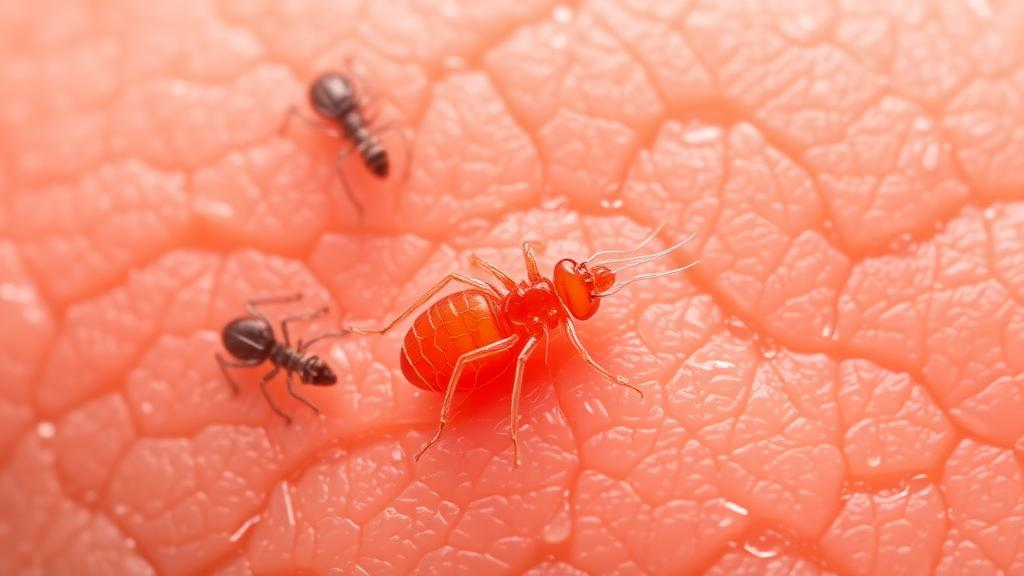
Deep in the pores of nearly every adult human face live microscopic tenants that most of us never think about: Demodex mites, eight-legged relatives of spiders and ticks that spend their entire lives inside our hair follicles. For decades, dermatologists have debated whether these ubiquitous creatures are harmless commensals or quiet instigators of disease. Now, a large retrospective study from Iran has added a provocative new piece of evidence to that debate, reporting that Demodex mites are more than twice as likely to be found in malignant skin tumors than in benign ones. The findings, published in the Archives of Dermatological Research, do not prove that the mites cause cancer, but they raise an intriguing question about the role these tiny parasites might play in the biology of skin lesions.
The research team, led by Fakhriyeh Kelavari of the Department of Pathology at Razi Hospital, Guilan University of Medical Sciences in Rasht, examined 602 skin biopsy samples collected over three years. The samples included 352 benign lesions and 250 malignant or premalignant ones, spanning a wide diagnostic spectrum: melanocytic nevi, sebaceous nevi, vascular lesions, seborrheic keratoses, actinic keratoses, basal cell carcinoma, basosquamous cell carcinoma, and squamous cell carcinoma. By analyzing routine histopathological sections, the researchers could identify mites lodged within follicles and compare infestation rates across diagnostic categories, patient ages, sexes, and anatomical sites.
The headline result was striking. Demodex infestation was detected in 23.6 percent of malignant lesions but only 10.5 percent of benign ones, a difference the authors report as highly statistically significant, with a P value below 0.001. Significant differences also emerged between the two groups in age, sex, and lesion location, reflecting the well-known demographic patterns of skin cancer, which tends to appear in older patients and on sun-exposed sites. The study was designed specifically to compare infestation frequencies between benign and malignant lesions in order to explore whether mites might act as a triggering factor in skin tumor development.
Within the benign group, the distribution of mites was far from uniform. Sebaceous nevi, benign growths of oil gland tissue, showed the highest infestation rate at 38.5 percent, followed by vascular lesions at 15.4 percent, melanocytic nevi at 13.8 percent, and seborrheic keratoses at 11.6 percent. Sebaceous nevi are of particular interest because they contain abundant, enlarged sebaceous glands, and Demodex mites feed on sebum, the oily secretion those glands produce. A dense lipid-rich environment could plausibly support larger mite populations, which may explain why these lesions harbored mites so frequently compared with other benign growths.
The malignant group told an even more compelling story. Actinic keratosis, a sun-induced premalignant scaly patch that can progress to squamous cell carcinoma, was the most heavily infested diagnosis of all, with mites present in 55.6 percent of cases. The authors note that actinic keratosis was significantly more infested than the other malignant lesions, with a P value below 0.001. Basosquamous cell carcinoma, an aggressive variant that shares features of both basal and squamous cell cancers, came next at 27.3 percent, followed by the most common skin cancer, basal cell carcinoma, at 25.2 percent, and squamous cell carcinoma at 14.6 percent. The gradient across these diagnoses hints that local tissue changes in chronically sun-damaged skin may create conditions that favor mite colonization.
What could connect a follicle-dwelling mite to tumor biology? Several mechanisms have been proposed in the broader literature. Demodex mites provoke inflammatory reactions as they feed, damage follicular epithelium with their claws and mouthparts, and can carry surface bacteria, including Bacillus species, whose proteins are thought to trigger the immune cascades seen in rosacea. Chronic inflammation is a well-established driver of carcinogenesis in many tissues, and the skin is no exception. The mites also interact with the cutaneous immune system in complex ways; recent immunology work has shown that type 2 innate lymphoid cells, the same immune population implicated in anti-melanoma responses, help control Demodex commensalism in hair follicles, suggesting a potential immunological crossroad between mite burden and tumor surveillance.
The new findings align with a growing but still scattered body of evidence. Earlier studies have detected Demodex in actinic keratosis and nonmelanoma skin cancer biopsies, reported associations between mite infestation and various cancers in different patient groups, and described Demodex-induced cutaneous pseudolymphoma, a benign inflammatory mass that mimics lymphoid tumor. Researchers have also documented mites within melanocytic nevi and eyelid tumors, and a 2022 report in the Journal of Dermatology for Physician Assistants specifically examined Demodex in patients with non-melanoma skin cancer. Meanwhile, studies of the skin microbiome in cutaneous squamous cell carcinoma have shown that microbial communities shift as cancer progresses, reinforcing the idea that the follicular ecosystem is altered in malignant skin.
Yet the authors are careful about the direction of causality, and they explicitly acknowledge the central limitation of their study: it is cross-sectional, capturing a single moment in time. As they state, it is not clear whether Demodex infestation occurred first or the skin tumors did. Malignant and chronically sun-damaged skin undergoes structural changes, including altered follicular architecture, disrupted barrier function, and modified sebum production, any of which could make tissue more hospitable to mites rather than the mites initiating the tumor. Reverse causation remains a live possibility, and only longitudinal studies that track infestation and tumor development over time in the same patients could disentangle which comes first.
Confounding factors also complicate the interpretation. Age is strongly associated with both Demodex density and skin cancer risk, and although the study found significant differences in age between the benign and malignant groups, the analysis did not fully isolate mite infestation from age, sex, and anatomical site effects. Sun-exposed skin, where actinic keratoses arise, is also the skin most altered by years of ultraviolet damage, and damaged follicles may simply be easier for mites to colonize. The authors report that no datasets were generated or analyzed beyond the study itself, and the work was approved by the ethics committee of Guilan University of Medical Sciences as part of a residency thesis, underscoring that this is an early observational signal rather than a definitive mechanistic demonstration.
Even with those caveats, the study is one of the largest direct comparisons of Demodex burden in benign versus malignant skin lesions, and its scale gives the association weight that smaller case reports could not. If future prospective research confirms that mite infestation precedes malignant transformation in some lesions, Demodex density could eventually become a biomarker worth monitoring in high-risk patients, or even a therapeutic target, much as mite-directed treatments have transformed the management of rosacea. For now, the image that emerges is of a familiar microscopic companion whose presence in tumor tissue is far from random, and whose role in the life story of a skin tumor, passenger or provocateur, remains one of dermatology’s most intriguing open questions.
Subject of Research: Association between Demodex mite infestation and benign versus malignant skin tumors
Article Title: Demodex infestation in benign and malignant skin tumors
Article References: Kelavari, F., Rafiei, R., Alizadeh, N., Gharaei Nejad, K., Eftekhari, H., Skandarzadeh, P., & Rafiei, E. (2026). Demodex infestation in benign and malignant skin tumors. Archives of Dermatological Research, 318(1), Article 483. https://doi.org/10.1007/s00403-026-04910-2
Image Credits: AI Generated
DOI: 10.1007/s00403-026-04910-2
Keywords: Demodex, skin cancer, basal cell carcinoma, actinic keratosis, squamous cell carcinoma, melanocytic nevi, sebaceous nevi, histopathology, parasitology, dermatology, skin microbiome, retrospective study
News Source: Nathaniel Bowman. (October 5, 2026). Tiny Skin Mites Found Far More Often in Malignant Tumors Than Benign Ones. Scienmag.