In a groundbreaking study that promises to revolutionize our understanding of triple-negative breast cancer (TNBC), researchers have uncovered a compelling biological mechanism by which fat tissue influences cancer metastasis. This research not only redefines the traditionally held views about adipose tissue as merely energy reservoirs but also opens new avenues for therapeutic intervention in a form of breast cancer notorious for its aggressiveness and treatment resistance. The research was led by Dr. Jyothi Nagajyothi and her team at the Hackensack Meridian Center for Discovery and Innovation (CDI), working alongside collaborators at Georgetown University’s Lombardi Comprehensive Cancer Center.
TNBC is a subtype of breast cancer characterized by the absence of estrogen, progesterone, and HER2 receptors, which limits the effectiveness of many targeted therapies. The aggressive nature of TNBC is partly due to its early and rapid metastatic potential, complicating treatment and often leading to poorer prognoses. Until now, the role of the tumor microenvironment, particularly the impact of fat tissue in cancer progression, has remained elusive. The new study unveils how adipose tissue, far from being passive, actively facilitates tumor spread through specialized extracellular vesicles known as adipomes.
Adipomes are tiny, extracellular vesicles secreted by fat cells that serve as molecular messengers within the tumor microenvironment. What makes this discovery particularly compelling is the elucidation of how these adipomes initiate and promote the metastatic cascade in TNBC. By harnessing advanced purification techniques capable of isolating pure adipomes from intact tissues and bodily fluids, the team could detail the molecular crosstalk between adipose tissue and cancer cells. This pioneering methodology overcomes a significant technical hurdle that has historically hampered research progress, and it is currently the subject of a pending U.S. patent application filed by Hackensack Meridian Health.
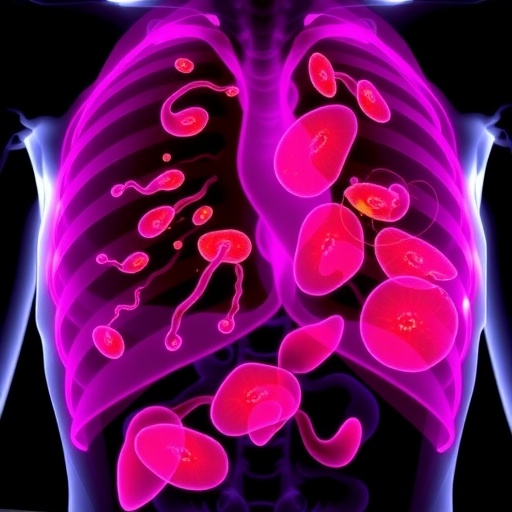
The study shows that adipomes carry a distinct ‘lipid code’ that reprograms triple-negative breast cancer cells at the molecular level. This lipid signaling activates stress-response pathways, enhances protein synthesis, and upregulates mitochondrial signaling and translational machinery. These molecular alterations culminate in the formation of invadopodia—dynamic, actin-rich protrusions that penetrate the extracellular matrix. Invadopodia play a crucial role in cancer cell invasion, facilitating tissue degradation and enabling cancer cells to breach local tissue barriers and disseminate to distant organs.
Traditionally, tumor-adjacent adipocytes have been viewed as static reservoirs of energy that merely supply fatty acids to tumors. However, the current study challenges this dogma by demonstrating that adipocytes, through the secretion of adipomes, are active participants and orchestrators in the mammary tumor microenvironment. This dynamic interaction represents a previously unrecognized tumor-adipocyte signaling axis, crucial for the initiation and progression of metastasis in TNBC. Understanding this axis expands our knowledge of cancer biology and may pinpoint novel biomarkers or therapeutic targets.
The metastatic cascade in breast cancer has long been understood to initiate with cancer cells invading the stromal tissue, a process heavily facilitated by invadopodia. While the structural and functional properties of invadopodia are well characterized, the triggering mechanisms that lead to their formation have remained obscure. The current research specifically targets the pre-invadopodia phase, revealing that adipomes act as upstream influencers that ‘prime’ cancer cells for metastasis by setting off the molecular machinery necessary for invadopodia development.
Utilizing human clinical samples obtained from the Hackensack Meridian Health Network Biorepository and a variety of preclinical models, the researchers meticulously detailed every step of this metastatic progression. Their approach included isolating and profiling adipomes, assessing their lipid content, and analyzing the downstream signaling cascades activated in the cancer cells. The results illuminate how adipose tissue-derived vesicles extend beyond local interactions to influence distant metastatic niches, effectively hijacking normal cellular communication pathways to benefit tumor invasion and dissemination.
This profound insight into adipome-mediated signaling provides a plausible explanation for the notoriously high metastatic propensity of TNBC. By manipulating cellular stress responses and protein production, adipomes equip cancer cells with enhanced invasive capabilities, thus facilitating rapid disease progression. The identification of this signaling axis offers hope that new therapeutic strategies may emerge, aimed at disrupting adipome formation, release, or cancer cell reprogramming, potentially halting or reversing the progression of TNBC.
The implications of these findings reach beyond breast cancer alone. Dr. Nagajyothi’s laboratory has an extensive research portfolio that explores the role of adipose tissue in various diseases, including infectious diseases such as Chagas cardiomyopathy and pulmonary tuberculosis, as well as metabolic disorders like type 2 diabetes and lean diabetes. The current study underscores the multifaceted influence of adipose tissue in systemic disease processes, demonstrating its critical role in both infectious and non-infectious pathologies.
Looking forward, the research team envisions the development of novel diagnostic tools and interventions targeting the tumor-adipocyte communication mediated by adipomes. The ability to detect and potentially neutralize these vesicles could enable early intervention in metastatic TNBC, significantly improving patient outcomes. Moreover, the group’s proprietary isolation technique for adipomes, protected under a pending patent, stands poised to accelerate research and therapeutic development in this emerging field.
In summation, this pioneering work sets a new paradigm in cancer biology by firmly establishing adipomes as key regulators of metastatic behavior in triple-negative breast cancer. It powerfully illustrates how the tumor microenvironment, particularly adipose tissue, contributes actively to cancer progression. As researchers worldwide continue to unravel the complexities of tumor-host interactions, these insights pave the way for breakthrough therapeutic strategies aimed at one of the most challenging cancer subtypes known today.
Subject of Research: Human tissue samples
Article Title: Cancer-associated adipomes promote invadopodia formation and enhance metastatic potential in triple-negative breast cancer
News Publication Date: 3-Jun-2026
Web References:
https://doi.org/10.1038/s41523-026-00985-2
References:
Nagajyothi, J., Thangavel, H., Glazer, R., et al. (2026). Cancer-associated adipomes promote invadopodia formation and enhance metastatic potential in triple-negative breast cancer. npj Breast Cancer. https://doi.org/10.1038/s41523-026-00985-2
Image Credits: Hackensack Meridian Health
Keywords: Breast cancer, triple-negative breast cancer, metastasis, adipose tissue, adipomes, tumor microenvironment, invadopodia, extracellular vesicles, lipid signaling, cancer metastasis
Tags: adipomes extracellular vesiclesbreast cancer metastasis researchCDI breast cancer researchcollaboration in cancer discoveryfat tissue and cancer progressionHackensack Meridian cancer studiesmolecular mechanisms of cancer spreadnew treatments for aggressive breast cancerrole of adipose tissue in cancertherapeutic targets in triple-negative breast cancertriple-negative breast cancer metastasistumor microenvironment in TNBC