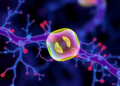
In a groundbreaking study published in the esteemed journal Molecular Cell, researchers from Michigan State University have unveiled a novel mechanism by which immune cells selectively initiate antibody class switching—a critical adaptive immune response. This intricate process, pivotal for tailoring antibody production to effectively neutralize diverse pathogens, hinges on the precise targeting of a key mutator protein, activation-induced cytidine deaminase (AID), to specific genomic loci within B cells. For the first time, scientists have visualized—and begun to decode—the dynamic molecular choreography that directs AID, providing profound insights into both immune function and the underpinnings of cancer development.
The immune system’s adaptive arm relies heavily on B cells’ extraordinary ability to switch the class of antibodies they produce through class switch recombination, a process that involves orchestrated DNA alterations. Unlike the devastating genomic instability found in cancers, this controlled DNA editing reshuffles antibody genes to generate distinct antibody classes, such as IgG or IgA, optimized for diverse pathogen challenges. Understanding how AID identifies and acts specifically at the immunoglobulin heavy-chain locus has long eluded scientists, in part due to the difficulty of observing these events within the fluid environment of living cells.
To conquer this challenge, the research team employed a cutting-edge live-cell microscopy technique innovated under the guidance of Jens Schmidt, PhD, associate professor at MSU specializing in quantitative health science. By cultivating a system wherein mouse B cells were genetically engineered to fluorescently tag AID, the researchers could track the instantaneous movements of single AID molecules. To stabilize the notoriously motile B cells for imaging, lead author Mariia Mikhova ingeniously used a centrifugation method to gently press the cells against a glass surface, extending the observational window before cells drifted out of view. This innovation enabled continuous visualization of the elusive real-time binding behaviors of AID within living immune cells.
The high-resolution, temporal imaging revealed a striking mechanism: regions of active transcription in the immunoglobulin heavy chain locus create what the team terms a “dynamic RNA hub.” This RNA-rich environment serves as a molecular beacon or “homing signal” for AID, leveraging the protein’s strong affinity for RNA molecules to localize it specifically to switch regions. Once tethered via RNA interactions, AID facilitates targeted deamination events on nearby DNA, initiating the class switch recombination that reconfigures antibody production. This elegant model solves the longstanding question of how AID discriminates its genomic targets amidst an ocean of non-specific DNA, minimizing collateral genomic damage.
Such specificity is crucial because off-target AID activity can lead to mutagenesis and chromosomal translocations, genomic rearrangements implicated in B-cell malignancies such as lymphomas. The ability to visualize AID trafficking and engagement with DNA in real time offers unprecedented insights into these precision mechanics underlying both immune competence and oncogenic risk. These findings pave the way for dissecting the molecular inadequacies that contribute to immune deficiencies, allergies, or autoimmunity through disrupted antibody class switching.
The discovery also highlights the interplay between transcriptional dynamics and enzymatic targeting, suggesting that the biophysical properties of transcription-induced RNA condensates are integral to recruiting DNA-modifying factors like AID. By illuminating this RNA-protein interface in living cells, the study bridges critical gaps between genomic regulation, immune function, and cellular biophysics. This convergence of techniques and knowledge embodies a new frontier in molecular immunology and genomic integrity research.
Importantly, this work was supported by National Institutes of Health funding, including a New Innovator Award to Schmidt and a major Research Project grant to Kefei Yu, PhD, a collaborator renowned for his expertise in immunology and genomic maintenance. The team, including MSU scientists Kapanka, Han, and Ungor, is now poised to delve deeper into the cellular contexts that modulate AID function, aiming to elucidate why some individuals struggle with appropriate antibody class switching or succumb to B-cell malignancies.
The implications of this research extend beyond fundamental biology. Understanding the molecular logic governing AID localization might inform therapeutic approaches to modulate immune response in infectious diseases, autoimmune disorders, and B-cell cancers. Targeting the RNA hub or modulating transcriptional states in B cells could inspire novel immunomodulatory strategies that fine-tune antibody repertoires with minimal off-target genomic consequences.
Moreover, this study establishes a powerful platform of live-cell molecular imaging combined with innovative cell manipulation to unravel complex biological questions that were previously inaccessible. The ability to observe single molecules function in real time in their native cellular environment represents a paradigm shift, moving beyond population-averaged biochemical assays to a granular understanding of molecular decision-making processes.
Looking ahead, the research team plans to investigate how variations in RNA hub composition and transcriptional kinetics influence AID’s recruitment efficacy and the fidelity of class switch recombination. They also aim to explore how these mechanisms may be disrupted in pathological contexts, particularly in immune deficiencies that compromise humoral immunity or in oncogenic transformations driven by erroneous DNA mutagenesis.
This pioneering research not only illuminates a central enigma in immunology but also exemplifies the transformative power of integrating advanced microscopy, genetic engineering, and molecular biology. It underscores the intricate coordination of cellular processes that maintain genome integrity while enabling adaptive immune innovation—an exquisite balancing act essential for health and disease prevention.
In sum, the revelation of a dynamic RNA hub guiding activation-induced cytidine deaminase to its precise genomic targets represents a monumental leap in understanding immune regulation at the molecular level. As the scientific community continues to build on these insights, the potential to manipulate and correct immune system dysfunctions with pinpoint precision becomes an increasingly promising reality.
Subject of Research: Cells
Article Title: A dynamic RNA hub facilitates activation induced cytidine deaminase recruitment to the immunoglobulin heavy chain locus
News Publication Date: 23-Jun-2026
Web References: 10.1016/j.molcel.2026.06.012
References: Published in Molecular Cell
Image Credits: Michigan State University
Keywords: Infectious diseases, immune cells, B cells, antibody class switching, activation-induced cytidine deaminase, AID, class switch recombination, RNA hub, live-cell microscopy, genomic integrity, immunology, cancer development
Tags: activation-induced cytidine deaminase functionadaptive immune response mechanismsantibody class switching processB cell genomic targetingclass switch recombination in B cellsDNA editing in adaptive immunityimmunoglobulin heavy-chain locus regulationlive-cell imaging of immune cellsMichigan State University immunology researchmolecular basis of antibody diversitymolecular insights into cancer developmentpathogen-specific antibody tailoring