In the complex landscape of cellular biology, lipid transport stands as a fundamental process indispensable to life. All cells are enveloped by a thin, flexible membrane primarily composed of lipids, which not only serve as barriers but also actively participate in critical cellular functions. The transport of these lipids across membranes is orchestrated by specialized proteins, the lipid transporters, which facilitate the movement of lipid molecules from one side of the membrane bilayer to the other. This transport underpins a myriad of physiological activities, including the assembly and preservation of cellular membranes, lipid provision to mitochondria, and signaling pathways involved in programmed cell death. Despite its significance, the individual dynamics of lipid transport proteins have remained elusive due to limitations in traditional investigative methodologies.
Historically, investigations into lipid transporter proteins have utilized ensemble measurement techniques. These conventional methods analyze millions of protein molecules simultaneously, yielding averaged data that mask the heterogeneity among individual transporters. Consequently, the unique behaviors, efficiency rates, and mechanistic variations of single lipid transport proteins could not be discerned. Understanding these subtle distinctions is pivotal for unearthing nuanced cellular processes and developing targeted therapeutic interventions. Addressing this gap, an international cohort of researchers has pioneered a breakthrough technique leveraging highly sensitive imaging methodologies combined with high-throughput capabilities to observe and quantify the lipid transport activity of individual proteins in real-time.
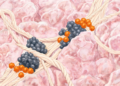
Central to the research is the protein VDAC1 (Voltage-Dependent Anion Channel 1), which plays a crucial role in the delivery of lipids to mitochondria, thereby sustaining mitochondrial membrane integrity and function. Notably, VDAC1’s lipid transport activity is contingent upon its assembly into dimers—complexes formed by the pairing of two protein molecules. The novel imaging approach revealed a striking variability in the lipid transport efficiency among these dimers. Whereas some VDAC1 dimers were capable of translocating thousands of lipid molecules per second, others exhibited markedly reduced activity, and a subset appeared completely inactive. This individual-level heterogeneity, unnoticed in previous bulk assays, can be attributed to the specific spatial conformations that these dimers adopt, influencing their functional interfaces for lipid translocation.
This heterogeneity extends beyond mere functional curiosity; it introduces a paradigm shift in understanding membrane protein behavior, suggesting that protein complex formation—its precise structural arrangement—critically governs functional outcomes. Molecular dynamic simulations provided corroborative evidence, demonstrating that only particular dimer configurations furnish the optimal surface topology necessary for efficient lipid movement. These insights prompt a reevaluation of lipid transporter function that moves beyond static representations, embracing the dynamic and variable nature of protein assemblies in vivo.
The methodology that underpins these discoveries is itself a technical marvel. By employing a single vesicle fluorescence microscopy platform, the researchers can isolate individual liposomes encapsulating single protein entities. Fluorescent probes sensitive to lipid translocation allow precise quantification of scrambling events—a process by which phospholipids redistribute between the bilayer leaflets—on a vesicle-by-vesicle basis. This level of granularity affords unprecedented resolution in kinetic measurements, avoiding the artifacts inherent in bulk assays where asynchronous activity and averaged signals convolute interpretation.
Moreover, this platform’s versatility is notable. It is not confined to the study of VDAC1 but adaptable to a broad spectrum of lipid transporters implicated across diverse cellular pathways. By systematically altering membrane lipid compositions or introducing cofactors such as metal ions, researchers can dissect how microenvironmental factors influence transporter kinetics. This feature facilitates comprehensive structure-function analyses, enabling the delineation of regulatory mechanisms and potential modulatory elements affecting transport efficacy.
From a translational perspective, the implications of these findings are profound. Mitochondrial dysfunction underlies a constellation of pathologies ranging from metabolic disorders to neurodegenerative diseases and certain hematological conditions. Aberrant lipid transport may contribute to these dysfunctions by compromising membrane integrity or signaling fidelity. Enhanced comprehension of individual transporter behavior could usher in new diagnostic markers or therapeutic targets. For instance, modulating the assembly state or stabilizing the active dimer conformation of VDAC1 may represent novel strategies to restore or optimize mitochondrial lipid homeostasis.
Furthermore, the study’s insights into the variability of lipid transporters invite reconsideration of drug design paradigms. Rather than targeting proteins en masse, future pharmacological interventions might be tailored to influence specific functional states or conformers of lipid transport proteins, enhancing efficacy and minimizing off-target effects. Such precision medicine approaches would benefit immensely from platforms capable of high-resolution characterization as demonstrated here.
The scientific community also gains a powerful tool to unravel the complexities of lipid dynamics and membrane biology. By circumventing the averaging problem intrinsic to ensemble experiments, researchers can now observe phenomena such as transient conformational states, stochastic transport events, and cooperative interactions among protein assemblies. This deeper understanding is essential for decoding the lipid-mediated regulatory codes that orchestrate cellular responses to environmental cues and stressors.
Importantly, this research exemplifies the synergy between experimental innovation and computational modeling. The integration of single-molecule fluorescence microscopy with molecular simulations not only confirms empirical observations but also guides hypothesis generation and experimental design. Such interdisciplinary approaches are increasingly vital for tackling intricate biological questions that span scales from atomic-level interactions to cellular physiology.
Looking ahead, the deployment of this single-vesicle fluorescence microscopy platform promises to accelerate discoveries in membrane biology and lipid transport. As the method is refined and applied to other protein families, it may reveal fundamental principles governing membrane asymmetry, lipid signaling, and protein-lipid interplay. These explorations are key for elucidating cellular homeostasis and the pathological disruptions that lead to disease.
In conclusion, the unveiling of individual lipid transporter dynamics through advanced fluorescence microscopy heralds a new era in cellular biochemistry. This technological and conceptual advance provides a crucial lens to interrogate the heterogeneity and regulation of crucial transport proteins, broadening our understanding of lipid biology and opening avenues for targeted biomedical innovations that address mitochondrial health and related disorders.
Subject of Research: Cells
Article Title: A Single Vesicle Fluorescence Microscopy Platform to Quantify Phospholipid Scrambling
News Publication Date: 15-Jun-2026
Web References: https://doi.org/10.1038/s41594-026-01821-8
Image Credits: © Günther-Pomorski
Keywords: lipid transport, VDAC1, mitochondrial lipid supply, single vesicle microscopy, phospholipid scrambling, protein dimerization, membrane biology, fluorescence microscopy, lipid transporter heterogeneity, mitochondrial function, molecular simulation, cellular membranes
Tags: advanced lipid transporter measurement techniquescellular lipid transport processescellular membrane lipid assemblyheterogeneity in lipid transporterslipid signaling pathwayslipid transport proteins dynamicsmembrane lipid bilayer transportmitochondria lipid provisionprogrammed cell death mechanismssingle lipid transporter analysissingle-molecule protein investigationtargeted lipid transporter therapies