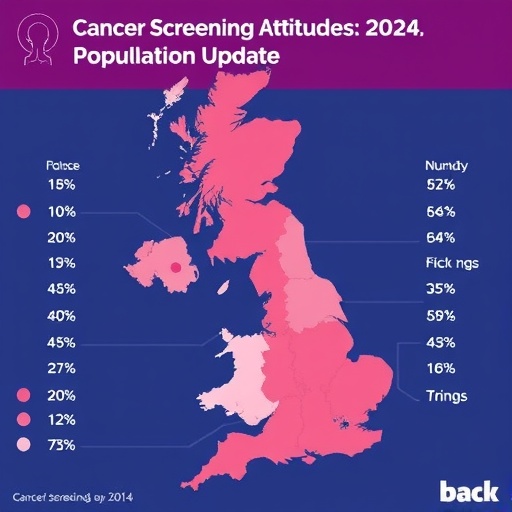
In recent years, cancer screening has undergone significant transformations, influenced not only by advances in medical technology but also by shifting public perceptions. A newly published study from the United Kingdom, appearing in the British Journal of Cancer, offers a comprehensive update on the evolving attitudes toward cancer screening within the UK population as of 2024. This study provides critical insights into how people’s views are changing amidst new screening options, heightened awareness, and the complexities associated with cancer detection and prevention.
Cancer screening programs have long been heralded as essential tools for early diagnosis, aiming to reduce mortality rates by detecting the disease before symptoms appear. The effectiveness of such programs, however, depends heavily on public participation, which is influenced by individuals’ perceptions of the benefits and harms of screening. This investigation explores contemporary attitudes, revealing nuanced shifts in public opinion that may have profound implications for health policy and screening uptake strategies.
The research meticulously examines how the UK population currently perceives cancer screening procedures across various types, including breast, cervical, and colorectal cancers, among others. It highlights a growing awareness of both the potential life-saving benefits of screening and the inherent risks involved, such as false positives and overdiagnosis. The study’s findings underscore that while a majority still support screening, there is increasing ambivalence fueled by a better understanding of the complexities involved.
One salient aspect of the updated data is the public’s enhanced comprehension of screening limitations. Overdiagnosis—the identification of cancers that would not have caused harm if left undetected—has emerged as a critical concern. Many individuals are now more cognizant of this phenomenon, challenging the previously near-universal acceptance of screening as unequivocally beneficial. The study details how this evolving knowledge is influencing people’s willingness to participate, especially when weighed against the psychological and physical toll of unnecessary treatment.
Furthermore, the investigation reveals demographic variations in attitudes, with age, socioeconomic status, and education playing pivotal roles. For instance, younger adults demonstrate a more questioning stance toward routine screening compared to older cohorts, who often possess more traditional views shaped by historical public health campaigns. This generational divide suggests that future communication strategies need to be tailored to address distinct concerns across age groups.
The emotional landscape surrounding cancer screening has also become more complex. The fear of cancer coexists with anxiety about undergoing invasive procedures or receiving ambiguous results. The researchers note that this emotional ambivalence can result in either enthusiastic participation or complete avoidance, depending on how information is conveyed and understood. Effective communication, therefore, emerges as a cornerstone in balancing awareness with reassurance.
The implications of these attitude shifts extend beyond individual decision-making; they influence national screening program efficacy and healthcare resource allocation. As public skepticism grows, health authorities face the challenge of maintaining high participation rates while respecting informed choice. The study advocates for more nuanced educational campaigns that transparently discuss the benefits and risks, empowering individuals rather than compelling them.
Technological advancements, such as liquid biopsy and artificial intelligence-driven diagnostic tools, are also altering the landscape. The study briefly addresses how the population views these emerging methods compared to traditional screening techniques. Early indications suggest curiosity mixed with caution, as people desire certainty but remain wary of new, unproven technologies potentially leading to overdiagnosis or false reassurance.
The research methodology employed involved a robust, representative sample of the UK adult population, integrating surveys and qualitative interviews to capture both statistical trends and deeper insights. This dual approach enables a comprehensive understanding of attitudes not simply as numbers but as complex human experiences shaped by personal, cultural, and societal factors.
The findings call for greater collaboration between clinicians, policymakers, and patient advocacy groups. By involving diverse stakeholders in the discourse around screening protocols, programs can be better tailored to meet the real-world concerns and preferences of the population. This participatory approach might foster trust, improve acceptance, and ultimately enhance public health outcomes.
This evolving landscape is also a reflection of the greater democratization of health information, where individuals now access a wealth of data online and through social media platforms. Such exposure can be a double-edged sword—enhancing knowledge but sometimes spreading misinformation and amplifying fears. The study warns that balancing accurate information dissemination amidst an ever-expanding digital landscape is a daunting but necessary challenge.
In conclusion, this 2024 update on UK population views regarding cancer screening paints a complex portrait of a society at crossroads. The once unchallenged faith in screening as a one-size-fits-all solution is now tempered by critical reflection, informed choice, and evolving expectations. As medical science progresses, aligning technological innovation with public attitudes will be paramount in optimizing cancer control efforts.
The research documented here not only informs UK-centric health policies but also resonates globally, as many countries grapple with similar issues related to cancer screening acceptance. Understanding the interplay between evolving technology, public perception, and policy implementation offers a roadmap for advancing cancer prevention and early detection strategies in an increasingly informed and engaged populace.
The future of cancer screening lies in this delicate balance between innovation, evidence-based practice, and patient-centered communication. This study serves as a vital touchstone for healthcare professionals and policymakers seeking to navigate the complexities of modern screening paradigms while respecting the agency and concerns of those they serve.
Subject of Research: Evolving public attitudes toward cancer screening in the UK population, with a focus on perceptions of benefits, harms, and emerging technologies influencing cancer detection.
Article Title: Evolving attitudes towards cancer screening: a 2024 update of UK population views.
Article References:
Dannhauser, F.C., Usher-Smith, J.A., Massou, E. et al. Evolving attitudes towards cancer screening: a 2024 update of UK population views. Br J Cancer (2026). https://doi.org/10.1038/s41416-026-03505-y
Image Credits: AI Generated
DOI: 17 June 2026
Tags: advances in cancer screening technologybreast cancer screening awarenesscancer prevention awareness UKcancer screening benefits and harmscancer screening policy UKcancer screening uptake UKcervical cancer screening perceptionscolorectal cancer screening attitudesfalse positives in cancer screeningoverdiagnosis in cancer detectionpublic perceptions of cancer screening UKUK cancer screening attitudes 2024