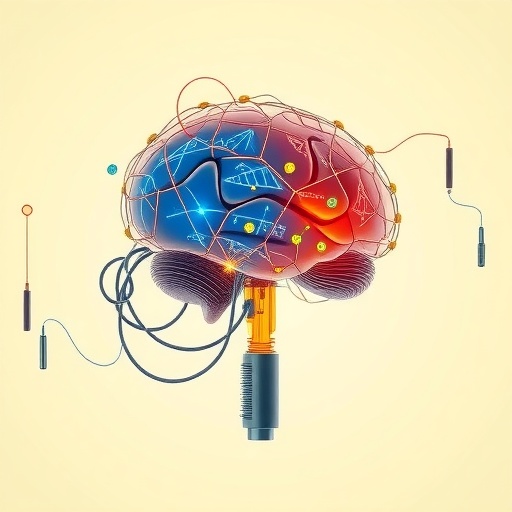
In a groundbreaking advancement that merges neurosurgery and cutting-edge biomedical engineering, University of Michigan Health has achieved the first-ever human implantation of Paradromics Inc.’s Connexus wireless brain-computer interface (BCI). This pioneering clinical trial ushers in a new era of potential treatment options for individuals impaired by severe speech difficulties caused by neurological disorders. The procedure marks a significant milestone as it seeks to restore natural communication abilities in patients whose conditions have rendered traditional methods ineffective or inaccessible.
Leading the surgical team, Dr. Matthew Willsey, a unique blend of neurosurgeon and biomedical engineer, alongside Dr. Aditya S. Pandey, Chair of the Department of Neurosurgery at U-M Health, successfully implanted the Connexus BCI into a female participant from Michigan who suffers from motor neuron disease. This debilitating condition, which compromises the neural pathways responsible for voluntary muscle movement, has severely impaired the patient’s capacity to speak. The trial, titled the Connect-One Early Feasibility Study (EFS), primarily aims to assess the device’s long-term safety profile while exploring its capability to restore communication by synthesizing text and speech derived from the patient’s neural activity.
Distinct from many BCIs currently under investigation, the Connexus system distinguishes itself as a fully implantable, wireless interface designed to bypass the need for cumbersome external hardware. It leverages an array of 421 microelectrodes embedded within the cerebral cortex to capture high-resolution signals at the level of individual neurons. These raw neural signals are transmitted through a compact transceiver implanted subcutaneously in the chest, which relays data wirelessly to an external receiver. This seamless integration eliminates physical tethering, thus reducing infection risks and improving user mobility and comfort.
The underlying mechanism of the Connexus BCI is to decode complex brain activity patterns and translate them into actionable commands. This is achieved through sophisticated onboard processing algorithms, which interpret fluctuations in neural firing rates associated with intended speech or computer control actions. Upon decoding, these signals are converted into synthesized speech or text output, enabling users to engage in verbal communication or operate digital devices solely through thought. The system represents the convergence of advances in microelectronics, neural engineering, and artificial intelligence, specifically the domains of speech recognition and neural decoding.
Matt Angle, Ph.D., CEO and founder of Paradromics, expressed profound optimism regarding the device’s potential to revolutionize communication restoration for those affected by paralysis and speech loss. He emphasized the transformative nature of fully implantable, wireless BCIs, highlighting their ability to reconnect individuals to their social environment by supporting naturalistic forms of interaction. The collaboration with University of Michigan Health underscores a shared vision to propel BCI technologies from laboratory prototypes to viable clinical therapies.
Prior to this first-in-human implant, the Connexus BCI underwent a temporary implantation in June 2025 during an epilepsy-focused functional neurosurgery trial at U-M Health. Directed by Dr. Oren Sagher, this preliminary study validated the device’s safety and demonstrated its capability to record high-fidelity neural signals over several days, establishing a foundation for permanent implantation protocols. Following this, the U.S. Food and Drug Administration granted Paradromics an Investigational Device Exemption (IDE) in November 2025, authorizing the initiation of the Connect-One clinical trial across multiple sites, including Michigan Medicine.
Dr. David M. Brandman of the University of California, Davis, who leads the Connect-One Study, remarked on the significance of transitioning from decades of intracortical BCI research to clinical applications that incorporate fully implanted, wireless systems. He voiced anticipation for the study’s outcomes, which could validate wireless BCIs as practical tools for restoring communication in individuals with severe motor impairments. The participant implanted at U-M Health will be monitored intensively over six years to evaluate both device safety and functional efficacy, receiving concurrent care at the Stanford Morris ALS Clinic.
Motor neuron diseases, such as amyotrophic lateral sclerosis (ALS) and primary lateral sclerosis (PLS), are devastating neurodegenerative disorders that progressively dismantle the neural infrastructure necessary for voluntary motor control, including speech. For individuals afflicted by these diseases, communication loss profoundly impacts autonomy and quality of life. Wireless BCIs like Connexus present a compelling approach to circumvent damaged motor pathways by tapping directly into neural intentions, potentially restoring the ability to communicate naturally despite peripheral paralysis.
According to Dr. Stephen Goutman, Director of the Stanford Morris ALS Clinic, maintaining communication channels is vital for preserving mental well-being, social connections, and independence for motor neuron disease patients. Partnerships between clinical neuroscientists and neurosurgeons at institutions like U-M Health are essential for translating pioneering BCI technologies into real-world therapeutic options. As such, multidisciplinary collaboration remains a cornerstone of this endeavor, with contributions spanning surgical teams, biomedical engineers, speech-language pathologists, and computational neuroscientists.
The establishment of a dedicated Brain-Computer Interface Clinic at U-M Health in 2025, under Dr. Willsey’s leadership, reflects a strategic institutional commitment to advancing BCI research and clinical care. The clinic supports ongoing clinical trials, including investigations into novel investigational BCIs that aim to restore a broader range of motor functions, alongside communication. This initiative aligns with the rapidly evolving landscape of neurotechnology, wherein device miniaturization, wireless data transmission, and adaptive decoding algorithms are redefining therapeutic possibilities for neurological disorders.
In the broader context of neurological disease treatment, the integration of brain-computer interfaces and neuromodulation technologies signals a paradigm shift. As Dr. Oren Sagher highlights, the clinician-scientist community at Michigan Medicine is dedicated to pushing the boundaries of neuroscience and neurosurgical care, ensuring that patients have access to innovative treatments that were once deemed futuristic. This commitment exemplifies the role of major academic medical centers in transitioning promising research into impactful patient outcomes.
Michigan Medicine, encompassing a wide network of hospitals and clinics, along with the University of Michigan Medical School, stands as a powerhouse of biomedical research with over $800 million in funding annually. Its multifaceted approach—spanning clinical care, research, and education—positions it uniquely to foster breakthroughs such as the Connexus BCI implantation. By harnessing institutional expertise and fostering collaboration across disciplines, Michigan Medicine continues to lead the charge in redefining therapeutic frontiers for complex neurological conditions.
Connexus BCI remains an investigational device, contingent upon regulatory approvals and further clinical validation. Nevertheless, this pioneering implantation signifies a hopeful horizon for individuals with motor neuron diseases and other debilitating neurological conditions. With sustained research, innovation, and clinical rigor, wireless brain-computer interfaces promise to restore lost communication capabilities, reconnect patients with their world, and ultimately transform lives.
Subject of Research: People with motor neuron diseases experiencing speech impairment.
Article Title: University of Michigan Performs First Human Implantation of Paradromics’ Wireless Brain-Computer Interface to Restore Communication
News Publication Date: Not specified in the provided content.
Web References:
Paradromics Connexus BCI Product
Connect-One Early Feasibility Study (EFS) Clinical Trial
Michigan Medicine
Image Credits: University of Michigan and Paradromics
Keywords
Neurological disorders, Amyotrophic lateral sclerosis, Neurodegenerative diseases, Speech recognition, Artificial intelligence, Computer processing, Brain-computer interface, Wireless implantation, Motor neuron disease, Neurosurgery, Neural decoding, Biomedical engineering
Tags: advanced treatments for speech impairmentbrain-computer interface safety and efficacyConnect-One Early Feasibility Studyhuman implantation of brain implantimplantable wireless neural interfacemotor neuron disease communication aidneural prosthetics for speech restorationneurosurgery and biomedical engineering collaborationParadromics Connexus wireless BCIrestoring speech through brain signalsUniversity of Michigan brain-computer interfacewireless brain implant clinical trial