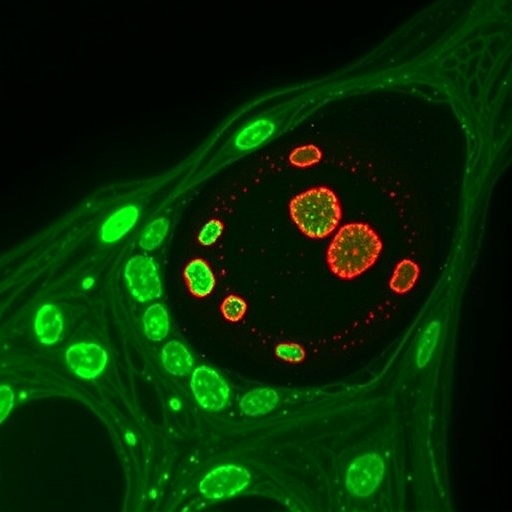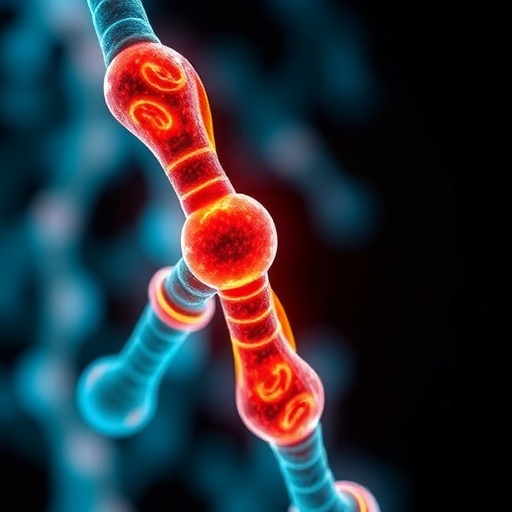
In a groundbreaking discovery poised to reshape our understanding of chromosome biology in cancer, researchers at the University of Pittsburgh School of Medicine and UPMC Hillman Cancer Center have uncovered a previously unrecognized genomic anomaly that challenges longstanding paradigms. Published in the prestigious journal Nature on June 3, 2026, this study reveals that in a subset of aggressive tumors utilizing the Alternative Lengthening of Telomeres (ALT) pathway, DNA sequences typically restricted to centromeres are aberrantly integrated near telomeres—the protective ends of chromosomes. This revelation not only underscores a novel mechanism sustaining unlimited tumor cell proliferation but also promises to unlock new biomarkers and therapeutic targets for a particularly stubborn class of cancers.
Chromosomes, the repositories of genetic material, have traditionally been understood to preserve the strict spatial and functional demarcation of their constituent regions. Telomeres, found at chromosome termini, serve as protective caps preventing genomic degradation, while centromeres occupy a more central position, anchoring spindle fibers to ensure proper chromosome segregation during cell division. These regions have long been thought to operate independently, with their discrete organization essential for genomic stability and cellular fidelity. The new findings disrupt this dogma by demonstrating that in ALT-positive cancers, this separation disintegrates, allowing unexpected structural crosstalk between centromeric and telomeric DNA.
This previously hidden genomic architecture emerged from comprehensive analyses conducted on osteosarcoma cell lines and patient-derived tumor samples, where investigators employed fluorescence in situ hybridization (FISH), high-resolution microscopy, sequencing, and biochemical profiling. Their data revealed chimeric or hybrid DNA fragments composed of centromere-like and telomere-like sequences overlapping at chromosome ends. This molecular signature was conspicuously enriched in ALT-positive tumors, implying that such an arrangement is not a random genomic aberration but rather a hallmark underpinning ALT tumor biology.
The pathological relevance of this phenomenon is striking given ALT’s role as a telomerase-independent telomere maintenance mechanism, utilized by approximately 5 to 10 percent of human cancers. Unlike the canonical telomerase-driven pathway which elongates telomeres enzymatically, ALT employs homologous recombination and DNA repair processes to sustain telomere length, contributing to continuous cancer cell replication. Yet until now, the precise genomic rearrangements facilitating ALT’s persistence were elusive. The revealed centromere-telomere DNA concatemer introduces an intriguing epigenomic dimension to ALT tumor maintenance.
Crucially, the formation of these hybrid DNA regions is tightly linked to specific epigenetic modifications governing chromatin organization. The research identifies the loss of function in ATRX, a chromatin remodeler instrumental in maintaining distinct chromosomal territories, as a pivotal event. ATRX deficiency permits the invasion of centromeric chromatin marks and sequences into telomeric domains, destabilizing the canonical chromosomal landscape. This epigenetic plasticity enables illegitimate recombination events that might initially be deleterious but are paradoxically co-opted by cancer cells to survive under replicative stress, a hallmark of ALT-driven malignancies.
These insights carry substantial clinical implications. The distinct genomic footprint—characterized by centromeric sequences at telomere loci—provides a novel molecular biomarker for ALT-positive tumors, which include pediatric brain cancers like neuroblastoma, and soft tissue sarcomas. Detection of this signature could improve diagnostic precision, aid in patient stratification, and offer a new metric for monitoring tumor evolution and response to therapy. Therapeutic strategies could aim to restore ATRX function or destabilize these chimeric chromosome regions, potentially blunting the adaptive advantage conferred by the ALT mechanism.
What makes this discovery even more compelling is the interdisciplinary collaboration that made it possible. Historically compartmentalized research fields—telomere biology and centromere biology—were integrated in this investigation, shifting scientific perspectives to consider chromosomal subdomains as dynamic and occasionally overlapping entities in pathological states. The O’Sullivan laboratory, specializing in chromosome conformation and telomere maintenance, partnered with the Nechemia-Arbely laboratory’s centromere expertise, merging advanced techniques like DiMeLo-seq to map these complex chromatin landscapes at unprecedented resolution.
Such cross-pollination of expertise yielded not just confirmatory evidence of peculiar centromeric footprints at the telomeres but also uncovered their epigenomic context, elucidating how chromatin regulators and recombination machineries collaborate to perpetuate this pathology. The robustness of the results was further validated through experiments disrupting the underlying mechanisms, which led to telomere instability and reduced ALT activity, reinforcing the functional necessity of these structural rearrangements for tumor viability.
This discovery advances our conceptual framework of genome organization, demonstrating that chromosomal regions once thought to be functionally isolated can engage in complex interactions with profound consequences. It underlines the adaptability of cancer genomes and the molecular intricacies that fuel their unrestrained growth despite genomic instability. This revelation not only enriches cancer biology but also galvanizes efforts to develop novel diagnostics and targeted treatments tailored to the unique vulnerabilities of ALT-positive tumors.
Looking forward, the research opens avenues for technological innovation in cancer diagnostics and therapeutics. Monitoring centromere-telomere hybrid signatures could become a critical component of personalized medicine approaches for patients with ALT-driven malignancies. Similarly, epigenetic therapeutics aimed at reinstating ATRX function or disrupting chromatin mislocalization hold promise for limiting the aggressive proliferative capacity of these cancers.
This advance is a testament to the power of integrative molecular and epigenomic analysis in unveiling the genome’s hidden complexities, reminding the scientific community that even well-established cellular structures can reveal unforeseen roles in disease when examined through interdisciplinary lenses. As investigators continue to unravel the mechanisms that enable chromosomal aberrations and cellular immortality, this discovery stands as a beacon illuminating new paths toward conquering some of the most intractable malignancies.
Subject of Research: Epigenomic and genomic structural rearrangements in chromosome regions underpinning telomere maintenance in ALT-positive cancers.
Article Title: Genomic and Epigenomic Centromeric Footprints Preserve Telomere Integrity in ALT Cancers.
News Publication Date: June 3, 2026.
Web References:
Nature Article: https://doi.org/10.1038/s41586-026-10598-1
University of Pittsburgh Department of Pharmacology and Chemical Biology: https://www.pharmacology.us/
UPMC Hillman Cancer Center Genome Stability Program: https://hillmanresearch.upmc.edu/research/programs/ccsg/genome-stability
Image Credits: Ragini Bhargava and O’Sullivan Laboratory and Nechemia-Arbel Laboratory, University of Pittsburgh and UPMC Hillman Cancer Center.
Keywords: Telomeres, Centromeres, Chromosome structure, Epigenetics, DNA recombination, Alternative Lengthening of Telomeres (ALT), Chromatin regulation, Genomic instability, Cancer biomarkers, Pediatric brain cancer, Neuroblastoma, Chromosomal abnormalities.
Tags: Alternative Lengthening of Telomeres pathwaycancer genomics research breakthroughscentromere function disruptioncentromere-telomere integrationchromosomal anomalies in cancer progressionchromosome interaction in cancergenomic instability in aggressive tumorsmechanisms of tumor cell proliferationnovel cancer biomarkerstargeted therapies for ALT cancerstelomere biology in oncologyUniversity of Pittsburgh cancer research