In a groundbreaking stride toward restoring independence for individuals affected by paralysis and communication impairments, Rice University, in partnership with Baylor College of Medicine (BCM), has become the sixth member of the prestigious BrainGate consortium. This collaboration marks the first BrainGate team based in Texas, joining the ranks of world-renowned institutions dedicated to advancing brain-computer interface (BCI) technologies. BCIs represent a transformative leap in medical science, enabling direct communication between neural activity and external devices such as robotic limbs or speech synthesizers, thus offering new avenues for restoring mobility and communication in conditions previously deemed irreversible.
Brain-computer interfaces operate by decoding the neural signals generated by the brain’s intent to perform actions—whether moving a limb or generating speech—and translating these signals in real-time to control external assistive devices. Over the past two decades, BrainGate has pioneered the development of implantable BCIs capable of capturing and interpreting these complex neural patterns. The recruitment of Rice and BCM into this consortium expands the scope and expertise of this collaborative national effort, with a particular emphasis on improving the quality of life for individuals with tetraplegia—a condition characterized by paralysis of all four limbs.
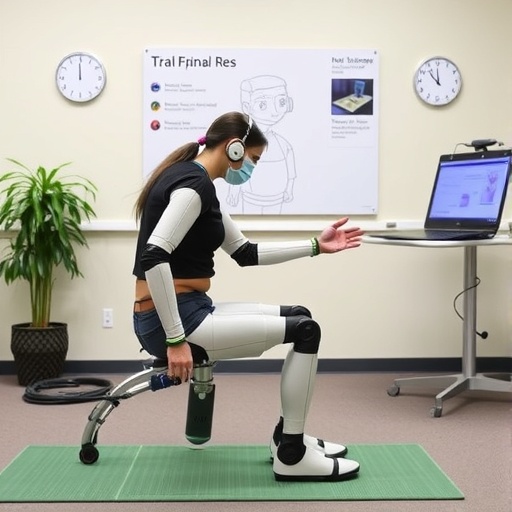
The research led by Dr. Nishal Shah, an assistant professor of electrical and computer engineering at Rice University, centers on the computational backbone required to decode cortical neural activity and translate it into precise movements of robotic assistive devices. This involves the design of sophisticated algorithms and machine learning models capable of interpreting the highly dynamic and intricate patterns of neural firing within the motor cortex. The team’s objective is to empower individuals with tetraplegia to independently perform complex motor tasks such as feeding themselves, which demands seamless integration of multiple motor commands executed with fine temporal coordination.
Dr. Shah highlights the complexity inherent in seemingly simple actions. “Feeding oneself,” he notes, “is a fluid task that requires the simultaneous coordination of multiple motor neurons to produce the natural and adaptable movements needed to manipulate utensils and consume food.” The challenge lies in creating brain-computer systems responsive enough to process these neural instructions with the speed and accuracy necessary to provide users with intuitive control over robotic limbs, thus restoring not only function but also the dignity of independence.
At Baylor College of Medicine, Professor Sameer Sheth spearheads the clinical activities crucial to this effort, including participant recruitment, neurosurgical implantation of specialized electrode arrays directly onto the brain’s surface, and comprehensive clinical oversight. These implants serve as the interface between the brain’s electrical activity and sophisticated decoding software. The surgical precision required to place these electrode arrays optimally is paramount, as signal quality directly influences the fidelity and responsiveness of the BCI system. Dr. Sheth expresses deep enthusiasm for the collaboration, emphasizing the transformative potential of neurally controlled robotic arms to rehabilitate those living with paralysis.
The integration of computational science and clinical neuroscience exemplified by the Rice-BCM BrainGate team underscores a multidisciplinary approach that harnesses the strengths of both institutions. The collaboration aims to refine the algorithms translating neural activity into motor commands, improving speed and accuracy, and expanding applications beyond movement to encompass speech restoration technologies. This synergy is vital as the consortium pushes toward developing assistive devices that respond naturally to the user’s intentions, effectively bridging the gap between neural signals and practical, everyday utility.
Rice University’s Brain Institute, led by Behnaam Aazhang, celebrates this milestone, viewing it as a catalyzing moment for its mission to converge diverse disciplines—including neuroscience, engineering, cognitive science, ethics, and policy—under a unified vision of enhancing brain health through innovative research. The BrainGate initiatives align perfectly with this mission, offering a platform for translating fundamental brain science into tangible, life-changing technologies.
Looking beyond immediate clinical goals, Dr. Sheth envisions a future where insights gleaned from movement-restoring BCIs can inform the treatment of neuropsychiatric disorders such as depression. By analyzing neural circuits involved in cognition, motivation, and emotion, researchers hope to bi-directionally interface with brain regions implicated in mental health, paving the way for novel neuromodulation therapies that restore not only physical function but also emotional and cognitive well-being.
Nicole Provenza, assistant professor of neurosurgery at Baylor and principal investigator for the BrainGate trial, echoes this forward-looking vision. She underlines the importance of understanding the neural underpinnings of mood, memory, and cognition within the context of BCI technology. This research can ultimately expand the reach of neuroprosthetic applications to encompass a wide spectrum of mental health conditions, enhancing quality of life for diverse patient populations.
Clinical trial participants recruited for the BrainGate2 study are pioneers, undertaking the role of test pilots in a neuroprosthetic frontier. Their participation is pivotal not only for advancing the state of BCI technologies but also for contributing invaluable data that will refine device functionality and inform future clinical protocols. These initial trials focusing on robotically-assisted feeding represent critical stepping stones toward broader applications of neural interface technologies.
Among BrainGate’s notable technological achievements is the development of systems capable of converting cortical activity associated with intended speech into coherent text and synthetic speech—revolutionizing communication for individuals immobilized by paralysis. These advances exemplify the potential of BCIs to transcend traditional assistive technologies, delivering seamless, brain-driven communication modalities that preserve the user’s unique vocal identity.
The BrainGate consortium encompasses several eminent institutions, including Massachusetts General Hospital, VA Providence Healthcare System, the University of California at Davis, Stanford University, and Emory University. The addition of Rice and Baylor College of Medicine expands both the consortium’s geographic footprint and its integration of cutting-edge engineering with frontline clinical expertise, solidifying BrainGate’s position at the vanguard of neuroprosthetic innovation.
Eligibility criteria for participation in the clinical trial require candidates to be adults diagnosed with paralysis in all limbs or severe speech impairment, resulting from conditions such as spinal cord injury, brainstem stroke, or degenerative motor neuron diseases like ALS. Interested individuals are invited to contact the research team at BCM for further information about enrollment and trial protocols.
In summation, the entry of Rice University and Baylor College of Medicine into the BrainGate consortium heralds a new chapter in the evolution of BCI technologies. By merging computational engineering with clinical neuroscience, this collaboration aims to develop next-generation neuroprosthetics that restore autonomy and hope to individuals affected by paralysis and beyond. The ongoing research is set to foster innovations not just in motor function restoration but also in the understanding and treatment of complex neuropsychiatric disorders, potentially reshaping the future landscape of personalized neurotechnology.
Subject of Research: Brain-computer interface technologies for restoring mobility and communication in paralysis and neurological disorders.
Article Title: Rice University and Baylor College of Medicine Join BrainGate Consortium to Advance Neuroprosthetic Technologies.
News Publication Date: May 28, 2026.
Web References:
https://brain.rice.edu/
Keywords
Brain-computer interface, neuroprosthetics, paralysis, tetraplegia, ALS, spinal cord injury, robotic limb control, speech restoration, neural decoding algorithms, neurosurgery, computational neuroscience, BrainGate consortium, clinical trial, neuroengineering.
Tags: assistive robotics for tetraplegiaBaylor College of Medicine BCI collaborationbrain-computer interfaces for paralysisBrainGate consortium advancementscommunication aids for paralysisimplantable brain-computer devicesimproving quality of life in paralysisneural signal decoding technologyneuroprosthetics for limb movementreal-time neural control systemsrestoring mobility with BCIsRice University neuroscience research