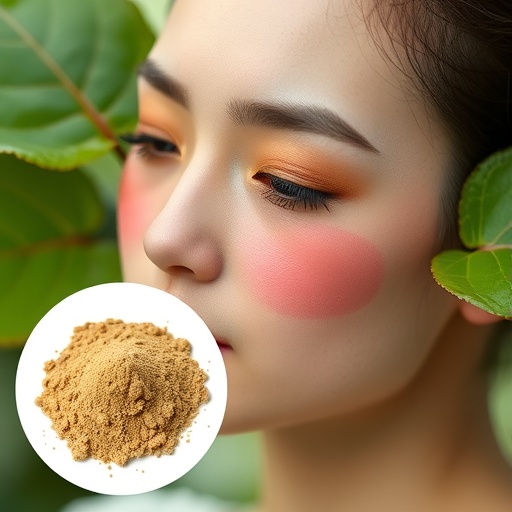
In a remarkable advance in the field of dermatological science, recent investigations into traditional medicinal plants have uncovered powerful natural agents capable of combating the multifactorial process of skin aging. A new study published in Acta Materia Medica brings to light the therapeutic potential of Vicatia thibetica de Boiss, a plant long esteemed in Chinese traditional medicine and consumed by the Bai ethnic group for its purported health benefits. This research rigorously explores the molecular and physiological mechanisms by which extracts derived from the root of this plant counteract skin deterioration induced by both chemical and physiological aging triggers.
The study delves into the anti-aging efficacy of the Vicatia thibetica root extract, designated as JM02001, in vivo, focusing on its capacity to reverse hallmarks of skin aging. Prior in vitro analyses had hinted at its ability to promote collagen synthesis and enhance antioxidant defenses. Now, this new research conclusively demonstrates that JM02001 mitigates the progressive loss of extracellular matrix (ECM) components, a critical factor in maintaining skin integrity and elasticity. Using D-galactose-induced aging models in mice, a well-established system characterized by accelerated oxidative stress and glycation, researchers observed restoration of collagen networks and reinforcement of epidermal barrier functions.
A central breakthrough in the investigation was identifying the ethyl acetate fraction of the root extract, termed JM02102, as the fraction most enriched in bioactive constituents with pronounced biological activity. This fraction exhibited superior anti-glycation effects, curbing the formation of advanced glycation end products (AGEs), which are major contributors to the skin’s structural decline. Concurrently, JM02102 enhanced the enzymatic antioxidant capacity by augmenting superoxide dismutase-1 (SOD-1) expression, thus reducing oxidative damage to skin cells and extracellular components.
Chromatographic and spectroscopic methods isolated chlorogenic acid (CGA) as a key molecule within JM02102 responsible for many of the observed benefits. CGA is a polyphenolic compound previously recognized for its antioxidative and anti-inflammatory properties. In this study, CGA not only protected the ECM from enzymatic degradation by suppressing matrix metalloproteinase-9 (MMP-9) expression but also improved the barrier functionality of the epidermis, a vital defense against environmental insults and transepidermal water loss.
An additional dimension of the study addressed glucocorticoid-induced skin aging, which mimics clinical scenarios where prolonged steroid application leads to skin atrophy and compromised barrier function. Administration of JM02102 and CGA in these models resulted in significant recovery of dermal and epidermal thickness. Moreover, treatment downregulated catabolic markers such as REDD1 and the cellular senescence marker p16INK4A, suggesting that the extract and its active compound not only alleviate oxidative and proteolytic damage but also exert anti-senescent effects at the molecular level.
These findings collectively validate the traditional claims of the Bai ethnic group about the skin health benefits of Vicatia thibetica and underscore the essential role of preserving ECM integrity and skin barrier strength in anti-aging strategies. The interplay between reduced oxidative stress, inhibition of ECM-degrading enzymes, and reinforcement of skin’s protective layers forms a comprehensive defensive mechanism against intrinsic and extrinsic skin aging factors.
The implications of this research extend beyond ethnopharmacology into the broader pharmaceutical and cosmeceutical arenas. By harnessing naturally derived bioactive compounds like chlorogenic acid, there is promising potential to develop novel skin therapeutics that are both efficacious and well-tolerated. This stands in contrast to many synthetic agents that may cause undesired side effects or exacerbate underlying skin conditions.
Notably, the study also highlights the importance of using standardized extraction methods to isolate fractions with enhanced biological activity, which is paramount for achieving consistent clinical outcomes. The ethyl acetate fraction JM02102 serves as a model for targeted extraction techniques aimed at maximizing the yield of key pharmacologically relevant constituents.
From a biochemical perspective, the dual mechanism of action—combining antioxidant defense with ECM preservation—addresses the core pathological features of skin aging. Oxidative stress damages collagen and elastin fibers, while glycation leads to the stiffening and fragility of skin structures. The suppression of MMPs further prevents unwarranted proteolysis, maintaining the extracellular matrix architecture essential for skin resilience.
This study’s use of established in vivo models to validate traditional knowledge also sets a precedent for future investigations into other ethnomedicinal candidates. Such research fosters a symbiosis between ancient wisdom and modern scientific rigor, paving the way for innovative, natural-based solutions to pervasive dermatological challenges.
Overall, these compelling results elevate Vicatia thibetica root extract and chlorogenic acid as promising agents in anti-aging regimens. Their multifaceted actions—ranging from molecular modulation of oxidative pathways to structural restoration of skin layers—offer a sophisticated approach to delaying or reversing skin aging. As interest in botanical therapeutics grows worldwide, this research opens exciting avenues for developing formulations that combine cultural heritage with cutting-edge science.
As the global demographic shifts towards an aging population, the demand for safe and effective skin rejuvenation therapies intensifies. Discoveries such as those reported here could revolutionize current strategies by providing alternatives that are rooted in natural compounds with minimal adverse profiles. Future clinical trials will be imperative to translate these findings into human applications and to optimize dosage and delivery methods.
This investigation not only illuminates the complex biological effects of Vicatia thibetica root extract but also reinforces the invaluable contribution of ethnobotanical knowledge to medical science. By bridging traditional practices with contemporary biomedical research, it encapsulates the future of integrative dermatology—where nature-inspired interventions can sustainably enhance skin health and quality of life.
—
Subject of Research: Anti-aging effects and bioactive constituents of Vicatia thibetica root extract on skin aging induced by D-galactose and glucocorticoids.
Article Title: Vicatia thibetica de Boiss root extract and its active constituents attenuate skin aging induced by D-galactose and glucocorticoid.
News Publication Date: 2026
References:
Daoxu Zhang, Yunyu Hong, Chengyi Wu et al. Acta Materia Medica. 2026; Vol. 5(2):178-193. DOI: 10.15212/AMM-2026-0413
Keywords: Skin Aging, Vicatia thibetica, Chlorogenic Acid, Extracellular Matrix, Antioxidant, Superoxide Dismutase, Matrix Metalloproteinase-9, D-galactose, Glucocorticoids, Epidermal Barrier Function, Anti-senescence, Ethnopharmacology
Tags: antioxidant effects on skin agingBai ethnic medicinal plantscollagen synthesis promotion in skinD-galactose induced skin aging treatmentextracellular matrix restoration skinglucocorticoid triggered skin agingmolecular mechanisms of skin aging reversalnatural compounds for skin agingskin elasticity improvement natural extractstherapeutic potential of JM02001traditional Chinese medicine for dermatologyVicatia thibetica root extract anti-aging