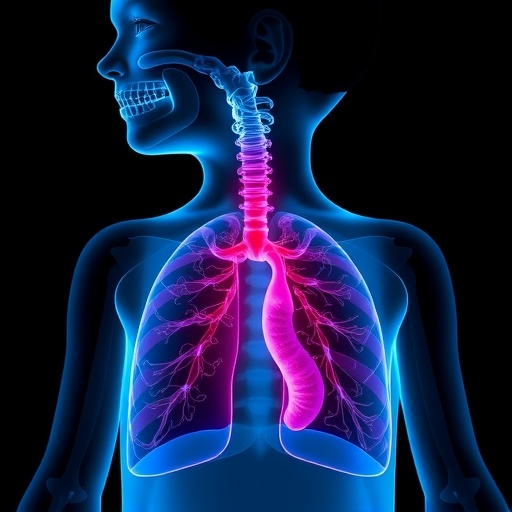
In a groundbreaking study published this month in Pediatric Research, researchers have unveiled alarming new insights into the respiratory health challenges faced by children who underwent surgical repair for esophageal atresia, with or without tracheoesophageal fistula. The investigation reveals a persistently high rate of pulmonary exacerbations, underpinned by marked neutrophilic airway inflammation, highlighting a long-overlooked respiratory complication in this vulnerable patient population. This revelation advances our understanding of the complex interactions between congenital anomalies and chronic respiratory morbidity, harboring significant implications for clinical management and long-term prognosis.
Esophageal atresia (EA), a congenital malformation characterized by an interrupted esophagus, frequently presents with or without tracheoesophageal fistula (TEF), an abnormal connection between the esophagus and trachea. While surgical correction has drastically improved survival rates, the long-term sequelae impacting pulmonary function and airway integrity remain incompletely characterized. This study represents one of the most comprehensive explorations to date of airway inflammation patterns following EA/TEF repair, offering unprecedented quantitative and qualitative data on the inflammatory milieu within the airways.
Central to the study’s findings is the discovery of elevated neutrophilic inflammation within the respiratory tract. Neutrophils, key protagonists in innate immunity, are typically mobilized to combat infection but, when persistently activated, can inflict collateral tissue damage contributing to chronic airway pathology. Using advanced bronchoalveolar lavage sampling coupled with cytological and immunological profiling, the research team demonstrated that children with repaired EA/TEF exhibited significantly higher airway neutrophil counts compared to healthy controls. This neutrophilic predominance suggests ongoing innate immune activation, potentially fueled by recurrent infections or microaspiration events.
The high frequency of pulmonary exacerbations identified underscores the clinical ramifications of this unchecked airway inflammation. Pulmonary exacerbations—episodes of acute worsening respiratory symptoms—were documented at rates exceeding those observed in comparable pediatric cohorts without congenital anomalies. Such exacerbations not only impose acute morbidity but also accelerate lung function decline, jeopardizing growth and quality of life. The study underscores the urgent need for heightened respiratory monitoring in this group to preempt and manage exacerbations effectively.
Intriguingly, the link between the anatomical abnormalities corrected by surgery and the observed pulmonary inflammation beckons further mechanistic inquiry. Repair of esophageal discontinuity and fistula closure may restore anatomical integrity but does not necessarily normalize airway defenses or microbial environment. The persistent neutrophilic inflammation may stem from altered airway clearance mechanisms, exposure to dysregulated microbiota, or immune dysregulation induced by early-life insults associated with the congenital malformation and intervention.
Technological advancements facilitated the depth of insight obtained in this study. Application of high-sensitivity flow cytometry, coupled with multiplex cytokine assays, enabled precise delineation of airway immune cell populations and their activation states. These techniques revealed not only elevated neutrophil numbers but also increased expression of activation markers and pro-inflammatory mediators, such as interleukin-8 (IL-8) and tumor necrosis factor-alpha (TNF-α), which orchestrate neutrophil recruitment and persistence.
Moreover, the study deployed longitudinal analysis, tracking children over several months to capture temporal patterns of inflammation and exacerbation occurrence. This approach highlighted that airway neutrophilia persisted beyond acute infection episodes, indicative of chronic inflammatory processes rather than transient responses. Such chronicity positions these children at heightened risk for progressive airway remodeling and bronchiectasis, a severe complication marked by irreversible airway dilation and impaired mucociliary clearance.
The ramifications extend beyond pulmonary symptomatology. Persistent systemic inflammatory signaling driven by chronic airway inflammation may influence nutritional status, growth trajectories, and neurodevelopmental outcomes. The study sparks a call for a multidisciplinary approach integrating pulmonology, gastroenterology, immunology, and developmental pediatrics to holistically address the diverse challenges these children face.
In clinical practice, these findings advocate for routine surveillance for early signs of airway inflammation and prompt intervention to mitigate exacerbations. Therapeutic strategies may encompass targeted anti-inflammatory treatments, optimized airway clearance techniques, and perhaps prophylactic antimicrobial regimens tailored to suppress opportunistic pathogens fueling neutrophilic inflammation. Precision medicine approaches leveraging individual immune profiling could refine such interventions, maximizing benefit while curtailing adverse effects.
This research further opens avenues for exploring the potential role of novel biomarkers in predicting exacerbation risk and monitoring response to therapy. Noninvasive biomarkers, including exhaled breath condensate analysis or peripheral blood markers reflective of airway inflammation, could revolutionize routine clinical monitoring. Integration of such tools could facilitate personalized care paradigms, improving long-term respiratory outcomes.
The study also raises intriguing questions regarding the microbiome’s role in perpetuating airway inflammation in post-repair EA/TEF patients. Altered microbial communities within the respiratory tract may act as chronic inflammatory stimuli, highlighting a possible target for probiotic or antimicrobial interventions designed to restore microbial balance and reduce immune activation.
From a broader perspective, these insights challenge the traditional view that surgical correction of congenital structural anomalies equates to resolution of associated health risks. The persistence of immune dysregulation and organ-specific inflammation suggests that reparative surgery is only one component of an integrated therapeutic strategy. Ongoing research is imperative to dissect the interplay between congenital anatomical repair, immune mechanisms, and microbiological factors that collectively shape respiratory health trajectories.
The study’s revelations arrive at a critical moment when pediatric respiratory diseases are garnering intensified scientific focus. Understanding the underpinnings of chronic airway inflammation in unusual yet impactful settings like repaired EA/TEF enriches the collective knowledge base and informs cross-cutting therapeutic advances applicable in broader pediatric pulmonary contexts such as cystic fibrosis or primary ciliary dyskinesia.
Looking forward, continued collaboration between clinical and translational researchers will be essential to translate these findings into standardized care protocols, potentially incorporating routine neutrophil quantification and anti-inflammatory modalities into follow-up regimens. Longitudinal cohort studies with expanded sample sizes and multi-center collaboration could validate and extend these observations, providing robust evidence to guide clinical guidelines.
In summary, this landmark study elucidates a hitherto underappreciated dimension of post-surgical morbidity in children with repaired esophageal atresia and tracheoesophageal fistula. The high burden of pulmonary exacerbations linked to persistent neutrophilic airway inflammation mandates renewed clinical vigilance and therapeutic innovation. As we deepen the mechanistic understanding of airway immune dynamics in this context, the prospect of improving outcomes through tailored interventions becomes increasingly tangible, heralding a new era of integrative care for these complex pediatric patients.
Subject of Research: Pulmonary exacerbations and neutrophilic airway inflammation in children with repaired esophageal atresia with or without tracheoesophageal fistula.
Article Title: High rate of pulmonary exacerbations and neutrophilic airway inflammation in children with repaired esophageal atresia with or without tracheoesophageal fistula.
Article References:
Martynov, I., Nofar, A.H., Wagner, R. et al. High rate of pulmonary exacerbations and neutrophilic airway inflammation in children with repaired esophageal atresia with or without tracheoesophageal fistula. Pediatr Res (2026). https://doi.org/10.1038/s41390-026-05047-8
Image Credits: AI Generated
DOI: 27 May 2026
Tags: chronic lung disease post-esophageal surgerycongenital esophageal malformations and lung healthesophageal atresia long-term respiratory complicationsimpact of neutrophils on airway tissue damageinflammation markers in respiratory pediatric patientslong-term prognosis of EA/TEF patientsmanagement of lung flare-ups in pediatric EAneutrophilic airway inflammation in childrenpediatric airway inflammation researchpulmonary exacerbations after EA repairrespiratory morbidity in congenital anomaliestracheoesophageal fistula surgical outcomes