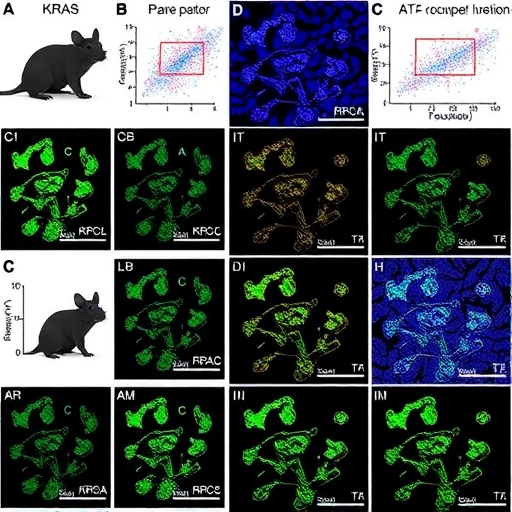
In a groundbreaking advance that reshapes the landscape of lung cancer treatment, researchers from IRB Barcelona and the Centro de Investigación del Cáncer have unveiled a novel pharmacological approach targeting mutant KRAS proteins. KRAS mutations, particularly the KRAS^G12V variant, are infamous drivers in approximately one-third of lung adenocarcinomas, historically rendering cancer cells exceptionally difficult to target therapeutically. While the field recently celebrated the approval of mutant-specific KRAS inhibitors, their transient efficacy due to acquired resistance has motivated scientists to explore alternative modalities that can provide more durable responses.
Traditional inhibitors function by binding to mutant KRAS proteins and obstructing their activity, but this method often falls short as cancer cells evolve mechanisms to circumvent inhibition and resume proliferative signaling. Addressing this limitation, the new study pivots towards inducing the selective degradation of the mutant KRAS protein itself, rather than merely inhibiting its function. This strategy leverages Proteolysis Targeting Chimeras (PROTACs), an innovative drug class designed to co-opt the cell’s intrinsic protein degradation machinery, effectively “tagging” the oncogenic protein for proteasomal destruction.
However, no current PROTACs can directly engage KRAS^G12V, posing a significant challenge. To overcome this, the research team ingeniously engineered lung cancer cells to express KRAS^G12V appended with a molecular tag amenable to novel PROTACs developed in collaboration with chemical biology experts at IRB Barcelona. This innovative tagging allowed the precise recruitment of the degradation system, resulting in efficient elimination of the mutant KRAS protein in vivo.
Employing genetically modified mouse models harboring these tagged KRAS^G12V proteins, the researchers observed remarkable tumor regression upon PROTAC treatment. The lung adenocarcinomas regressed substantially, highlighting the tumor cells’ profound dependency on continuous KRAS^G12V signaling for survival and proliferation. This response was more robust and durable compared to outcomes previously reported with conventional KRAS inhibitors, suggesting that targeted proteolysis could represent a superior therapeutic avenue.
Intriguingly, the study also delineated the immune landscape following KRAS degradation. Although an increase in immune cell infiltration within treated tumors was documented, parallel experiments in immunodeficient mice confirmed that the initial tumor regression was predominantly driven by direct cancer cell-autonomous mechanisms rather than the immune system. This insight emphasizes the fundamental cytotoxic potential of mutant KRAS degradation, independent of adaptive immune activation.
Delving deeply into the mechanisms of acquired resistance, the scientists uncovered a resistance paradigm distinct from that encountered with kinase inhibitors. Instead of mutations within KRAS itself or reactivation of downstream oncogenic pathways, resistant tumors exhibited alterations in the cellular proteostasis machinery. These modifications impaired the effectiveness of the proteasomal degradation system, effectively sabotaging the molecular machinery required to dismantle mutant KRAS, thereby allowing the tumor cells to evade destruction.
This distinct resistance mechanism highlights an evolutionary pressure on tumors to preserve KRAS dependence while simultaneously overcoming the novel therapeutic approach. By dysregulating protein degradation pathways, cancer cells develop an unexpected mode of resistance, underscoring the complexity of targeted proteolysis as a therapeutic modality and the necessity for combination strategies or next-generation PROTACs that can circumvent this escape route.
The conception and execution of this work are the result of a highly collaborative endeavor, integrating expertise from molecular biology, chemical synthesis, and cancer pharmacology across institutions including IRB Barcelona, Centro de Investigación del Cáncer, University of Salamanca, University of Navarra, Catalan Institute of Oncology, University of Liège, University of Turin, CIBERONC, and University of Barcelona. The interdisciplinary nature of this research reinforces the value of collaborative networks in tackling the formidable challenge of KRAS-driven malignancies.
From a therapeutic development perspective, these findings signal the dawn of a new era in targeted cancer therapies. While KRAS inhibitors revolutionized treatment paradigms, the advent of targeted protein degradation represents a paradigm shift with potential transformative impacts on clinical outcomes. The prospect of deploying sequential or combinatorial regimens, integrating KRAS inhibition with degradation, could potentiate tumor control and circumvent the resistance that plagues monotherapy approaches.
Moreover, the tailored strategy of tagging mutant KRAS not only facilitates in vivo functional studies of KRAS degradation dynamics but also establishes a versatile platform to explore PROTAC efficacy against other oncogenic drivers traditionally deemed “undruggable.” This platform empowers future preclinical investigations and accelerates the translation of proteolysis-based therapeutics into clinical settings for diverse cancer types.
Support for this pioneering research was generously provided by the Spanish Ministry of Science and Innovation, the European Research Council (ERC), the Spanish Association Against Cancer (AECC), Generalitat de Catalunya, the European Union’s NextGenerationEU program, “la Caixa” Foundation, and Farmaindustria. Their commitment underscores the critical societal imperative of advancing cancer research toward curative therapies.
In summary, the strategic targeting of mutant KRAS through induced degradation via PROTAC technology represents a compelling advance, combining molecular innovation with therapeutic promise. This elegant approach not only deepens understanding of lung adenocarcinoma biology but also charts new directions for combating resistance, potentially heralding a future where devastating KRAS-driven cancers can be durably controlled or eradicated.
Subject of Research: Targeted degradation of mutant KRAS in lung adenocarcinoma using PROTAC technology and investigation of resistance mechanisms in vivo.
Article Title: Targeted KRASG12V degradation in vivo elicits lung adenocarcinoma regression with subsequent relapse from dysregulated proteolysis
News Publication Date: 27 May 2026
Image Credits: IRB Barcelona
Keywords: Lung cancer, KRAS mutation, oncogene, targeted protein degradation, PROTACs, drug resistance, lung adenocarcinoma, immunotherapy, cancer treatment, proteolysis, in vivo study, molecular tag
Tags: cancer protein proteasomal destructionKRAS degradation therapyKRAS^G12V mutationlung adenocarcinoma treatmentmutant KRAS targetingnovel lung cancer therapeuticsovercoming KRAS inhibitor resistancepharmacological KRAS degradationpreclinical mouse models lung cancerPROTACs in cancerproteolysis-targeting chimerastargeted protein degradation in oncology