Occupational Exposure to Carcinogens Among Health and Social Care Workers in Europe: New Insights from the Workers’ Exposure Survey
Cancer remains one of the most pressing public health challenges worldwide, with occupational exposure to carcinogens recognized as a significant yet preventable cause. A novel investigation spearheaded by the Barcelona Institute for Global Health (ISGlobal), supported by the ”la Caixa” Foundation, casts new light on the prevalence of carcinogenic risk factors specifically within the health and social care sector (HeSCare) across Europe. Unlike many prior studies that focus predominantly on industrial or manufacturing sectors, this research delineates exposures encountered within caregiving professions, a domain historically overlooked in occupational carcinogen surveillance.
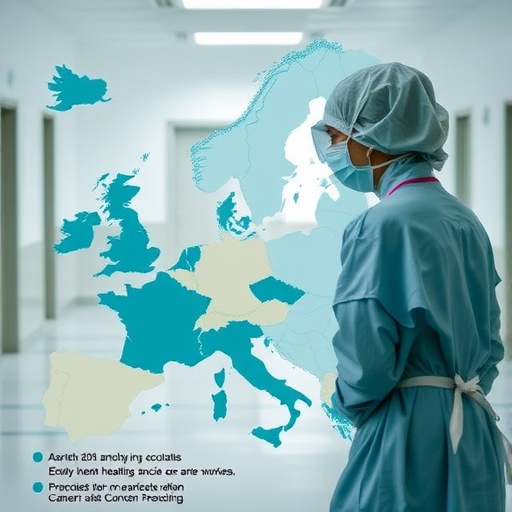
Published in the European Journal of Public Health, the study leveraged data from the groundbreaking Workers’ Exposure Survey (WES), executed between 2022 and 2023 under the auspices of the European Agency for Safety and Health at Work (EU-OSHA). The WES represents an unprecedented effort in Europe to systematically quantify exposure to 24 recognized carcinogenic agents through detailed, task-centric telephone interviews with over 24,000 workers spanning six countries: Finland, France, Germany, Hungary, Ireland, and Spain. Among these, a cohort of 3,041 individuals employed in health and social care professions was analyzed, representing approximately 11% of the European Union’s labor force.
The findings expose a troubling reality: close to 30% of workers in the health and social care sector experienced exposure to at least one carcinogenic agent during their most recent working week. Even more concerning, nearly 8% were subject to multiple carcinogen exposures concurrently. These statistics underscore the sector’s vulnerability to carcinogenic hazards, which range from chemical agents to environmental factors often underestimated in clinical and caregiving settings.
Ionising radiation emerges as the predominant risk factor, affecting 7.4% of health and social care workers. This exposure typically occurs through engagement with radiological equipment, such as diagnostic X-ray machines or the handling of medical isotopes used in diagnostics and therapy. The medical community relies heavily on such technologies, yet the occupational safeguards are evidently insufficient or inadequately implemented in certain settings, putting workers at oncogenic risk.
Equally pressing is exposure to diesel engine exhaust emissions, experienced by 6.2% of employees. The presence of diesel-powered vehicles and equipment in healthcare facilities and social care environments, both indoors in transport duties and outdoors during facility maintenance, contributes to the inhalation of complex mixtures of carcinogenic particles. Diesel exhaust is classified by the International Agency for Research on Cancer (IARC) as a Group 1 carcinogen, linked primarily to lung cancer but associated with other malignancies as well.
Solar ultraviolet radiation, a risk factor affecting 6.1% of these workers, introduces an intriguing dimension to the occupational hazards in health and social care. Individuals performing duties outdoors, such as community health nurses, home care providers, and social workers, face cumulative exposure to UV radiation, which is a well-established etiological factor in various skin cancers. This finding broadens the conventional view of occupational exposure beyond the confines of hospital settings.
Chemical carcinogens, particularly formaldehyde and benzene, remain substantial contributors, with 5.2% and 4.8% prevalence respectively. Formaldehyde is commonly found in disinfectants, sterilizing agents, and some chemical preparations used within medical laboratories and healthcare facilities. Benzene exposure, though less obvious in this sector, may arise from environmental contamination or specific cleaning agents and solvents. Both compounds are notorious for their genotoxic properties and association with hematological cancers.
Importantly, the study highlights high-level exposures to formaldehyde (2.3%) and ethylene oxide (2.0%), exacerbating cumulative occupational risk. Ethylene oxide is extensively used in sterilization of medical equipment but is also a potent alkylating agent with confirmed carcinogenicity. These high exposure levels necessitate urgent re-evaluation of exposure limits and implementation of stringent protective measures.
Beyond single-agent exposure, the research draws attention to combined carcinogen exposures prevalent in this workforce. Exposure to diesel emissions alongside solar ultraviolet radiation or concurrent contact with formaldehyde and ethylene oxide compounds the complexity and potential synergistic effects of these occupational hazards, possibly elevating cancer risk beyond additive models.
Notably, gender disparities emerge in the patterns of exposure: male workers exhibited a significantly higher prevalence (35.7%) of carcinogen exposure compared to female counterparts (26.1%). This discrepancy may reflect occupational segregation within the sector, differences in job roles, or varying adherence to protective protocols, warranting further gender-focused occupational health investigations.
These revelations compel a rethinking of occupational health policies in the health and social care environment. Historically, carcinogenic risks in these settings have been overshadowed by concerns in other industries perceived as higher risk. However, the data advocate for tailored preventive strategies, reflecting the workplace realities encountered by care workers and aimed at mitigating exposure through engineering controls, administrative policies, and personal protective equipment enhancements.
Ultimately, the study serves as a critical call to action for regulatory bodies, employers, and health professionals alike. Continuous monitoring of occupational carcinogen exposure and proactive interventions could have substantial impacts on workforce well-being and, ultimately, the burden of cancer linked to occupational hazards.
In view of the complex nature of exposures within health and social care professions, interdisciplinary cooperation between occupational health experts, policymakers, and scientific researchers will be pivotal in developing effective prevention frameworks. Enhanced education on occupational carcinogens, combined with rigorous enforcement of safety standards, can create safer environments for those dedicated to caring for others.
This pioneering study not only informs evidence-based occupational health practices but also raises public awareness about the hidden carcinogenic risks faced daily by health and social care workers, challenging preconceived notions and inspiring a paradigm shift in workplace safety priorities across Europe.
Subject of Research: People
Article Title: Occupational exposure to cancer risk factors among health and social care workers in Europe: results from the Workers’ Exposure Survey
News Publication Date: 3-Apr-2026
Web References:
https://doi.org/10.1093/eurpub/ckag056
References:
Khan, M.W., Vallbona-Vistós, M., Cavet, M., Vilahur, N., Turner, M. C. Occupational exposure to cancer risk factors among health and social care workers in Europe: results from the Workers’ Exposure Survey. European Journal of Public Health, 2026.
Keywords: Occupational exposure, cancer risk factors, health and social care workers, carcinogens, ionising radiation, diesel exhaust emissions, ultraviolet radiation, formaldehyde, ethylene oxide, occupational safety, Europe, Workers’ Exposure Survey
Tags: cancer prevention in healthcare workerscancer risk in social care professionscarcinogenic agents in health and social careepidemiology of occupational cancer in EuropeEuropean Agency for Safety and Health at Work studiesexposure to carcinogens in caregiving sectorhealth and social care worker survey EuropeISGlobal occupational cancer researchoccupational carcinogen exposure in healthcare workersoccupational health risks in Europeoccupational safety in social careWorkers’ Exposure Survey Europe 2022-2023