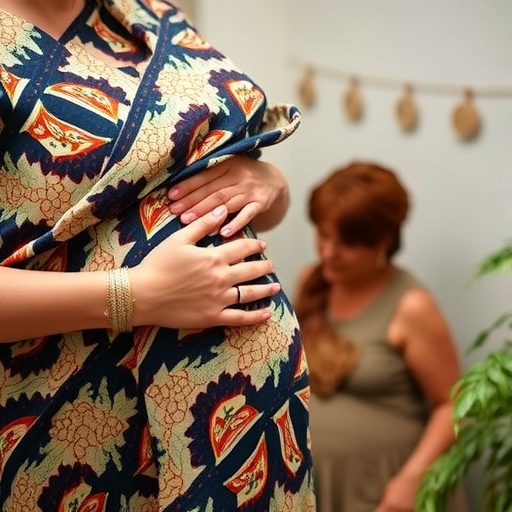
In regions of the world where consistent access to adequate nutrition is a significant challenge, the health of pregnant women and their newborns remains in a fragile state. A groundbreaking study led by epidemiologist Dongqing Wang from George Mason University’s College of Public Health sheds new light on the profound impact that maternal nutrition during pregnancy can have on birth outcomes. This study systematically reviews and meta-analyzes individual participant data from multiple randomized controlled trials conducted across low- and middle-income countries, putting forward compelling evidence in favor of prenatal balanced energy and protein (BEP) supplementation as an effective intervention to enhance neonatal health.
The global burden of maternal malnutrition is an often-overlooked crisis. Pregnant women facing inadequate calorie and protein intake endure increased risks of poor birth outcomes, including low birth weight and infants who are small for gestational age. Such infants are known to suffer not only higher neonatal mortality rates but also long-term developmental impairments and chronic health challenges. Traditional strategies to improve pregnancy outcomes have overwhelmingly focused on micronutrient supplementation, which, while important, may neglect the fundamental role that macronutrient sufficiency plays in fetal growth and resilience.
Dongqing Wang’s research bridges this critical knowledge gap by highlighting the potential of BEP supplements—food-based products designed to elevate calorie and protein consumption during pregnancy. These supplements often take the form of nutrient-dense pastes or fortified beverages, crafted to be easily integrated into maternal health programs in resource-limited settings. Unlike single micronutrient pills, BEP supplementation addresses energy and protein deficiencies holistically, providing pregnant women with the macronutrients necessary to support robust fetal development.
This meta-analysis encompassed data from eight clinical trials carried out in diverse settings across Africa and South Asia, including countries like Nepal, The Gambia, and Pakistan. By aggregating individual-level data rather than relying solely on aggregate trial outcomes, the researchers attained a refined understanding of how BEP supplementation influences birth metrics, particularly newborn weight and size relative to gestational age. The strength of this data lies in its ability to detect subtle but clinically significant improvements across heterogeneous populations, reinforcing the generalizability of the findings.
One of the most striking conclusions of the study is the consistent association of BEP supplementation with increased birth weights and a reduction in the incidence of small-for-gestational-age infants. Infants born small for their gestational age are especially vulnerable to early-life morbidity and mortality, making any intervention that minimizes this risk a public health priority. Importantly, the benefits of BEP were more pronounced when supplementation began early in pregnancy, ideally prior to 20 weeks’ gestation, underscoring the critical window of fetal organ development and growth that necessitates maternal nutritional support.
In contexts where food insecurity prevails, the sheer challenge of delivering micronutrients in isolation is apparent. Maternal undernutrition frequently reflects broader caloric scarcity and inadequate protein availability. By contrast, food-based BEP supplements may better align with the nutritional realities pregnant women face in low- and middle-income countries, offering a scalable and culturally adaptable solution. Integration of BEP supplementation into existing maternal and child health frameworks could generate synergistic benefits, improving both perinatal outcomes and long-term child health trajectories.
Beyond improving individual birth outcomes, BEP supplementation has promising implications for public health systems. Wang’s ongoing research in Ethiopia examines the cost-effectiveness of different BEP supplementation modalities, aiming to identify delivery mechanisms that balance efficacy with feasibility. Such economic evaluations are vital for guiding policymakers who must allocate limited resources to maximize population health benefits. Considering the global emphasis on reducing neonatal mortality in line with Sustainable Development Goals, strategies like BEP supplementation could play a pivotal role in bridging health disparities.
The study’s collaborative design illustrates the power of interdisciplinary and multinational scientific partnerships. Researchers from institutions such as Harvard T.H. Chan School of Public Health, the Food and Agriculture Organization of the United Nations, Aga Khan University, and numerous partners across Europe, South Asia, and Africa contributed expertise and data. This network facilitated rigorous harmonization of trial data, advanced statistical meta-analytical techniques, and ensured context-sensitive interpretation of results—hallmarks of robust global health research.
Scientifically, the biological rationale behind BEP supplementation’s benefits is compelling. Adequate protein intake fuels the development of fetal tissues, including muscle and brain, while sufficient energy intake supports maternal metabolic demands and placental function. Deficiencies in these macronutrients can trigger intrauterine growth restriction and impair organogenesis, laying the foundation for lifelong health deficits. BEP supplementation can counteract these mechanisms, enhancing nutrient availability during critical developmental windows.
Given these findings, the public health community is urged to reconsider current nutritional strategies for pregnant populations in resource-limited settings. While micronutrient supplementation remains essential, it should be complemented with interventions that holistically address macronutrient insufficiencies. This integrative approach holds the promise of reducing the burden of neonatal morbidity and mortality, potentially shifting outcomes on a population scale in vulnerable regions.
In conclusion, Dongqing Wang’s comprehensive meta-analysis provides robust evidence that balanced energy and protein supplementation during pregnancy significantly improves birth outcomes in low- and middle-income countries. The study advocates for early, food-based nutritional interventions targeting pregnant women to mitigate the risks associated with maternal malnutrition. As further cost-effectiveness research unfolds, it is anticipated that BEP supplementation will gain traction as a key component of maternal health programming globally, contributing to healthier generations and advancing equity in reproductive health worldwide.
Subject of Research: Maternal nutrition and birth outcomes in low- and middle-income countries
Article Title: The effect of prenatal balanced energy and protein supplementation on small vulnerable newborn types in low- and middle-income countries: A systematic review and meta-analysis of individual participant data
News Publication Date: 18-Feb-2026
Web References: https://journals.plos.org/plosmedicine/article?id=10.1371/journal.pmed.1004716
Keywords: Pregnancy, Public health, Nutrition, Maternal malnutrition, Balanced energy and protein supplementation, Neonatal health, Low birth weight, Small for gestational age, Fetal growth, Maternal health interventions
Tags: birth outcomes in low-income countriesglobal maternal health challengeslong-term developmental outcomes newbornslow birth weight preventionmacronutrient sufficiency in pregnancymaternal malnutrition impactmaternal nutrition during pregnancyneonatal health improvementnutrition interventions in pregnancyprenatal balanced energy and protein supplementationrandomized controlled trials on pregnancy nutritionsmall for gestational age infants