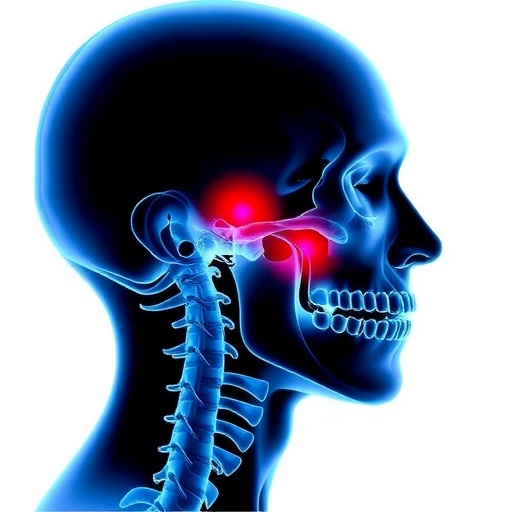
In a groundbreaking exploration into the biological underpinnings of temporomandibular joint (TMJ) pain, researchers from Texas A&M University have unveiled a compelling link between gut-derived metabolites and the epigenetic regulation of chronic orofacial pain. TMJ disorders, notorious for causing persistent and debilitating facial pain, have remained therapeutically challenging due to their intricate nature involving neural circuitry, inflammatory responses, and systemic factors. However, this latest research sheds light on how alterations in the gut microbiome and its metabolic byproducts can modulate pain pathways at the molecular level, offering new avenues for innovative treatment strategies.
The team, spearheaded by Drs. Sufang Liu and Feng Tao from the Department of Biomedical Sciences, utilized a well-established mouse model of inflammatory TMJ pain to dissect the molecular events contributing to pain chronification. Their study, published in the International Journal of Oral Science, focuses on the potent short-chain fatty acid butyrate, a key metabolite produced by gut microbial fermentation of dietary fibers. Butyrate’s anti-inflammatory and neuroprotective properties have been documented, yet its precise role in modulating central nervous system (CNS) pain circuits was not fully understood until this investigation.
Central to the study was the administration of tributyrin—an oral prodrug that elevates systemic butyrate levels. The researchers observed that tributyrin supplementation profoundly alleviated TMJ-associated mechanical hypersensitivity and spontaneous pain behaviors in mice. Quantitative analyses revealed a restoration of butyrate concentrations not only in the colon and bloodstream but notably within the spinal trigeminal nucleus caudalis (Sp5C), a critical CNS hub for processing nociceptive signals from the trigeminal nerve. This regional specificity highlights a mechanistic bridge between gut microbiota-derived metabolites and central pain modulation.
To elucidate the molecular circuitry underlying these effects, the investigators employed single-cell multi-omics technology, integrating single-nucleus RNA sequencing (snRNA-seq) with single-nucleus assay for transposase-accessible chromatin using sequencing (snATAC-seq). This sophisticated analysis allowed them to resolve cell-type-specific transcriptomic and chromatin accessibility landscapes within the Sp5C at unparalleled resolution. They catalogued twelve distinct cell types, encompassing diverse neuronal and glial populations, all of which displayed significant transcriptomic remodeling under TMJ pain conditions, though cellular composition remained stable.
Crucially, the study identified a panel of five genes—Nop14, Matk, Idh3b, Ndst2, and Tomm6—that exhibited coordinated epigenetic and transcriptional dysregulation concurrent with TMJ inflammation. These genes demonstrated altered chromatin accessibility patterns coupled with modulated RNA expression in specific cell clusters, indicating their central involvement in the pathological pain network. Strikingly, tributyrin treatment reversed these epigenetic aberrations, reinstating gene expression and chromatin configuration to homeostatic states, thereby underscoring the epigenome’s malleability in response to microbial metabolites.
The epigenetic mechanism driving these changes was further characterized through examination of histone acetylation levels, a key marker of chromatin openness and active transcriptional programs. TMJ inflammation precipitated a pervasive reduction in histone acetylation within the Sp5C, reflective of a transcriptionally repressed chromatin environment. Administration of tributyrin successfully restored histone acetylation, an effect attributed to butyrate’s well-known histone deacetylase (HDAC) inhibitory activity. This restoration was linked to normalization of the expression of acetylation-modulating enzymes across distinct cell subsets.
Among the implicated genes, Nop14 emerged as a pivotal regulator orchestrating epigenetic and transcriptomic dynamics in TMJ pain. The researchers demonstrated that TMJ inflammation elevated both chromatin accessibility and mRNA levels of Nop14 in the Sp5C. Targeted silencing of Nop14 expression via genetic knockdown produced significant analgesic effects and reinstated histone acetylation patterns, suggesting that Nop14 serves as a nexus point in epigenetic modulation of pain signals. These findings position Nop14 as a promising therapeutic target for future non-opioid interventions.
Further dissection of the regulatory networks uncovered intricate interplay among transcription factors modulating chromatin architecture in response to inflammatory pain. The study detailed how these transcriptional regulators orchestrate gene expression remodeling across neuronal subsets induced by TMJ pathology and subsequently mitigated by butyrate supplementation. These insights highlight the complexity of neuroepigenomic control in chronic pain states and underscore the therapeutic potential of modulating chromatin dynamics.
This research not only deepens our understanding of the gut-brain axis but also pioneers a novel conceptual framework wherein microbial metabolites serve as epigenetic modulators of CNS function in pain disorders. By linking gut microbiome-derived butyrate to cell-type-specific gene regulatory shifts in the Sp5C, the study paves the way for microbiota-centric therapeutic strategies. These strategies may provide safer, opioid-free alternatives for managing chronic orofacial pain, with broad implications for other neuropathic and inflammatory pain conditions.
The ability of tributyrin to penetrate the blood-brain barrier and influence central epigenetic landscapes represents a significant advancement in pain biology, challenging prevailing paradigms that often isolate CNS pain mechanisms from peripheral metabolic influences. This research positions epigenetic interventions—either through microbiome modulation or direct epigenetic enzyme targeting—as viable next-generation approaches to halt pain chronification and improve quality of life for patients suffering from TMJ disorders.
By marrying cutting-edge single-cell multi-omics with traditional behavioral and biochemical methodologies, the Texas A&M team exemplifies the power of integrative neuroscience in unraveling the multilayered complexities of pain. Their findings affirm the essential role of epigenetic plasticity in CNS pain circuits and establish a blueprint for future investigations into microbe-host interactions that regulate neuroinflammation and nociception.
Ultimately, the translational implications of this study extend well beyond TMJ pathophysiology, inviting broader exploration into gut microbiome metabolites as modulators of disease-relevant gene expression programs in the nervous system. As the scientific community continues to decode the intricacies of microbiota-derived epigenetic regulation, novel therapeutic horizons emerge, promising transformative breakthroughs in pain management and neurobiology at large.
Subject of Research: Animals
Article Title: Single-cell multi-omics sequencing reveals cell-specific transcriptomic and chromatin accessibility profiles in gut microbiome metabolite butyrate-produced pain modulation
News Publication Date: 17-Apr-2026
Web References: http://dx.doi.org/10.1038/s41368-026-00432-9
References: DOI: 10.1038/s41368-026-00432-9
Image Credits: Drs. Sufang Liu and Feng Tao, Texas A&M University School of Dentistry
Keywords: Temporomandibular Joint Disorders, TMJ Pain, Butyrate, Gut Microbiome, Epigenetic Regulation, Histone Acetylation, Single-Cell Multi-Omics, Transcriptomics, Chromatin Accessibility, Nop14, Non-Opioid Therapeutics, Neuroinflammation
Tags: butyrate anti-inflammatory effectscentral nervous system pain modulationdietary fiber fermentation and metabolitesepigenetic regulation of chronic paingut microbiome and orofacial paingut-brain axis in pain managementinnovative therapies for chronic facial painmolecular mechanisms of TMJ disordersmouse model of TMJ inflammationshort-chain fatty acids and neuroprotectiontemporomandibular joint pain treatmenttributyrin oral prodrug