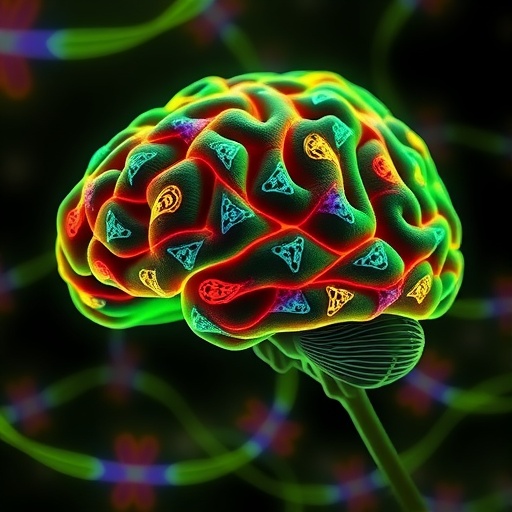
For decades, the apolipoprotein E gene (APOE) has intrigued scientists for its deep connections to aging and neurodegenerative diseases, most notably Alzheimer’s disease. Among the three common allelic variants—APOE2, APOE3, and APOE4—the APOE2 variant has stood out as a beacon of longevity and resilience. Carriers of this allele not only tend to live longer but also exhibit a markedly lower risk for Alzheimer’s. The biological reasons behind this protective effect, however, have remained elusive, often dubbed the “black box” of APOE research. Now, groundbreaking research from the Buck Institute for Research on Aging brings us closer to demystifying this enigma. The study, recently published in the peer-reviewed journal Aging Cell, delineates a novel mechanism showing that APOE2 fortifies neurons by preserving DNA integrity and resisting cellular senescence.
This investigation pivots the scientific lens away from APOE’s classical association with lipid metabolism and cholesterol transport, uncovering an unexpected, yet fundamental, role in genomic maintenance. Cellular senescence—the process wherein cells irreversibly cease dividing and accumulate damage—is a hallmark driver of aging and Alzheimer’s pathology. The new study reveals that neurons expressing APOE2 exhibit enhanced DNA repair capabilities and dramatically reduced markers of senescence compared to those carrying other APOE alleles. These effects could profoundly reshape our understanding of neuronal longevity and aging-related neurodegeneration.
Researchers employed cutting-edge techniques using human induced pluripotent stem cells (iPSCs) selectively engineered to express APOE2, APOE3, or APOE4 variants. They differentiated these iPSCs into two broad classes of neurons: inhibitory GABAergic neurons and excitatory glutamatergic neurons—cell types integral to brain function and often vulnerable in neurodegenerative conditions. This is a significant methodological advance, ensuring that observed differences are attributable solely to the APOE genotype, eliminating confounding genetic background effects that have hampered previous studies.
RNA sequencing analyses, both at the bulk and single-cell level, uncovered striking transcriptional discrepancies between these genotypes. APOE2 neurons activated a suite of genes responsible for DNA repair and damage response, bolstering the cells’ defenses against genomic insults. Conversely, APOE4 neurons showed gene expression patterns consistent with pathways implicated in Alzheimer’s disease, including increased neuroinflammation and vulnerability to stress. These molecular signatures mapped directly onto functional assays demonstrating that APOE2 neurons accumulate far fewer DNA strand breaks—a classical form of genomic damage that compromises cellular health.
The resilience of APOE2 neurons became particularly pronounced under conditions of acute stress. When exposed to ionizing radiation or the chemotherapeutic agent doxorubicin, which both induce DNA damage, excitatory neurons with APOE2 maintained a notably lower burden of hallmark senescence indicators such as p16^INK4a and CRYAB. Moreover, nuclear architecture—a key determinant of genomic stability—remained intact, with nucleoli size preserved and the nuclear envelope showing less degradation. These findings underscore APOE2 neurons’ superior ability to withstand genotoxic stress, an attribute that likely translates to greater functional longevity in vivo.
Complementing these in vitro discoveries, in vivo studies with aged knock-in mice expressing human APOE alleles further validated the protective phenotype conferred by APOE2. The hippocampus, a brain region crucial to learning and memory, exhibited more compact nucleoli, elevated levels of Lamin A/C (a structural protein essential for nuclear stability), and better-preserved heterochromatin in APOE2 mice than in counterparts carrying APOE3 or APOE4. This conserved phenotypic signature from cells to whole organisms underscores the robustness of the APOE2 effect across biological scales.
One of the most remarkable revelations of the study was that the protective influence of APOE2 could be transferred extrinsically. Application of recombinant APOE2 protein to neurons harboring the APOE4 allele partially ameliorated DNA damage signaling post-radiation. This finding opens tantalizing therapeutic prospects—if the protective mechanism is at least partly mediated by APOE2 protein function, treatments mimicking or delivering its effect could potentially mitigate the neurodegenerative risk in vulnerable populations.
The implications of these findings ripple outward beyond the APOE field, touching on central tenets of aging biology. DNA damage accumulation and cellular senescence are recognized as foundational drivers underpinning a myriad of age-related diseases. By connecting the dots between a major longevity gene and these critical hallmarks of aging, this research reshapes conceptual frameworks and offers a concrete molecular substrate explaining why APOE2 favors exceptional longevity and cognitive preservation.
The study’s senior author, Dr. Lisa M. Ellerby, emphasized the paradigm shift engendered by these insights. “Our work shows that APOE2 neurons repair DNA more efficiently and resist senescence, which drives much of the functional decline in aging brains. This reframes therapeutic targets—from merely focusing on lipid metabolism and amyloid processing to modulating DNA repair pathways and senescence escape,” she remarked. The research harbors promise not only for understanding basic biology but also for designing innovative interventions.
While the precise molecular machinery by which APOE2 stabilizes the nuclear envelope and facilitates DNA repair awaits full elucidation, current hypotheses point towards APOE2 influencing nuclear scaffolding proteins and chromatin organization. The preservation of nuclear architecture and heterochromatin integrity tends to protect genomic functions, ensuring efficient transcription and replication while minimizing DNA damage. Dissecting these pathways in future studies may unveil new druggable targets.
Co-first author Dr. Cristian Gerónimo-Olvera highlighted the consistency of the protective theme, noting that “APOE2 neurons are not only less damaged under normal conditions but also recover faster from acute stresses across neuron types and species models.” This phenomenon points to an intrinsic cellular robustness that could underpin the allele’s epidemiological links to healthy aging and resistance to neurodegeneration.
Looking forward, the researchers advocate exploration of APOE2-mimetic compounds and interventions aimed at enhancing neuronal DNA repair machinery or selectively clearing senescent cells from the brain. Such approaches hold compelling potential for mitigating Alzheimer’s risk, especially in carriers of the risk-enhancing APOE4 allele, who currently lack targeted therapies to counteract their genetic predisposition.
This study artfully bridges population-level genetic observations with concrete molecular mechanisms, illuminating how a single gene variant can profoundly influence cellular fate, genomic integrity, and ultimately organismal longevity. As the global population ages and the burden of neurodegenerative diseases swells, discoveries like these redefine the frontier of biomedical science—ushering in hope for strategies that extend not just lifespan but the quality of those years.
Subject of Research: Cells
Article Title: Exceptional Longevity Modifying Allele APOE2 Promotes DNA Signaling Pathways Resisting Cellular Senescence in Human Neurons
News Publication Date: 8-May-2026
Web References: http://dx.doi.org/10.1111/acel.70494
References: DOI: 10.1111/acel.70494
Image Credits: Ella Maru for the Buck Institute
Keywords: Alzheimer’s disease, cellular senescence, DNA repair, APOE2, neurodegeneration, longevity, induced pluripotent stem cells, neuronal aging, DNA damage, nuclear envelope, lamin A/C, hippocampus
Tags: APOE alleles and longevityAPOE gene and Alzheimer’s disease riskAPOE variants and neuroprotectionAPOE2 and aging resistanceAPOE2 gene variant and neuronal DNA repairAPOE2 protective effects on brain cellsBuck Institute aging researchcellular senescence in neurodegenerationDNA repair mechanisms in neuronsmolecular basis of Alzheimer’s resilienceneuronal genomic integrity and agingneuronal senescence and DNA damage repair