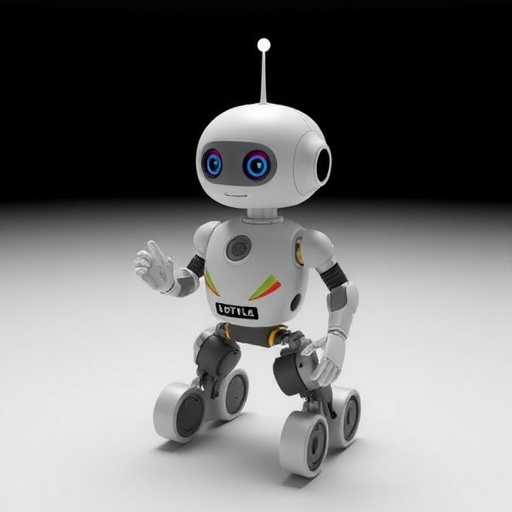
In the quest to bridge the divide between human cognition and artificial intelligence, researchers have unveiled a groundbreaking multisensory framework that integrates vision, touch, hearing, smell, and taste modalities through a self-powered, bioinspired architecture. This innovative approach challenges the traditional paradigms where multisensory processing in machines has remained limited, energy-intensive, and largely modular, lacking the seamless cross-modal integration emblematic of human sensory cognition. The new framework leverages triboelectric nanogenerators coupled with artificial neural networks to achieve autonomous, efficient, and adaptive sensory processing—a leap towards endowing machines with human-like perceptual and cognitive abilities.
At the heart of this pioneering system lies a triboelectric-sensing-mediated artificial neural network (TES-ANN), architected to emulate the distributed and hierarchical sensory neuron structures found in the human brain. The triboelectric effect enables the transduction of diverse environmental stimuli—including mechanical pressure, acoustic vibrations, and chemical interactions—into electrical signals without the need for external power sources. These signals are subsequently encoded into neural-like electrical spikes, mirroring the temporal spiking patterns of biological neurons. This encoding is critical for preserving the temporal dynamics of sensory inputs, facilitating richer, more context-aware processing in downstream neural module frameworks.
The TES-ANN framework transcends conventional sensory fusion by allowing active cross-modal associative learning and adaptive reconfiguration. In essence, information from one sensory modality can be translated into the neural representation of another, enabling not just recognition but also inference and imagination—functions previously exclusive to human cognition. For instance, tactile sensations acquired through touching handwritten digits are reconstructed into high-fidelity visual images with remarkable accuracy exceeding 97%, demonstrating the system’s proficiency in translating touch-derived data into visual representations.
This multisensory system’s auditory processing further exemplifies its cross-modal prowess. Sounds are not merely identified; they invoke corresponding visual, olfactory, and gustatory representations with an accuracy of approximately 94.6%. Such capability suggests an integrated cognitive mapping across sensory domains, akin to human synesthetic experiences where stimulation of one sense involuntarily triggers perceptions in another. This adaptive reconfiguration capability dramatically enhances the system’s contextual understanding, allowing machines to infer complex environmental cues through multimodal associations.
Beyond empirical recognition, the framework advances into non-empirical cognitive territories. After being trained on basic color-fruit associations, it can generate and visualize a previously unseen concept such as a “purple strawberry” derived solely from an auditory cue. This generative capacity points to an emergent form of machine imagination, marking a paradigm shift from passive data processing to active cognitive synthesis. The system models this by neurocomputational algorithms that simulate semantic association and cross-domain inference, historically a challenge for artificial intelligence frameworks.
Technically, the integration of triboelectric nanogenerators is key to the system’s energy autonomy. These nanogenerators harness mechanical energy from environmental interactions to drive sensory signal generation actively. This obviates the dependency on traditional power supplies, a critical bottleneck in the deployment of autonomous machines in real-world, energy-constrained scenarios. The energy efficiency of TES-ANN is a cornerstone attribute that sets it apart from conventional sensor networks and centralized AI models, which are typically power-hungry.
Crucially, the system’s hierarchical artificial neural modules are designed to mirror the brain’s layered sensory pathways. Each module is specialized for processing specific stimulus types but maintains bidirectional communication with other modalities, fostering dynamic sensory integration and feedback. This architecture supports scalable multisensory learning, permitting the system to continuously evolve and adapt to novel stimuli and environments without extensive retraining. The modular and scalable nature of TES-ANN positions it well for deployment in embodied intelligent systems that require real-time multisensory processing.
The research team behind this advancement represents a collaboration among the Beijing Institute of Nanoenergy and Nanosystems, the University of Chinese Academy of Sciences, Guangxi University, and the Georgia Institute of Technology. Their findings, published in the 2026 issue of eScience, highlight the feasibility and immense potential of triboelectric-driven multisensory cognition. This marks a significant milestone in the journey toward artificial intelligence systems that not only perceive but also comprehend and predict in ways akin to biological organisms.
Application-wise, the implications are far-reaching, poised to impact fields ranging from autonomous robotics to immersive interface technologies. Energy-autonomous robots equipped with such multisensory architectures could interpret complex environmental cues holistically, exhibiting improved contextual awareness and decision-making autonomy. For assistive technologies, such as prosthetics or rehabilitation devices, this could mean more natural, intuitive user experiences, bridging the divide between artificial devices and human sensory expectations.
Furthermore, the vision of camera-free object recognition technologies becomes viable through the system’s capability to infer visual representations from other sensory modalities, thereby offering privacy-preserving alternatives in sensitive environments. Virtual and augmented reality systems stand to benefit as well by leveraging cross-modal sensory synthesis for richer, more immersive user experiences, where generated sensory associations expand beyond the limitations of current hardware.
This transformative step of integrating triboelectric sensing with neural architectures also contributes significantly to embodied AI—the concept that intelligence arises through interaction with the physical environment. By producing machines that maintain high cognitive function while relying on ambient energy, the framework lays the foundational architecture for future intelligent agents capable of sustained autonomous operation in diverse, unstructured settings.
Importantly, the study’s interdisciplinary methodology underscores the convergence between materials science, neuroscience, and artificial intelligence. By harnessing novel nanomaterials for energy harvesting and sensor interfacing alongside advanced neural network modeling, the research exemplifies how bioinspiration can guide the design of next-generation AI systems. This holistic approach promotes the development of cognitive machines that do not merely process information but integrate, adapt, and imagine, approaching the complexity and efficiency of living brains.
As articulated by the study’s corresponding authors, this work heralds a future where machines move beyond narrow sensory recognition into robust cross-modal cognition and creative inference. The fusion of self-powered triboelectric technology with sophisticated neural algorithms marks a watershed moment in realizing intelligent systems that are both adaptable and energetically sustainable. This transformative approach instigates new research trajectories aiming to endow machines with cognitive faculties that have long been regarded as uniquely human.
Ultimately, these advances articulate a compelling vision for human–machine symbiosis, where devices seamlessly understand and interact with the world across multiple sensory dimensions. By bridging perception and inference within a self-sufficient framework, this bioinspired multisensory system maps a promising roadmap toward intelligent agents that think, learn, and imagine like us but without conventional power constraints—ushering in an era of truly autonomous and perceptive machines.
Subject of Research: Bioinspired multisensory integration and cross-modal learning via triboelectric sensing and artificial neural networks in energy-autonomous systems.
Article Title: Bioinspired triboelectric-driven multisensory framework with autonomous cross-modal adaptation
News Publication Date: March 2026
Web References:
DOI link
Journal: eScience (Link)
Image Credits: Yao Xiong, Yang Liu, et al.
Keywords
Triboelectric nanogenerators, multisensory integration, cross-modal learning, artificial neural networks, self-powered sensing, bioinspired AI, energy-autonomous robotics, cognitive inference, sensory reconfiguration, embodied intelligence, neural spike encoding, generative machine cognition
Tags: adaptive multisensory learningartificial neural networks for sensory processingautonomous robot cognitionbioinspired multisensory roboticscross-modal sensory integrationenergy-efficient sensory transductionhierarchical sensory neuron emulationhuman-like robot perceptionself-powered sensory systemstemporal spiking neural encodingtriboelectric nanogenerators in AItriboelectric-sensing-mediated ANN