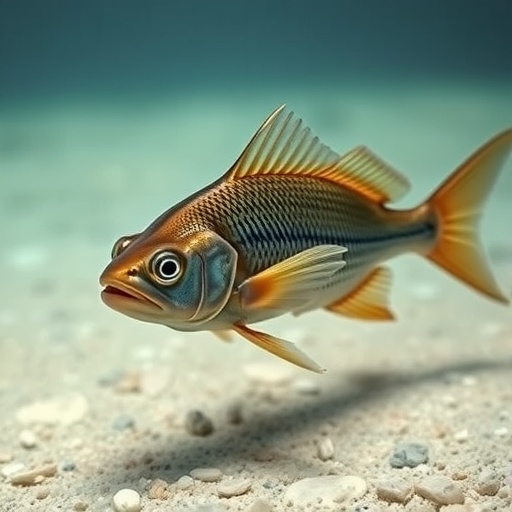
The incredible diversity of coral reef fish has long fascinated scientists and marine enthusiasts alike. New research now unveils a compelling reason behind this abundance: approximately 50 million years ago, certain fish evolved the ability to feed by biting and scraping food from hard surfaces such as coral reefs. This evolutionary innovation, researchers argue, set in motion a remarkable acceleration in the diversification of these species, leading to the stunning variety we observe today.
Evolutionary processes rarely proceed at a constant rate. Instead, they exhibit episodic surges of diversification punctuated by periods of relative stagnation. Such bursts often coincide with environmental upheavals or the emergence of novel traits that enable species to exploit previously untapped ecological niches. For fish, one of the key innovations was the development of a feeding strategy that allowed them to scrape algae, mollusks, and other organisms off solid substrates. This breakthrough transformed their evolutionary trajectory, particularly among reef-dwelling species.
In a study published in the Proceedings of the National Academy of Sciences, scientists from the University of California, Davis conducted an extensive phylogenetic analysis encompassing over 9,500 fish species. By categorizing these species according to their habitats—from the open water column to lake and ocean bottoms, and notably coral reef environments—they traced how rates of evolutionary diversification fluctuated over the past 350 million years. The results revealed that coral reef fish exhibited a pronounced spike in diversification rates shortly after the Paleocene-Eocene Thermal Maximum (PETM), a period marked by intense global warming and ecological reshuffling.
The PETM, occurring around 56 million years ago, was characterized by a dramatic rise in global temperatures by 5 to 8 degrees Celsius over roughly 200,000 years. This environmental upheaval triggered massive turnovers in marine ecosystems, especially affecting planktonic organisms and shallow-water corals. Following this event, fish species that developed the ability to bite and scrape food from hard surfaces exploited new feeding niches, effectively “resetting” the ecological playing field. This allowed these lineages to rapidly diversify and capitalize on newly available resources within complex reef environments.
One of the study’s most striking findings was the disparity in evolutionary velocity between fish inhabiting open water versus those occupying complex benthic habitats like reefs. The three-dimensional structure of coral reefs affords abundant opportunity for specialization and the evolution of novel feeding behaviors. Conversely, fish living in pelagic zones—where food resources are more homogeneously distributed in the water column—showed comparatively steady, less variable diversification rates. This highlights how environmental complexity and resource accessibility profoundly steer evolutionary dynamics.
Crucially, the fish groups driving this burst of diversification are those specialized in feeding by physically biting into the reef structure. These include well-known families such as parrotfish, butterflyfish, angelfish, surgeonfish, rabbitfish, and triggerfish. These taxa have evolved robust jaws and specialized dentition that enable efficient scraping and biting, facilitating exploitation of algae, sessile invertebrates, and coral polyps. In contrast, other reef-associated fish like snappers, groupers, and sea basses that feed primarily in mid-water exhibited no comparable increase in speciation rates, underscoring the direct link between feeding innovation and evolutionary success.
The research synthesis reinforces previously published studies from this laboratory that explored the morphological evolution of fish teeth and the biomechanics of biting. Biting stands out as a relatively recent and unique feeding mode in fish, dramatically expanding their dietary repertoire and ecological flexibility. This study scales that insight to a macroevolutionary level, demonstrating that the evolution of biting feeding modes catalyzed an unparalleled diversification pulse that continues to shape coral reef biodiversity today.
Beyond illuminating patterns of fish evolution, these findings also shed light on broader questions regarding the uneven distribution of biodiversity across habitats. Tropical coral reefs, with their intricate architecture and rich species interactions, emerge as hotspots not only of current biodiversity but also of evolutionary creativity. Freshwater systems, particularly in Africa, also show elevated diversity but involve different evolutionary dynamics. Meanwhile, vast expanses of open ocean sustain comparatively lower fish diversity, potentially constrained by reduced opportunity for niche differentiation.
The evolutionary implications of this study are profound. It emphasizes that the interplay between organismal traits—such as feeding apparatus and behaviors—and habitat structure governs the tempo of diversification. Coral reef environments, through their complexity and stability, have repeatedly functioned as cradles of speciation, fostering innovations that ripple through ecological networks. This tightly coupled relationship between environment and evolutionary potential underscores the fragile interdependencies sustaining marine ecosystems.
Moreover, the study highlights the lasting impacts of ancient climate events on marine biodiversity. The PETM’s legacy includes not only extinction pulses but also the creation of ecological space for adaptive radiations. Understanding how past climate fluctuations influenced evolutionary trajectories provides a vital context for predicting how contemporary climate change might reshape marine life in the coming centuries.
In summary, the explosive diversification of coral reef fish can be traced back to a pivotal evolutionary innovation: the ability to feed by biting and scraping on hard surfaces. This development emerged in a window following significant climatic and environmental upheaval, enabling fish lineages to access novel ecological niches and diversify at an unprecedented pace. It is this legacy of innovation and adaptation that underpins the radiant tapestry of coral reef biodiversity, offering a powerful example of how evolutionary processes operate at the interface of biology and environment.
This insight not only enriches our understanding of marine evolution but also underscores the importance of conserving coral reefs, which serve as both reservoirs and engines of biodiversity. Protecting these ecosystems safeguards the evolutionary potential they harbor—potential that has generated one of the most spectacular biological radiations on Earth.
Subject of Research: Animals
Article Title: Habitat-specific temporal variation in the pace of fish diversification
News Publication Date: 13-Apr-2026
Web References:
https://www.pnas.org/doi/10.1073/pnas.2533611123
Keywords: Evolutionary biology, Evolution, Marine biology, Morphology, Fish
Tags: adaptation to hard surface feedingcoral reef biodiversity increasecoral reef fish evolutiondiversification of reef fish speciesepisodic diversification in fishevolution of scraping feedingevolutionary innovation in marine speciesfish ecological niche specializationfish feeding adaptationmarine evolutionary biology studiesphylogenetic analysis of fishUniversity of California Davis fish research