In a groundbreaking genomic study published in Nature Plants, researchers have unveiled a nuanced and dynamic evolutionary history underlying the domestication of wheat. By conducting an in-depth analysis of ancient wheat grains dated between 3,000 and 6,000 years old, excavated from the southern Levant region, the team has illuminated the intricate genetic pathways that shaped one of humanity’s most vital staple crops. This work challenges the long-held linear model of wheat domestication and introduces a more complex narrative involving hybridization and multi-regional processes.
Wheat holds a special place in human civilization, commonly viewed as a singular domestication event marking the dawn of agriculture. However, the present genomic investigation offers compelling evidence that the domestication of wheat was far from a straightforward process. Instead, it was characterized by repeated hybridization events and gene flow across geographically distinct wild populations, a mosaic pattern that reflects both environmental pressures and human influence during the Neolithic period.
Central to wheat domestication are key mutations in genes that control spike shattering, an agricultural trait that prevents mature ears from dispersing their seeds naturally, thus allowing humans to harvest grain efficiently. Specifically, two genes, TtBtr1-A and TtBtr1-B, have emerged as crucial determinants of non-shattering spikes. The researchers demonstrate that these mutations did not occur in a single wild population; rather, they mutated independently in northern and southern wild populations of emmer wheat, a wild ancestor of domesticated wheat.
The research team utilized advanced genomic sequencing techniques on the ancient grain samples, enabling them to reconstruct the genetic landscape of early domesticated wheat. These findings clearly indicate that a foundational domestication event stemmed from the hybridization of the northern and southern wild populations, effectively merging the necessary genetic mutations into a single domesticated lineage. Remarkably, this hybridization occurred more than once, spawning distinct domesticated wheat lineages that later spread to other regions.
The discovery of this multi-stage domestication process overturns the simplistic narrative of a singular domestication center. Instead, it aligns with archaeological and environmental data that suggest a protracted and regionally interconnected process of wheat domestication. The hybrid lineages of domesticated wheat identified in the southern Levant share close genetic affinities with wheat varieties from geographically distant regions such as Ethiopia, the Arabian Peninsula, and India, highlighting early dispersal and adaptation.
Moreover, the study reveals that subsequent to these initial hybridizations, ancient domesticated grains underwent further genetic diversification. This diversification was fueled by gene flow from local wild emmer populations, contributing advantageous traits that enhanced adaptability and robustness. This dynamic exchange of genetic material underscores the complexity of crop evolution in response to both natural and anthropogenic pressures.
The authors emphasize that human selection and cultivation practices played a pivotal role in shaping these genetic profiles. Continuous back-crossing with wild relatives and the regional trading of grain materials likely facilitated the integration of diverse genetic traits. Such interactions created resilient and regionally adapted wheat populations, capable of thriving in varied climates and agricultural settings.
One of the striking outcomes of this research is the revelation of at least two independent hybridization events responsible for stable domesticated wheat genomes. Each event corresponds to the merging of different wild populations, each carrying mutations in one of the two seed dispersal genes. This dual-origin model challenges earlier hypotheses that domestication was a single, localized phenomenon driven by a solitary mutation event.
The team’s genomic reconstructions are supported by rigorous phylogenetic analyses, which provide temporal and spatial resolution for the domestication events. Additionally, the genomic data correlate with archaeological findings of wheat cultivation and utilization patterns, enriching our understanding of early agricultural societies and their relationship with plant domestication.
By underscoring the protracted timeline and geographic breadth of domestication, this study adds critical clarity to the evolutionary trajectory of wheat, illustrating that domestication was neither an isolated nor an instantaneous event. Instead, it was a mosaic process shaped by multiple independent hybridization events and ongoing human-facilitated gene flow across multiple fertile regions of the ancient Near East.
This research also has profound implications for modern agriculture. Understanding the genetic complexity and the origins of key domestication traits could inform breeding strategies aimed at enhancing resilience in current wheat varieties. Transferring valuable alleles derived from ancient gene pools back into contemporary cultivars might help address challenges posed by climate change and food security.
Furthermore, the study highlights the importance of integrating archaeobotanical findings with state-of-the-art genomic technologies to unravel the history of domesticated species. Such interdisciplinary approaches illuminate the interplay between natural selection, human agency, and environmental factors over millennia, enriching not only our scientific knowledge but also cultural understandings of agriculture’s origins.
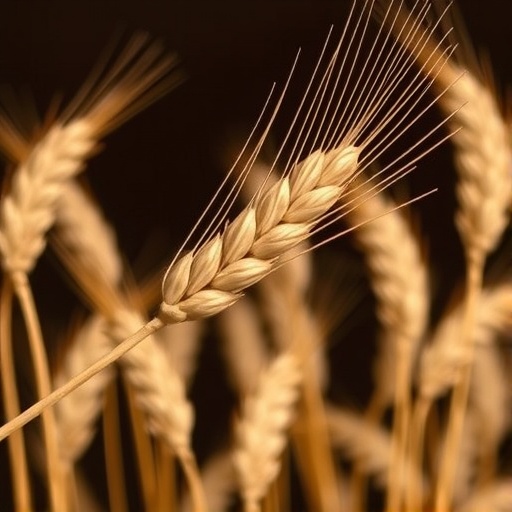
The artistic rendering accompanying the publication encapsulates these findings, depicting the hybridization and dispersal routes that gave rise to the vast diversity of domesticated wheat seen today. It visually reinforces the concept of a complex, interconnected network as opposed to a linear chain of domestication events.
In sum, this landmark study redefines wheat domestication as a multifaceted evolutionary process characterized by repeated hybridization between geographically separated wild populations, subsequent gene flow, and region-specific selective pressures. It provides a compelling narrative that aligns genomic data with archaeological context, offering a holistic view of how human cultivation practices and natural variation intertwined to produce a crop fundamental to civilizations worldwide.
Continued exploration of ancient crop genomes promises to further elucidate the complexities of agricultural origins, revealing how early farmers shaped biodiversity and, conversely, how plant adaptation influenced human societies. As the first such comprehensive ancient DNA study of wheat grains, this work lays a firm foundation for future investigations into crop domestication and evolutionary biology.
The revelations unearthed not only deepen our appreciation of wheat’s rich evolutionary past but also inspire innovative approaches in contemporary crop science. By decoding the intricate genetic pathways that led to domestication, scientists are better equipped to harness ancient genetic diversity in pursuit of sustainable food production for future generations.
Subject of Research: Evolutionary history and genomic analysis of ancient domesticated wheat grains
Article Title: Ancient grains illuminate the mosaic origin of domesticated wheat
Article References:
Lev-Mirom, Y., Ashkenazy, N., Klymiuk, V. et al. Ancient grains illuminate the mosaic origin of domesticated wheat. Nat. Plants (2026). https://doi.org/10.1038/s41477-026-02283-y
Image Credits: AI Generated
DOI: https://doi.org/10.1038/s41477-026-02283-y
Tags: ancient wheat grains genomic studycomplex wheat domestication modelgenetic pathways staple cropshuman influence on crop domesticationhybridization in wheat domesticationmulti-regional wheat domestication processesNeolithic agriculture genetic analysissouthern Levant ancient cropsTtBtr1-A gene spike shatteringTtBtr1-B gene non-shattering spikeswheat domestication evolutionary historywheat gene flow wild populations