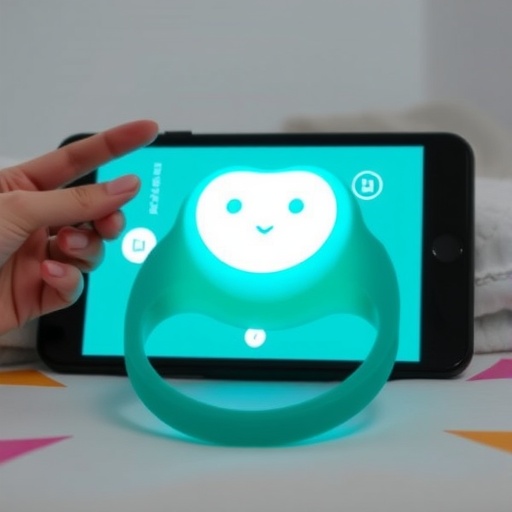
In an era increasingly dominated by digital interaction, researchers have turned their attention to the subtle yet profound effects that digital tools can have on emotional regulation, particularly in moments of stress. A new study led by S. Andic and F. Başbuğ, published in Pediatric Research in April 2026, explores the innovative concept of “digital pacifiers” and the power of brief, shared off-screen routines designed to alleviate stress. Their findings suggest that integrating carefully crafted digital interventions with real-world human connection can form a potent strategy to improve emotional resilience, especially among children and caregivers.
The study recognizes the growing prevalence of digital devices in everyday life, particularly in family settings where young children and parents often interact with screens. Digital pacifiers, conceptualized as digital tools or applications that soothe and comfort users during stressful moments, are positioned as modern analogues to traditional pacifiers. However, unlike the conventional objects that babies use for self-soothing, these digital counterparts are designed to be tools facilitating emotional regulation through engagement, distraction, or interaction that is deliberately limited in scope and duration.
A critical focus of the research was on the creation and implementation of brief shared off-screen routines. These routines are short, intentional activities undertaken jointly by a caregiver and child away from screens, following or during digital pacifier use. The researchers argue that these interactions are fundamental for establishing secure attachments and emotional support, which cannot be wholly replaced by digital engagement alone. Their experiments highlight how such hybrid approaches can synergistically boost stress regulation better than either digital or purely analog strategies alone.
To understand the efficacy of these interventions, the research employed a combination of physiological and behavioral measures. Participants in the study were observed and assessed for stress indicators such as cortisol levels, heart rate variability, and observable signs of distress or calming. The results were compelling: children and caregivers who used digital pacifiers in conjunction with shared off-screen routines demonstrated significantly lower stress markers and reported a higher subjective feeling of calm compared to control groups relying on either tool exclusively.
This nuanced balance underscores the importance of mindful technology use. The digital pacifier is not presented as a replacement for human contact but as a complementary enhancement that meets the modern realities of family life, where screen time is often inevitable. Through carefully designed interactions, these tools help manage emotional states by providing moments of distraction and calming that prepare both child and caregiver for meaningful, non-digital engagement.
Moreover, the routines shared off-screen emphasize activities such as storytelling, singing, or gentle physical touch, which promote neurobiological benefits linked with attachment and emotional security. These interactions are brief yet rich in emotional content, counteracting the isolating tendencies of digital immersion. The research points to the fact that the precise timing and sequencing of these routines relative to digital pacifier use are crucial to maximizing benefits.
From a developmental perspective, the study sheds light on how early exposure to digital media—when moderated by these thoughtful practices—does not inevitably lead to negative outcomes. Instead, it reframes digital tools as potential allies in nurturing emotional health, provided they are embedded within sensitive caregiving environments. The concept challenges prevailing assumptions that digital exposure is inherently detrimental for young children.
Technological innovation plays a central role in this concept. The researchers collaborated with software developers to create digital pacifier prototypes featuring calming visuals, interactive breathing exercises, and soothing soundscapes designed to engage without overstimulating. These prototypes were tested iteratively with families to refine features that best support stress reduction. The science behind the digital pacifier hinges on biofeedback and cognitive behavioral principles, merging technology with psychological insight.
Critically, the study’s scope reaches beyond infancy, encompassing older children and even adults in caregiver roles, highlighting the universal nature of stress and the shared benefit of these interventions. In modern households, where digital devices are ubiquitous, finding ways to integrate them harmoniously into emotional caregiving practices represents a significant advance.
The implications of this research are vast, suggesting applications in clinical settings, childcare, and home environments. Mental health professionals might incorporate digital pacifier protocols alongside traditional therapies, harnessing technology to facilitate stress management practices that are accessible and user-friendly. This integration offers a promising pathway to bridge the digital divide in mental health accessibility.
Furthermore, the results challenge educational and pediatric guidelines that often err on the side of restricting all screen time for young children. Instead, a more nuanced approach is warranted, one that values the quality and context of digital interactions over strict limitations. This study lends strong empirical support to the notion that digital tools, when thoughtfully designed and paired with human interaction, can be protective and restorative.
As digital landscapes continue to evolve, so too must our understanding of their psychological impacts. Andic and Başbuğ’s study opens new avenues for research at the intersection of technology, developmental psychology, and emotional health. Future directions include exploring personalized digital pacifiers adapted through machine learning to individual stress profiles and expanding the model to diverse cultural contexts.
In a world where stress is ubiquitous and often unavoidable, innovations that leverage technology to enhance emotional well-being are urgently needed. This pioneering research provides compelling evidence that the fusion of digital pacifiers with brief shared off-screen routines represents a powerful toolset for nurturing calm and connection, vital to healthy development and caregiving.
As society negotiates the integration of digital and analog life, these findings offer hopeful insights. By embracing technology as a companion rather than a competitor to human caregiving, we can foster resilient young minds and supportive family dynamics in the digital age. The study stands as a milestone, marking a thoughtful, science-driven path forward in the complex challenge of managing stress across generations.
Subject of Research: Digital pacifiers and brief shared off-screen routines for stress reduction in children and caregivers.
Article Title: Digital pacifiers and brief shared off-screen routines for stressful moments.
Article References: Andic, S., Başbuğ, F. Digital pacifiers and brief shared off-screen routines for stressful moments. Pediatr Res (2026). https://doi.org/10.1038/s41390-026-04965-x
Image Credits: AI Generated
DOI: 10.1038/s41390-026-04965-x
Tags: digital distractions for calmingdigital emotional regulation toolsdigital interventions in pediatric caredigital pacifiers for stress reliefemotional resilience in caregiversimpact of technology on child developmentinnovative stress relief methodsoff-screen routines for childrenpediatric emotional health researchscreen time management strategiesshared parent-child activitiesstress reduction in family settings