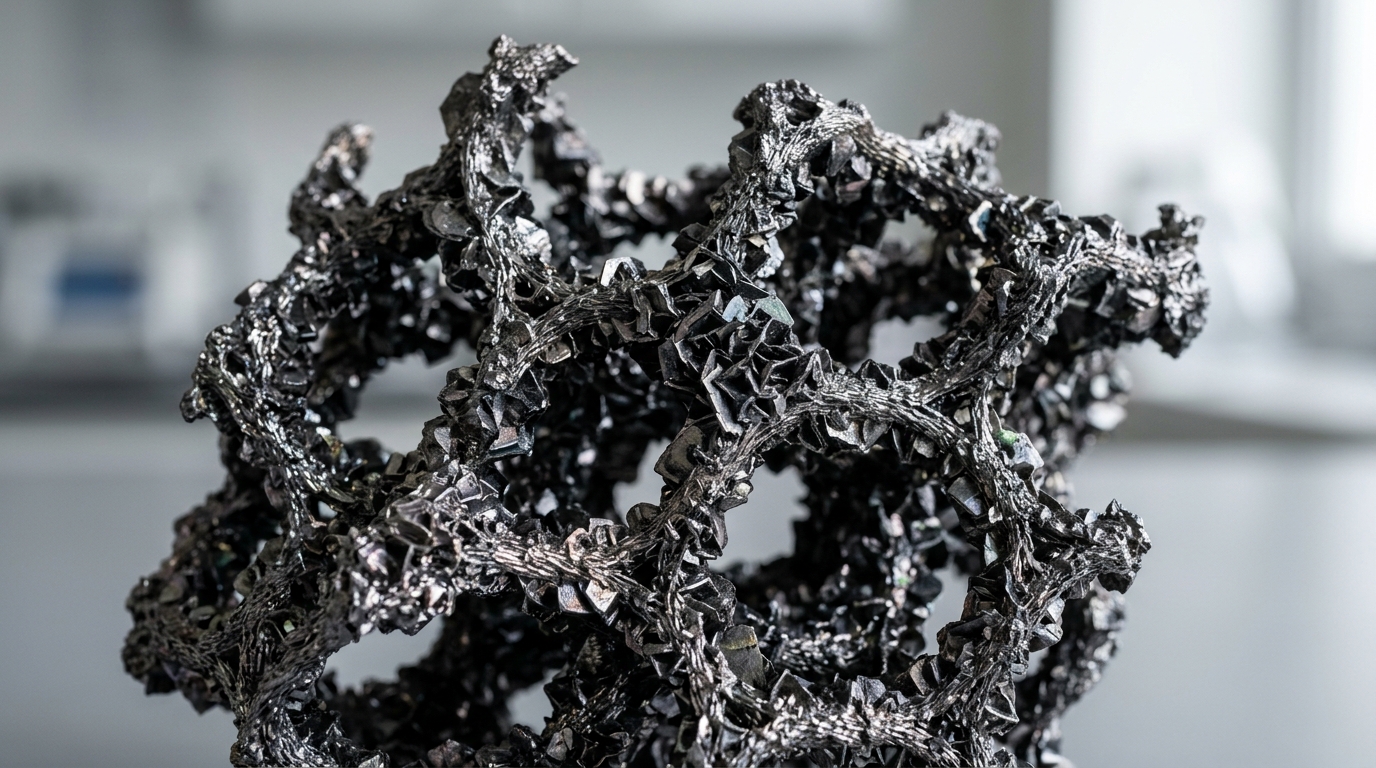
Published in the journal Discover Electronics, the study details a facile hydrothermal synthesis method that produces Ni₂CoS₄ spinel nanostructures with improved morphology and superior charge-storage capabilities. The primary finding indicates that CTAB acts as a morphology-directing agent during synthesis, leading to a more porous and interconnected structure that facilitates electrolyte ion transport. This structural modification results in higher specific capacitance and better cycling stability compared to pristine nickel-cobalt sulfide electrodes, positioning the material as a promising candidate for next-generation supercapacitors.
The research addresses a persistent challenge in the development of electrochemical supercapacitors, which are environmentally friendly energy storage systems often limited by the performance and durability of their electrode materials. While carbon-based materials are widely used, transition metal sulfides, oxides, and hydroxides can store significantly more energy due to faradaic charge transfer reactions. However, individual transition metal sulfides often suffer from weak cycling stability and low specific capacity at high current densities. To overcome these limitations, the study focuses on Ni₂CoS₄, a bimetallic sulfide that exhibits exceptional chemical stability and a high theoretical specific capacitance. The material contains built-in redox centers that demonstrate greater electrochemical activity than single-metal oxides or sulfides, yet it remains susceptible to structural instability caused by volume changes during ion insertion and extraction.
The synthesis process involved a hydrothermal method using nickel acetate and cobalt acetate as metal precursors and thiourea as the sulfur source. The reaction mixture was heated to 160 degrees Celsius for eight hours in a Teflon-lined stainless-steel autoclave. For the modified samples, a 0.1 M solution of CTAB was added dropwise after the introduction of thiourea, followed by continuous stirring for one hour before the autoclave step. This specific addition of the surfactant serves as a soft template during nucleation and growth, restricting crystal coalescence and preventing excessive particle agglomeration. The resulting CTAB-NCS composite was then annealed at 150 degrees Celsius for one hour and dried into a fine powder, ensuring that the surfactant’s influence on the crystal structure was systematically integrated into the material’s formation.
Structural characterization using X-ray diffraction confirmed that both the pristine and CTAB-modified samples formed a well-crystallized cubic spinel phase, matching the JCPDS Card No. 20-0782. Rietveld refinement analysis revealed that while the lattice parameters remained largely unchanged, the CTAB-NCS sample exhibited slightly broader and lower intensity peaks. This observation indicates a reduction in crystallite size and a possible increase in lattice microstrain due to the presence of the surfactant. The calculated dislocation density for the CTAB-NCS sample increased to approximately 1.18 × 10¹⁵ m⁻², compared to 9.69 × 10¹⁴ m⁻² for the pristine sample, suggesting a higher number of lattice defects. These structural modifications are attributed to CTAB’s role in suppressing crystallite growth, which ultimately increases the accessible surface area for electrochemical reactions.
Optical studies using UV-Visible spectroscopy revealed that the synthesized Ni₂CoS₄ films exhibit strong absorption across the visible region. The optical band gap was estimated to be 1.07 eV, highlighting the semiconducting nature of the material. This value was derived from Tauc plots assuming a direct allowed electronic transition, a model consistent with previous reports on related transition-metal sulfides. The presence of strong absorbance across the UV-visible wavelength range confirms the material’s potential for applications requiring specific optical properties, although the primary focus of the study remains on its electrochemical behavior. The thin films were deposited on silica glass substrates, and the absorption coefficient was calculated using a film thickness of 0.12 micrometers, determined by the weight difference method.
Surface morphology analysis via scanning electron microscopy provided visual evidence of the structural changes induced by CTAB. The pristine Ni₂CoS₄ sample displayed densely agglomerated nanoparticles with irregular clustering, forming a compact morphology with limited porosity. In contrast, the CTAB-assisted sample exhibited a more porous, loosely packed morphology with smaller, interconnected nanoparticles. This open nanostructure is critical for supercapacitor performance because it facilitates greater electrolyte accessibility and shorter ion-diffusion pathways. Energy-dispersive X-ray spectroscopy confirmed the elemental composition, detecting peaks for cobalt, nickel, and sulfur, along with carbon and oxygen signals attributed to the CTAB surfactant residues and surface oxidation. Fourier transform infrared spectroscopy further verified the adsorption of CTAB molecules on the sulfide surface, showing characteristic stretching vibrations of the alkyl chain that partially replaced surface hydroxyl and water groups.
Electrochemical performance was evaluated using cyclic voltammetry, galvanostatic charge-discharge, and electrochemical impedance spectroscopy in a 1 M KOH electrolyte. Cyclic voltammetry curves revealed pseudocapacitive behavior with noticeable redox peaks, indicating reversible faradaic reactions of nickel and cobalt species. The CTAB-NCS electrode delivered a specific capacitance of 280.45 F/g at a scan rate of 2 mV/s, significantly higher than the 215.30 F/g recorded for the pristine NCS electrode. As the scan rate increased to 20 mV/s, the specific capacitance decreased for both materials due to diffusion limitations, but the CTAB-modified electrode maintained a superior value of 65.20 F/g compared to 34.86 F/g for the pristine sample. This enhanced rate capability suggests that the porous structure allows for faster ion movement even under demanding conditions.
Galvanostatic charge-discharge measurements at a current density of 1 A/g further confirmed the superior charge-storage capability of the modified electrode. The CTAB-NCS electrode exhibited a specific capacitance of 155.55 F/g, whereas the pristine NCS electrode delivered 111.11 F/g. The corresponding energy density for the CTAB-NCS electrode was calculated to be 5.40 Wh/kg, compared to 3.86 Wh/kg for the pristine sample, with both materials maintaining a power density of approximately 250 W/kg. The near-linear voltage-time profiles observed in the charge-discharge curves indicate low internal resistance and improved charge transport characteristics. These results demonstrate that the morphological engineering achieved through CTAB incorporation directly translates to higher energy storage capacity in practical electrochemical testing.
Long-term durability was assessed through galvanostatic charge-discharge cycling tests over 3000 consecutive cycles. The CTAB-NCS electrode retained approximately 93% of its initial specific capacitance, while the pristine NCS electrode retained about 91%. The coulombic efficiency, calculated as the ratio of discharge time to charge time, was approximately 91.3% for the CTAB-NCS and 88.6% for the pristine NCS after 3000 cycles. These high efficiencies indicate highly reversible faradaic reactions and minimal irreversible side reactions during prolonged use. The minimal change in charge-discharge profiles after extensive cycling suggests excellent structural integrity, which is crucial for the practical applicability of supercapacitor devices in real-world applications where consistent performance over time is required.
Electrochemical impedance spectroscopy provided insights into the charge transport mechanisms at the electrode-electrolyte interface. The Nyquist plots were fitted using an equivalent circuit model, revealing that the pristine NCS electrode had a charge-transfer resistance of 0.8 Ω and a Warburg impedance of 5 Ω. In contrast, the CTAB-NCS electrode exhibited a slightly higher charge-transfer resistance of 1.2 Ω but a significantly reduced Warburg impedance of 2 Ω. This decrease in Warburg impedance indicates enhanced ionic diffusion at the interface, which is attributed to the porous morphology induced by CTAB. Although the charge-transfer resistance increased slightly, the overall improvement in ion transport characteristics outweighs this minor increase, leading to better electrochemical performance. The CPE values also suggested a more heterogeneous surface for the CTAB-modified sample, consistent with the complex nanostructure observed in microscopy.
The study acknowledges that while the specific capacitance values are promising, they are comparatively lower than those of some hierarchical and binder-free electrodes reported in the literature, which often incorporate conductive carbon supports or multicomponent heterostructures. However, the present work employs a simple hydrothermal synthesis followed by CTAB-assisted surface modification, offering a facile, cost-effective, and scalable approach. The authors emphasize that the primary contribution is the systematic correlation between CTAB-assisted morphology evolution and electrochemical properties, including crystallinity, optical properties, and ion diffusion kinetics. This comprehensive investigation establishes a direct link between surface engineering and enhanced supercapacitor performance, providing a clear pathway for optimizing transition metal sulfide electrodes.
In conclusion, the successful synthesis of CTAB-modified Ni₂CoS₄ nanostructures demonstrates that surfactant-assisted hydrothermal methods can effectively tailor the morphology and electrochemical properties of metal sulfides. The resulting material exhibits improved specific capacitance, higher energy density, and excellent cycling stability, making it a viable candidate for advanced supercapacitor applications. The findings highlight the importance of structural engineering in overcoming the limitations of pristine metal sulfides, such as agglomeration and poor ion transport. By providing a detailed analysis of the structural, optical, and electrochemical characteristics, the study offers valuable insights for the future development of high-performance hybrid electrode materials for energy storage systems.
Subject of Research: Enhanced electrochemical energy storage performance of CTAB-assisted hydrothermal Ni₂CoS₄ spinel nanostructures
Article Title: Enhanced electrochemical energy storage performance of CTAB-assisted hydrothermal Ni₂CoS₄ spinel nanostructures
Article References: Gunjal, V. B., Hase, Y. V., Pathan, A. S., Gapale, D. L., Baviskar, P. K., Arote, S. A., Navale, S. R., Bardapurkar, P. P., Dalvi, S. N., Zate, M. K., & Palve, B. M. (2026). Enhanced electrochemical energy storage performance of CTAB-assisted hydrothermal Ni₂CoS₄ spinel nanostructures. Discover Electronics, 3(1), Article 124. https://doi.org/10.1007/s44291-026-00273-0
Image Credits: AI Generated
DOI: 10.1007/s44291-026-00273-0
Keywords: Enhanced, electrochemical, energy, storage, performance, CTAB-assisted, hydrothermal, spinel, nanostructures, scientific research
News Source: Denise Maddox. (November 11, 2026). CTAB-Modified Nickel-Cobalt Sulfide Enhances Supercapacitor Performance. Scienmag.