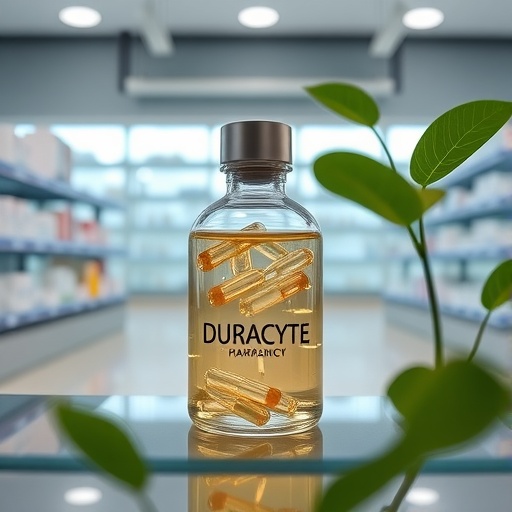
In a transformative leap for biotechnology, Houston-based RBL LLC has unveiled Duracyte, a groundbreaking biotech firm poised to revolutionize the delivery of biologic medicines through implantable “biohybrid pharmacy” devices. These unprecedented devices are engineered to continuously produce therapeutic proteins inside the human body, circumventing the conventional burdensome protocols of frequent injections and infusions that millions of patients currently endure. Duracyte’s innovative platform, underpinned by a substantial $45 million grant from the Advanced Research Projects Agency for Health (ARPA-H), marks a significant stride toward creating self-sustaining therapeutic systems designed to operate seamlessly within the human body over extended periods.
Central to Duracyte’s technology is the Hybrid Advanced Molecular Manufacturing Regulator (HAMMR), a sophisticated, rechargeable implantable device that integrates state-of-the-art biological sensing, dynamic drug modulation, and wireless communication in a single compact unit. Unlike traditional drug delivery systems, HAMMR continually monitors the patient’s biological signals and tumor microenvironments in real-time, enabling it to modulate therapeutic protein production adaptively based on physiological feedback. This precision medicine approach promises unparalleled treatment consistency by maintaining optimal therapeutic protein levels, thereby potentially minimizing adverse side effects and maximizing therapeutic efficacy.
One of HAMMR’s most groundbreaking features is its internal oxygen-generation system, a critical innovation that sustains the viability and functionality of the living therapeutic cells encapsulated within the device. Oxygen generation inside an implantable system is vital because it overcomes a key limitation faced by prior biohybrid devices: the dependency on external oxygen supply, which limits cell survival and therapeutic duration. By internally generating oxygen, HAMMR establishes a stable and supportive microenvironment, transforming the implant into a true “living pharmacy” that reliably produces biologic medicines around the clock.
Leading experts emphasize the transformative potential of such a platform. Daniel Anderson, co-founder of Duracyte and professor at the Massachusetts Institute of Technology, highlights how the continuous in vivo manufacturing of biologics, such as monoclonal antibodies and cytokines, represents a paradigm shift in therapeutic delivery. This approach replaces episodic drug administration with sustained protein production directly within the patient, reducing the logistical and physiological challenges of maintaining therapeutic drug levels often compromised by fluctuating systemic concentrations in traditional regimens.
Duracyte aims to rapidly transition this technology from laboratory innovation to clinical application. The company has announced plans to initiate a Phase 1 clinical trial later in 2026, targeting recurrent ovarian cancer, a disease notorious for its limited treatment options and poor prognosis. By focusing on this pressing unmet medical need, Duracyte’s initial clinical efforts seek to demonstrate both the safety and therapeutic advantages of HAMMR’s continuous biologic drug delivery in a patient population that could dramatically benefit from more consistent and tolerable treatment alternatives.
The clinical potential of HAMMR is amplified by its wireless communication capabilities, which enable remote monitoring and personalized treatment adjustments. This aspect allows clinicians to remotely track the device’s performance and the patient’s response, offering a dynamic feedback loop for optimizing therapy without invasive procedures. Such connectivity underscores a growing trend toward integrating biomedical devices with digital health platforms, increasing the overall precision and convenience of patient care.
Duracyte is not working in isolation but as part of a robust multidisciplinary consortium supported by ARPA-H’s Targeted Hybrid Oncotherapeutic Regulation (THOR) project. This collaborative effort brings together top-tier research institutions—including Rice University, The University of Texas MD Anderson Cancer Center, Stanford University, Carnegie Mellon University, Northwestern University, and the University of Houston—alongside industry leaders such as Chicago’s CellTrans. The consortium combines expertise across cell engineering, biomaterials science, clinical oncology, and engineering to accelerate the translation of implantable biohybrid devices from bench to bedside.
At the forefront of this collaboration is Omid Veiseh, professor of bioengineering at Rice University and a key founding member of Duracyte. Veiseh points to years of converging technological advances in cellular therapies, biomaterials innovation, and implantable electronics as the foundation for HAMMR’s development. By harnessing these diverse scientific disciplines and integrating real-time sensing with adaptive drug release, the team has engineered a platform capable of delivering continuous, precisely regulated biologic medicines—a feat that might redefine therapeutic standards across multiple disease domains.
Houston’s emergence as a biotechnology hub is further reinforced by Duracyte’s successful launch. The city’s unparalleled clinical infrastructure, epitomized by the Texas Medical Center, offers fertile ground for innovative biotech ventures. Coupled with premier academic institutions and a burgeoning ecosystem of investors and entrepreneurs, Houston is poised to accelerate the commercialization of next-generation therapies. Paul Wotton, managing partner of RBL and Duracyte co-founder, underscores the city’s unique ability to fast-track ambitious biomedical innovations from idea inception to patient care.
Duracyte represents the third major biotech creation by RBL LLC, following Sentinel BioTherapeutics—developing localized cytokine cancer therapies—and SteerBio, focused on regenerative treatments for lymphedema. This growing portfolio epitomizes RBL’s strategic model of rapidly forming high-impact ventures based on pioneering medical technologies. The launch of Duracyte underscores the transformative potential of leveraging integrated expertise in cell and materials science, bioengineering, and clinical research to advance therapeutic innovation rapidly.
The scientific community eagerly anticipates the forthcoming clinical trials, which will provide critical data on the safety, efficacy, and long-term durability of HAMMR-mediated therapeutic protein production. Should positive results be realized, this implantable living pharmacy device could precipitate a profound shift in how biologic therapies are administered across a spectrum of chronic and acute diseases. By minimizing patient burden and enhancing therapeutic consistency, Duracyte’s platform holds promise to elevate patient quality of life and redefine standards of care in personalized medicine.
This pioneering endeavor exemplifies the future trajectory of medicine, in which engineered biological systems harmonize with advanced materials and digital interfaces to create self-regulating, patient-tailored therapeutic networks. Duracyte’s implantable HAMMR device heralds a new era where the body itself becomes a dynamic manufacturing site for lifesaving biologics, offering hope for more sustained, precise, and patient-centric treatment paradigms in oncology and beyond.
Subject of Research: Implantable biohybrid devices for sustained in vivo therapeutic protein production.
Article Title: Duracyte Launches “Living Pharmacy” Biohybrid Devices to Revolutionize Biologic Therapy Delivery.
News Publication Date: April 15, 2026.
Web References: https://www.rbl-llc.com/
Image Credits: Photo by Jared Jones/Rice University.
Keywords: Biohybrid devices, implantable therapeutics, biologic drug delivery, HAMMR, continuous protein production, ovarian cancer, real-time biosensing, adaptive drug delivery, oxygen generation, cellular therapies, bioengineering, personalized medicine, ARPA-H, biotechnology innovation, living pharmacy.
Tags: ARPA-H funded biotech projectsbiologic medicine delivery innovationscontinuous therapeutic protein productiondynamic drug modulation systemsHouston biotech innovation hubimplantable biohybrid pharmacy devicesoxygen-generating implantable devicesprecision medicine in biotechnologyreal-time biological sensing technologyrechargeable implantable drug regulatorstumor microenvironment monitoringwireless communication in medical implants