In a groundbreaking study recently published in Nature Communications, researchers from the Institute for Systems Biology (ISB) have shed new light on the elusive process by which melanoma cells develop resistance to targeted therapies. Their findings challenge the long-held view that drug resistance is predominantly a late-stage genetic event. Instead, they reveal a startlingly early and coordinated cellular response that propels cancer cells into a drug-tolerant state, well before any permanent mutations take hold.
The study focuses on melanoma, the deadly skin cancer frequently driven by mutations in the BRAF gene, which has been a prime target for precision therapies. While BRAF inhibitors have offered significant initial success in controlling tumor growth, many patients eventually experience relapse as tumors adapt and resist treatment. Understanding the mechanisms behind this adaptability has been the holy grail of cancer research — a pursuit that this new study advances with remarkable clarity.
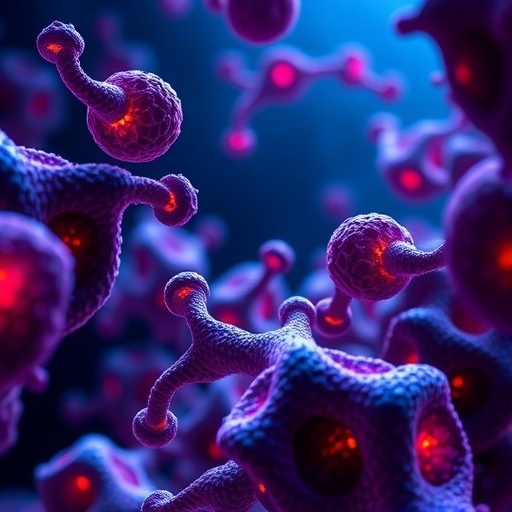
Using a sophisticated combination of high-resolution time-series multi-omics technologies, paired with advanced computational modeling, the researchers effectively created a “molecular movie” of the melanoma cells’ response as it unfolds in real time. This innovative approach allowed them to capture the earliest events occurring within hours to days following the commencement of therapy, going beyond traditional before-and-after snapshots that miss the dynamic nature of resistance development.
The results reveal that melanoma cells don’t passively wait for resistance-conferring mutations to emerge. Rather, they initiate a swift and deliberate identity shift, transiently converting from a drug-sensitive state into a more primitive, drug-tolerant phenotype. This transformation is orchestrated through two distinct “transcriptional waves” — sequential cascades of gene expression changes that progressively remodel cellular identity and function.
Crucially, this state change is reversible. When treatment pressure is withdrawn, cells do not merely revert along the original path but instead follow an alternate trajectory that retains what the authors describe as a “molecular memory” of exposure. This hysteresis effect implies that the cellular history of drug treatment influences future behavior, underscoring the complexity of drug resistance beyond simple genetic alterations.
Central to this early adaptive response is the stress-responsive transcription factor NF-κB, which acts as a molecular sentinel translating therapeutic stress into survival signals. Targeted therapies disrupt antioxidant defenses in melanoma cells, causing an accumulation of reactive oxygen species (ROS). This oxidative stress activates NF-κB, triggering a cascade of epigenetic modifications that alter the chromatin landscape — effectively rewriting the instructions the cell uses to execute its biological programs.
One critical target of this NF-κB-driven chromatin remodeling is SOX10, a transcription factor essential for maintaining the melanocytic identity of these cancer cells. As SOX10 and related genes are epigenetically silenced, the cells lose their differentiated characteristics and adopt a state poised to tolerate drug exposure, enabling survival through the initial therapeutic onslaught.
These findings redefine our understanding of cancer resistance by framing it as a dynamic interplay of cell state transitions influenced by stress-induced epigenetic reprogramming, rather than solely a consequence of accumulated genetic mutations. The implications extend far beyond melanoma; similar stress-driven adaptive pathways identified in lung and colon cancers suggest a conserved, broader mechanism at play across multiple tumor types.
The translational potential of this research is profound. By recognizing that the earliest escape strategies deployed by cancer cells are reversible and mediated by epigenetic mechanisms, new therapeutic avenues open up. Combining existing targeted drugs with agents that disrupt these stress response pathways, particularly those modulating chromatin remodeling and NF-κB activity, could prevent cancer cells from ever entering the drug-tolerant state, thereby extending treatment durability and improving patient outcomes.
Moreover, this study highlights the pressing need to shift clinical strategies. Traditionally, oncologists have focused on countering resistance after it emerges, often through combination therapies targeting multiple mutations. However, intervening upstream—before resistance is genetically encoded—by impeding the transient survival states may prove far more effective.
The ISB research team emphasizes that this paradigm shift underscores the importance of developing biomarkers capable of detecting early cell state changes during therapy, enabling real-time monitoring of treatment responses. Such dynamic tracking could inform adaptive treatment regimens tailored to prevent the entrenchment of resistant states.
While still at the preclinical stage, these insights imperatively call for clinical translation. In the fight against cancer, where the development of resistance remains a formidable barrier to long-term remission, the opportunity to thwart resistance at the earliest stages offers compelling hope.
In summary, the study unravels a sophisticated, temporally ordered escape mechanism in melanoma cells under targeted therapy. The role of NF-κB as a molecular trigger of chromatin remodeling and subsequent drug-induced dedifferentiation bridges cellular stress responses with epigenetic plasticity and cancer survival strategies. The concept that treatment itself inadvertently spurs a cellular state transition responsible for rapid drug tolerance redefines future directions in precision oncology.
This major advance enhances our molecular understanding of therapy resistance and sets the stage for novel therapeutic approaches designed to preempt resistance pathways, potentially transforming outcomes for patients afflicted with melanoma and other malignancies characterized by similar escape mechanisms.
Subject of Research: People
Article Title: Sequential transcriptional waves and NF-κB-driven chromatin remodeling direct drug-induced dedifferentiation in cancer
News Publication Date: 15-Apr-2026
Web References:
https://doi.org/10.1038/s41467-026-71349-4
References:
Wei Wei et al., Nature Communications, 2026. “Sequential transcriptional waves and NF-κB-driven chromatin remodeling direct drug-induced dedifferentiation in cancer.”
Keywords: Melanoma, drug resistance, BRAF mutation, NF-κB, chromatin remodeling, epigenetics, reactive oxygen species, transcriptional waves, drug tolerance, cancer therapy, cell state transitions, precision oncology
Tags: BRAF inhibitor resistancecomputational modeling in oncologydrug-tolerant cancer cell statesearly cellular drug tolerancehigh-resolution multi-omics cancer studymelanoma drug resistance mechanismsmelanoma relapse and treatment failuremolecular movie cancer researchnon-genetic cancer adaptationprecision medicine in melanomareal-time cancer cell dynamicstargeted therapy melanoma