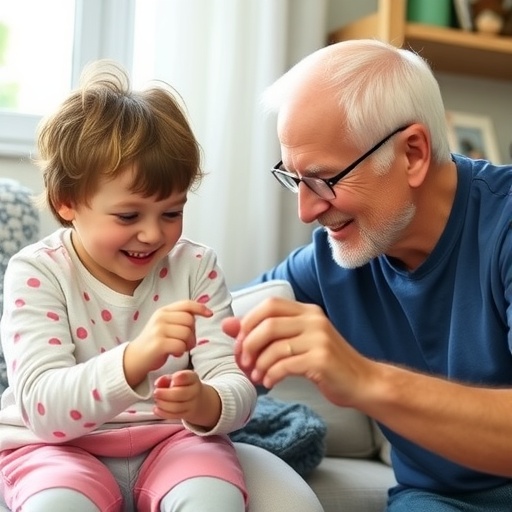
In a groundbreaking study poised to reshape our understanding of healthy aging, researchers have unveiled compelling evidence supporting intergenerational play as a potent strategy for enhancing wellness among older adults. The study, conducted with an extensive cohort of 1,293 Chinese seniors, highlights how shared play experiences with grandchildren not only foster social bonds but significantly bolster cognitive, emotional, and physical health, heralding a new paradigm in geriatric well-being.
The global demographic landscape is shifting dramatically, with populations aging at unprecedented rates in many countries, including China. This demographic trajectory presents both challenges and opportunities for healthcare systems and societies alike. Central to addressing these challenges is the need for innovative, accessible, and culturally appropriate interventions that promote healthy aging. Within this context, the Chen et al. study offers valuable insights into a naturally occurring, culturally embedded practice—grandparents engaging in playful activities with their grandchildren—that may serve as a highly effective, low-cost tool to promote longevity and quality of life.
At the heart of this research lies the exploration of play’s multifaceted benefits beyond its traditional association with childhood development. Play in older adults, especially when shared intergenerationally, is hypothesized to stimulate neuroplasticity — the brain’s capacity to reorganize and adapt in response to new experiences. Cognitive decline, often associated with aging, is a major concern, and activities that potentially delay such decline are invaluable. The study’s findings suggest that playful interactions with grandchildren may enhance executive functioning, memory retention, and overall cognitive resilience, attributed to the complex mental engagement and social stimulation these activities require.
Emotional well-being also emerged as a significant outcome of intergenerational play. The study documented marked reductions in symptoms related to depression and loneliness among seniors who regularly participated in playful interactions with their grandchildren. This reinforces the concept that social engagement is a crucial determinant of mental health in later years. The nurturing of affectionate bonds through play offers psychological nourishment, alleviates isolation, and contributes to a sense of purpose and belonging—elements often compromised by aging.
Physiologically, the study delved into how physical activity intertwined with play contributed to improved health markers in older adults. Many forms of intergenerational play inherently involve movement—be it gentle walking, interactive games, or outdoor recreational activities—facilitating cardiovascular health, motor skills maintenance, and overall physical fitness. This holistic approach to health harnesses the joyful aspects of play, converting what might otherwise be perceived as a chore into an engaging, sustainable lifestyle practice.
The researchers utilized a robust methodological framework, combining quantitative assessments with qualitative interviews to capture the nuanced dynamics of intergenerational play’s impact. Cognitive function was measured through standardized neuropsychological tests, while emotional and psychological well-being were evaluated using validated scales for depression and loneliness. Physical health parameters were monitored through a combination of self-reports and objective indicators such as blood pressure and mobility assessments. This multidimensional approach enabled a comprehensive understanding of the interplay between social behavior and health outcomes.
One of the most striking revelations of the study is how cultural context moderates the effects of intergenerational play. In China, where filial piety and family cohesion are deeply ingrained societal values, grandparents often play a pivotal role in child-rearing, fostering natural environments for intergenerational engagement. This cultural backdrop amplifies the beneficial effects observed, underscoring the importance of culturally tailored interventions in public health initiatives aimed at older populations.
The implications of these findings extend beyond the individual, resonating with public health policy and community programming. Governments and healthcare providers may consider integrating structured intergenerational play programs into aging and family services. Such programs could be designed to promote regular, meaningful interaction between older adults and younger family members, potentially reducing healthcare costs by mitigating age-related disease progression through enhanced cognitive and emotional health.
Moreover, the study opens avenues for technological innovation by suggesting that digital platforms and virtual reality could be harnessed to facilitate intergenerational play, especially in contexts where physical proximity is limited. Such technologies might replicate or augment the positive effects of shared play experiences, broadening access and inclusion for seniors living apart from their grandchildren.
The researchers caution that while the observed associations are robust, longitudinal studies are needed to establish causal pathways and examine long-term effects. Future research may also explore variances across different types of play and their distinct cognitive and emotional impacts. Additionally, investigating biological mechanisms, such as changes in neurotrophic factors or stress hormones induced by social play, would deepen scientific understanding of why and how play influences aging physiology.
This study’s innovative approach, bridging social behavior, psychology, and gerontology, represents a significant contribution to aging research. It shifts the discourse from solely medical interventions toward lifestyle and social determinants of health, emphasizing that play—a fundamental, often undervalued human activity—retains profound relevance throughout life’s later stages.
In the context of a world grappling with the twin challenges of increasing aging populations and rising prevalence of dementia and depression among seniors, these insights signal an accessible, joyful intervention path. Encouraging grandparents and grandchildren to regularly engage in play may become a cornerstone of holistic healthy aging strategies, blending personal fulfillment with measurable health benefits.
Public awareness campaigns could amplify this message, motivating families to integrate playful interactions into their regular routines. Community centers, elder support organizations, and schools might partner to create inclusive intergenerational programs that celebrate play’s power and promote societal cohesion.
Ultimately, the study invites us to reconsider societal narratives around aging, highlighting that growth, learning, and joy are lifelong processes. Play, often relegated to childhood, can be a vital source of strength, connection, and vitality for older adults, affirming the universal human capacity for wellness across generations.
The research by Chen and colleagues not only underscores the scientific merits of intergenerational play but also offers a heartwarming vision of aging enriched by family, interaction, and joy. As the quest for healthy longevity continues, such simple, culturally resonant strategies may well become critical tools in empowering older adults to thrive in body, mind, and spirit.
Subject of Research: Healthy aging and intergenerational social engagement through play.
Article Title: Play together with grandchildren: a potential useful strategy for promoting healthy aging suggested by the evidence of 1,293 Chinese older adults.
Article References:
Chen, H., Fang, Y., Chen, F. et al. Play together with grandchildren: a potential useful strategy for promoting healthy aging suggested by the evidence of 1,293 Chinese older adults. BMC Geriatr (2026). https://doi.org/10.1186/s12877-026-07465-z
Image Credits: AI Generated
Tags: cognitive health in seniorscultural practices in aging Chinaemotional well-being in older adultsgeriatric wellness interventionsgrandparent-grandchild relationshipshealthy aging strategiesintergenerational play benefitslongevity and quality of lifelow-cost aging solutionsneuroplasticity and agingphysical health and agingsocial bonding across generations