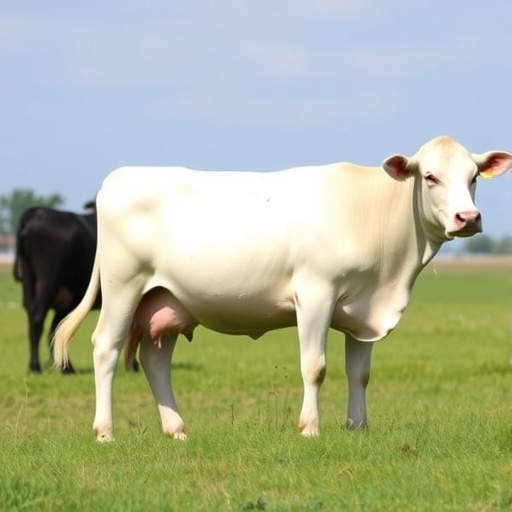
In the intricate world of beef production, the efficiency with which cattle convert feed into usable energy stands as a critical determinant of sustainability and profitability. Recent advancements at the University of Tennessee Institute of Agriculture (UTIA) are poised to revolutionize our understanding of these biological processes. Led by Dr. Phillip Myer, an associate professor and UT AgResearch Faculty Fellow, a multidisciplinary team is embarking on a groundbreaking five-year study, backed by a $650,000 grant from the USDA National Institute of Food and Agriculture. This work delves into the complex, intertwined roles of cattle genetics, ruminal microbiota, and cellular biology to uncover new pathways toward enhancing feed efficiency.
At the heart of this research lies the rumen, a specialized fermentation chamber in the bovine stomach that houses a complex microbial ecosystem essential for nutrient breakdown. The microbial populations within the rumen not only facilitate the digestion of fibrous plant material but also orchestrate critical biochemical transformations that impact the animal’s overall metabolism. However, these microbial communities are not static; their composition and function are influenced by a constellation of factors, including the host animal’s genetic makeup. By analyzing the ruminal microbiome alongside the genetic and cellular profiles of Angus cattle housed at UT’s Plateau AgResearch and Education Center, the researchers aim to map the dynamic interactions that govern nutrient absorption and utilization.
Prior investigations by Myer and his colleagues have illuminated the significant influence of host genetics on the ruminal microbial ecosystem. Microbes within the rumen are both shaped by, and in turn shape, the genetic expression patterns of the animal, creating a feedback loop that defines feed efficiency. This project seeks to extend these findings by applying cutting-edge genomic and transcriptomic technologies to precisely identify the myriad cell types comprising the rumen wall. Through single-cell RNA sequencing and other molecular tools, the research will characterize the expression profiles of these cells, shedding light on how they interface with the microbial residents to regulate nutrient transport and metabolism.
The complexity of this host-microbiome interface is compounded by the diversity and functional repertoire of the ruminal microbes themselves. The team plans to employ metagenomic and metatranscriptomic approaches to catalog and characterize the microbial taxa present, elucidating their specific biochemical roles within the rumen environment. Such analyses will enable the identification of key microbial genes involved in fiber degradation, volatile fatty acid production, and other metabolic pathways critical to cattle nutrition. By integrating microbial data with host genetic information, the project aims to pinpoint genetic markers and biological mechanisms that modulate feed utilization efficiency.
Central to this initiative is the convergence of several scientific disciplines—genetics, microbiology, molecular biology, and animal science—each offering unique insights into cattle metabolism. Dr. Jonathan Beever, director of the UTIA Genomics Center for the Advancement of Agriculture, brings expertise in genomics and computational biology, facilitating the data-intensive analyses required. Meanwhile, Dr. Troy Rowan focuses on the genetic improvement of metabolic traits, leveraging animal breeding strategies to translate biological insights into tangible gains on the farm. Together, this team embodies a holistic approach that transcends traditional siloed research.
The practical implications of this study are profound. Feed constitutes the largest input cost in beef production, and even marginal improvements in feed efficiency can translate into significant economic and environmental benefits. By deciphering the genetic and microbial determinants of feed conversion, the research holds promise for developing targeted breeding programs that select for animals with naturally optimized gut environments. Furthermore, microbial interventions—such as probiotics tailored to augment beneficial ruminal populations—could complement genetic strategies, fostering a synergistic approach to improving cattle nutrition.
Additionally, the research emphasizes the importance of the rumen epithelium, a tissue often overlooked in previous studies. This barrier not only protects the host from pathogens but also serves as a critical interface for nutrient absorption. Understanding the cell-type specificity and molecular signaling pathways within the rumen wall could unveil novel targets for enhancing nutrient uptake efficiency. These insights might inform the design of feed additives or management practices that promote rumen health and function.
From a methodological perspective, the integration of multi-omics data sets represents a significant challenge and innovation within this project. Coordinating genomic, transcriptomic, and metagenomic analyses requires sophisticated computational frameworks capable of handling large-scale data and extracting biologically meaningful patterns. Such integrative systems biology approaches are at the frontier of agricultural sciences, enabling a more comprehensive understanding of complex biological systems than ever before.
The outcomes of this research will be disseminated through educational programming and industry partnerships, ensuring that developments benefit a wide array of stakeholders, from ranchers to feed manufacturers. This translation of scientific knowledge into actionable strategies underscores the mission of the University of Tennessee Institute of Agriculture—to deliver “Real. Life. Solutions.” that enhance agricultural productivity while supporting sustainability goals.
Moreover, the project exemplifies the vital role of federal funding in advancing agricultural innovation. With a $10 million allocation distributed among 19 projects nationwide, the USDA’s investment signals a national commitment to addressing critical challenges in animal nutrition, growth, and lactation. The UTIA team’s focused exploration of microbial-host interactions positions them at the vanguard of this effort, potentially setting a benchmark for future research in ruminant biology.
As the study progresses, the detailed portrayal of the rumen microbiome and its genetic connections could also contribute to broader scientific fields. Insights gained here may inform ecological and evolutionary studies of symbiotic relationships, as well as biotechnological applications aimed at harnessing microbial systems for sustainable production. The ripple effects of this work thus extend well beyond beef cattle, touching multiple domains where microbial symbiosis plays a central role.
Ultimately, this research embodies a new paradigm in animal agriculture, one that integrates molecular genetics, microbiology, and systems biology to optimize production efficiency from the inside out. By unlocking the biological secrets of the bovine gut, the University of Tennessee team is charting a course toward a more sustainable and profitable future for the beef industry, with benefits that resonate across food systems, economies, and ecosystems alike.
Subject of Research: The interplay between genetics, rumen microbiota, and cellular biology influencing nutrient absorption and feed efficiency in beef cattle.
Article Title: Unlocking the Genetic and Microbial Secrets of Cattle Feed Efficiency
Web References: https://utia.tennessee.edu/
Image Credits: Photo courtesy UTIA
Keywords: Agriculture, Genetics, Microbiology, Beef Production, Feed Efficiency, Rumen Microbiome, Cattle Genetics, Animal Nutrition, Metagenomics, Genomics
Tags: Angus cattle genetic analysisbovine rumen fermentation processescattle feed efficiency researchcellular biology in cattle nutritionenhancing beef production sustainabilitylivestock feed conversion optimizationmultidisciplinary cattle biology researchrumen microbiome and cattle geneticsruminal microbial ecosystem in cattlesustainable beef production technologiesUSDA funded cattle nutrition researchUTIA cattle genetics study