Malignant cutaneous melanoma remains one of the most formidable adversaries in modern oncology, notorious for its aggressive invasiveness and high metastatic potential. Globally, it stands out as the deadliest form of skin cancer, accounting for the majority of skin cancer-related mortalities. Traditional management of this malignancy heavily relies on surgical excision aimed at eradicating the tumor mass. However, this seemingly straightforward approach harbors intrinsic limitations. Complete tumor clearance is often challenging, with microscopic residual cancer cells frequently left behind, paving the way for recurrence and diminished patient prognosis. Moreover, postoperative healing presents a separate but equally daunting clinical hurdle, particularly in cases involving extensive tissue excision.
Acral lentiginous melanoma (ALM), a specific and notable subtype of cutaneous melanoma, further complicates treatment paradigms. Predominantly affecting the palms, soles, and nail beds, ALM demonstrates distinct biological behaviors and a higher incidence in certain ethnic populations. The anatomical locations implicated by ALM manifest unique clinical challenges, particularly because these are high-mobility sites subjected to constant mechanical stress. Conventional bulky wound dressings applied post-surgically in these regions are prone to dislodgement, especially during joint movement. This recurrent detachment not only compromises the wound microenvironment crucial for healing but also significantly undermines therapeutic efficacy, exposing patients to increased risk of postoperative complications and tumor recurrence.
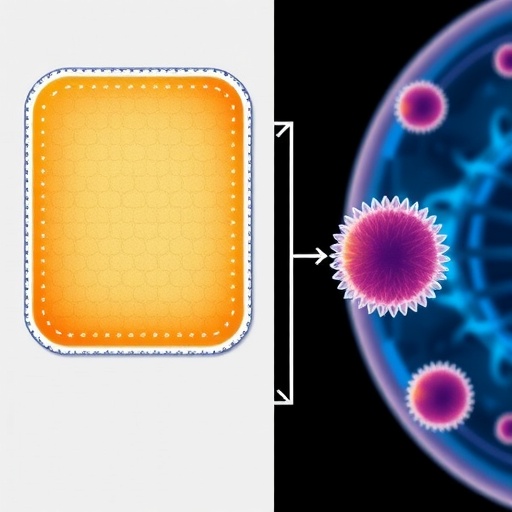
Addressing these intertwined challenges, researchers have embarked on pioneering efforts to engineer advanced wound dressings that transcend traditional modalities. The recent development of a nanocomposite hydrogel wound patch, designated as MxNd/yCe@M SAC, represents a transformative leap in melanoma postoperative care. This innovative patch harnesses the synergistic properties of nanomaterials and polymer hydrogels to provide a multifunctional platform tailored explicitly for melanoma surgery wounds. Designed with an integrated, cascaded sequential therapy strategy, this system seeks to concurrently mitigate tumor recurrence and promote robust wound regeneration, embodying a sophisticated therapeutic paradigm shift.
The composition of MxNd/yCe@M SAC integrates multiple elements at the nanoscale to orchestrate a controlled therapeutic response. Rare earth elements such as neodymium (Nd) and cerium (Ce) are embedded within the hydrogel matrix to exploit their unique physicochemical and bioactive properties. These nanoparticles facilitate potent anticancer effects through reactive oxygen species (ROS) generation and catalytic activity, selectively targeting residual melanoma cells at the excision margins. This nanocatalytic activity forms the cornerstone of the sequential therapy method, ensuring that any lingering malignant cells are efficiently eradicated post-surgery, thereby significantly reducing the risk of local tumor recurrence.
Simultaneously, the hydrogel scaffold provides an optimal environment for wound healing. Its viscoelastic and adhesive properties are meticulously engineered to maintain robust contact with the wound bed, even in mechanically dynamic regions such as joints afflicted by ALM. This ensures that therapeutic agents remain localized, and the wound is shielded from environmental contaminants, which are critical factors for accelerating tissue repair processes. Importantly, the hydrogel’s porous architecture not only supports nutrient and oxygen permeability but also facilitates cellular infiltration and proliferation, essential for re-epithelialization and collagen deposition.
The cascade therapeutic mechanism is a particularly compelling aspect of this advanced hydrogel patch. Initially, the nanocomposite generates localized ROS, selectively inducing apoptosis in residual melanoma cells without inflicting significant damage on surrounding healthy tissues. Following this antitumor phase, the system transitions into a pro-healing mode by modulating the wound microenvironment. It downregulates inflammatory responses and enhances angiogenesis through controlled release of bioactive ions from the incorporated nanoparticles. This sequential modulation ensures a seamless transition from tumor suppression to tissue regeneration, maximizing therapeutic benefit in both dimensions.
Experimental validation of MxNd/yCe@M SAC has demonstrated promising outcomes. In preclinical models simulating ALM surgical wounds, the patch adhered securely to anatomical sites prone to disturbance by joint motion, maintaining therapeutic efficacy throughout the healing phase. Histological analyses revealed marked reductions in tumor cell viability adjacent to the wound margins, coupled with accelerated granulation tissue formation and epidermal remodeling. These findings attest to the multifunctional capability of the hydrogel dressing in addressing the dual burdens of melanoma recurrence and compromised wound repair.
From a materials science perspective, the nanocomposite hydrogel embodies cutting-edge advances in biomedical engineering. The integration of rare earth nanoparticle catalysis within a biocompatible polymer matrix exemplifies a multidisciplinary approach, leveraging nanotechnology, oncology, and regenerative medicine principles. The stability of the hydrogel under physiological conditions and its resilience against mechanical shear forces highlight meticulous design considerations tailored to the unique biomechanical environment of ALM-affected anatomical regions.
Clinically, the potential impact of such a wound patch is profound. By providing sustained, localized anticancer activity in the immediate postoperative period and actively supporting wound healing, MxNd/yCe@M SAC could transform the therapeutic landscape for melanoma patients. The reduction in tumor recurrence would translate directly into improved long-term survival rates, while enhanced wound healing would minimize complications such as infection, dehiscence, and prolonged morbidity. Moreover, its application could reduce the necessity for repeated surgical interventions, thus alleviating patient burden and healthcare costs.
Notably, the innovation embodied in this hydrogel patch also addresses a critical unmet need specific to ALM’s anatomical predilection. Traditional dressings’ poor adhesion and lack of flexibility have hampered effective treatment in these mobile regions. The nanocomposite’s tailored mechanical properties and bioactive functionality collectively overcome these limitations, offering a durable and responsive solution that conforms to the dynamic movements of joints without compromising its therapeutic role.
Future directions for this technology involve clinical translation, including human trials to validate safety, efficacy, and patient tolerability. Optimization of nanoparticle concentration, hydrogel formulation, and therapeutic dosing schedules may further enhance outcomes. Additionally, there is scope for incorporating personalized medicine approaches, tailoring the hydrogel composition based on individual tumor biology and wound characteristics, to maximize effectiveness.
In sum, the development of the MxNd/yCe@M SAC nanocomposite hydrogel patch represents a pioneering convergence of nanotechnology and regenerative strategies poised to elevate melanoma postoperative care. By addressing the fundamental challenges of residual tumor eradication and wound healing in a single, integrated platform, this innovation holds promise for transforming clinical outcomes in cutaneous melanoma, especially in challenging contexts such as acral lentiginous melanoma. The sophisticated design and demonstrated preclinical success herald a new era in smart wound dressings that could set a standard for future oncologic and regenerative therapies.
Subject of Research: Nanocomposite hydrogel wound patch for melanoma postoperative therapy
Article Title: MxNd/yCe@M SAC: A Cascaded Nanocomposite Hydrogel for Enhanced Postoperative Melanoma Therapy and Wound Healing
News Publication Date: Not provided
Web References: Not provided
References: Not provided
Image Credits: Image courtesy of EurekAlert! / [journal/source not specified]
Keywords
Melanoma, Acral Lentiginous Melanoma, Nanocomposite Hydrogel, Wound Healing, Postoperative Therapy, Nanoparticles, Reactive Oxygen Species, Tumor Recurrence, Regenerative Medicine, Rare Earth Elements, Neodymium, Cerium, Catalytic Therapy
Tags: advanced wound dressings for melanomaimmune modulation in melanoma treatmentmechanical stress impact on wound healingmelanoma treatment in ethnic populationsnanocomposite hydrogel patch for melanomaovercoming surgical excision limitationspostoperative tumor eradication technologyprevention of melanoma recurrence post-surgerytargeted therapy for cutaneous melanomatissue regeneration after melanoma surgerytreatment challenges of acral lentiginous melanomawound healing in high-mobility anatomical sites