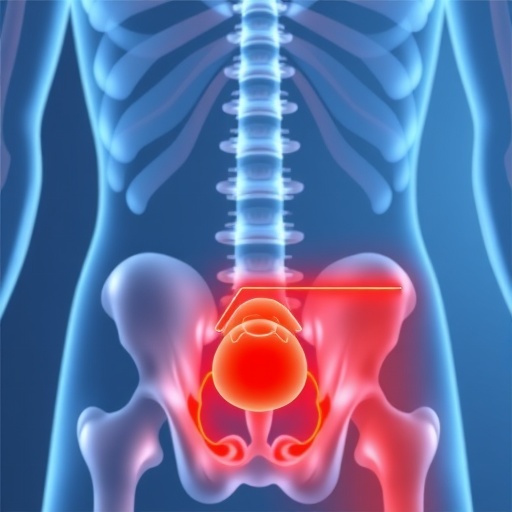
Bladder cancer, a malignancy originating from the urothelial lining of the bladder, remains one of the most prevalent cancers diagnosed in the United States, particularly notable for its early-stage diagnosis in the form of non-muscle invasive bladder cancer (NMIBC). NMIBC is characterized by tumor confinement to the superficial layers of the bladder wall, sparing the muscular layer. Despite timely detection and intervention, NMIBC presents a significant clinical hurdle due to its extraordinarily high recurrence rate. This persistent challenge has driven researchers to seek advances that not only improve detection but also guide more effective personalized treatment regimens.
In current clinical practice, patients diagnosed annually with NMIBC—numbering over 60,000 in the U.S.—undergo an initial surgical procedure known as transurethral resection of bladder tumor (TURBT). This surgery removes visible tumors from the bladder lining. Subsequent treatment traditionally includes the administration of bacillus Calmette-Guérin (BCG), an immunotherapeutic agent delivered via bladder instillations. BCG therapy is designed to stimulate the patient’s immune system to target residual microscopic cancerous cells, thereby reducing the risk of recurrence. However, the clinical trajectory following TURBT and BCG varies widely between patients; some achieve durable remission with surgery alone, while others eventually relapse even after a full course of BCG. Until recently, clinicians have lacked robust tools to accurately predict individual patient outcomes in response to these treatments.
The implications of prognostic uncertainty are vast. BCG not only carries the burden of treatment-related adverse effects, including cystitis and systemic symptoms, but also suffers from a chronic global supply shortage that can limit patient access. For patients destined to experience relapse, delays in detecting recurrent disease until it becomes visible through conventional cystoscopy can result in missed opportunities for early and potentially more effective therapeutic intervention. This critical gap underlines the urgent need for better molecular diagnostics to stratify patients’ risk and customize treatment.
A transformative breakthrough emerged from an interdisciplinary collaboration involving the Stanford Departments of Urology and Radiation Oncology, together with the Stanford Cancer Institute. A landmark study, recently published in the prestigious journal Cell, reports the development of a novel noninvasive urine-based molecular diagnostic test capable of detecting minimal residual disease (MRD) after initial bladder cancer treatment. This assay leverages liquid biopsy techniques to identify tumor-derived DNA fragments shed into the urine, offering unprecedented sensitivity for surveillance and risk stratification.
Liquid biopsies are rapidly evolving as a front-line tool for cancer monitoring due to their ability to detect circulating tumor DNA with high precision from accessible biological fluids. In bladder cancer, urine represents a particularly advantageous medium, reflecting the tumor microenvironment directly. However, the Stanford researchers uncovered a significant biological confounder termed “clonal cystopoiesis,” wherein normal urothelial cells accumulate age-related, cancer-associated mutations that could mimic the presence of tumor DNA in urine samples. This phenomenon necessitated a refinement of existing molecular assays.
To address this issue, the Stanford team devised an innovative statistical approach designed to filter out these “background” mutations arising from non-malignant clonal expansions within the bladder epithelium. By computationally correcting for this field effect, the refined assay significantly enhanced the specificity and accuracy of urine tumor DNA detection. This breakthrough capability enabled the differentiation of patients who were effectively cured by surgery alone from those who required—and benefited from—adjuvant BCG immunotherapy.
When deployed prospectively in a cohort undergoing surgery followed by BCG, the enhanced liquid biopsy provided highly prognostic information. Detectable tumor DNA post-BCG treatment predicted nearly inevitable recurrence, whereas clearance of tumor DNA corresponded with favorable long-term outcomes. Remarkably, this molecular surveillance outperformed standard cystoscopy in some cases, identifying impending relapse even when cystoscopic evaluations appeared normal. This points to the potential for earlier, preclinical detection of recurrence, facilitating timely clinical interventions.
Delving deeper into molecular response dynamics, the study delineated three distinct treatment response groups based on tumor DNA kinetics throughout therapy: surgery responders, where tumor DNA vanished after surgical excision; BCG responders, characterized by residual tumor DNA post-surgery that diminished following immunotherapy; and non-responders, showing persistent or increasing tumor DNA despite BCG. This stratification underscores the assay’s utility not only in surveillance but also in mechanistically understanding tumor biology and treatment sensitivity.
Crucially, correcting for the clonal cystopoiesis field effect was indispensable for these insights. It eliminated false-positive signals stemming from mutation-rich benign urothelium that had hampered prior molecular detection efforts. The refined assay could now reliably attribute tumor DNA clearance or persistence to true cancer cell eradication or persistence, offering a molecular lens into the relative efficacy of surgery and immunotherapy for individual patients.
Molecular profiling further revealed differential biological drivers underlying response phenotypes. Tumors resistant to surgery exhibited gene expression patterns linked to proliferative and invasive phenotypes, suggesting intrinsic aggressive biology. In contrast, tumors amenable to BCG exhibited higher mutational burdens and active immune microenvironments, factors that render the cancer more immunologically visible—and thus susceptible to immunotherapy. These findings provide a biological rationale for tailored therapeutic approaches based on pre-treatment molecular tumor characterization.
This study’s implications extend profoundly into routine clinical practice. Presently, the standard approach prescribes BCG immunotherapy broadly to intermediate- and high-risk NMIBC patients after surgery because physicians cannot reliably identify those who are already molecularly cured by resection alone. The introduction of a field-effect-corrected urine assay offers the promise of personalized treatment decision-making: sparing patients without residual disease from unnecessary BCG, prioritizing limited BCG resources for those with confirmed molecular residual disease, and enabling early treatment escalation in high-risk patients to prevent progression to muscle-invasive disease.
Moreover, this approach could refine patient selection for clinical trials of novel therapeutics by identifying molecular subgroups most or least likely to respond to specific interventions. Reduction in false positives and non-invasive testing would also alleviate patient anxiety and decrease reliance on frequent, invasive cystoscopic exams, improving quality of life and healthcare resource utilization.
Beyond bladder cancer, the concept of age-related clonal mutation fields within epithelial tissues—the so-called field effect—has been documented in other organs including lung and colon. As liquid biopsy technologies become mainstream across diverse cancer types and sample types, integrating field-effect corrections to distinguish benign mutation backgrounds from true malignant signals will be critical for maximizing diagnostic accuracy and clinical utility.
If validated in larger, multi-institutional cohorts, this molecular urine test paradigm could revolutionize bladder cancer management, shifting the standard of care away from uniform protocols toward precision oncology models. Clinicians might soon rely on a simple urine sample to decide when to safely discontinue therapy or when to intensify treatment regimens, optimizing therapeutic impact while minimizing toxicity and costs. This represents a pivotal step forward in transforming bladder cancer care into a truly patient-specific discipline driven by cutting-edge molecular diagnostics.
Subject of Research: Cells
Article Title: Molecularly Informed Urine-Based Minimal Residual Disease Detection Transforms Bladder Cancer Management
News Publication Date: 19-Feb-2026
Web References: http://dx.doi.org/10.1016/j.cell.2025.12.054
Keywords: Urology, Cancer, Bladder Cancer, Non-Muscle Invasive Bladder Cancer, Liquid Biopsy, Tumor DNA, Bacillus Calmette-Guérin, Immunotherapy, Clonal Cystopoiesis, Molecular Diagnostics, Minimal Residual Disease, Personalized Medicine
Tags: advancements in bladder cancer diagnosticsBCG immunotherapy for bladder cancerbladder cancer early detectionbladder cancer immunotherapy outcomesbladder cancer recurrence preventionclinical challenges in NMIBC managementinnovative urine test for cancer detectionnon-muscle invasive bladder cancer recurrencepersonalized bladder cancer treatment strategiestransurethral resection of bladder tumor procedureurothelial cancer treatment innovationsurothelial carcinoma diagnosis methods