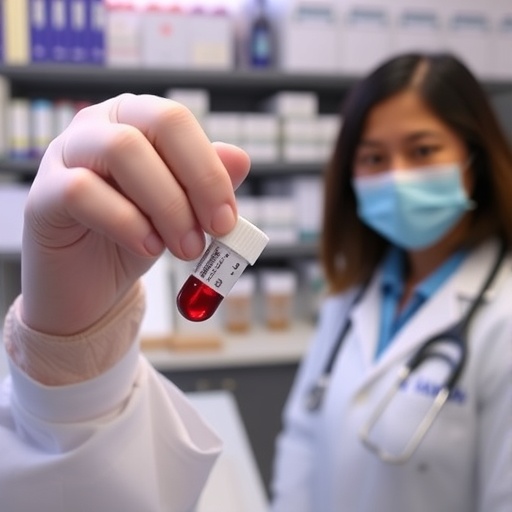
A groundbreaking advancement in the realm of early disease detection has emerged from UCLA, where scientists have engineered a blood test capable of detecting a spectrum of cancers, liver diseases, and organ abnormalities through the nuanced analysis of DNA fragments circulating in the bloodstream. This innovative approach, detailed in the prestigious journal Proceedings of the National Academy of Sciences, promises a more accessible and cost-effective method for comprehensive health monitoring, potentially transforming current paradigms in both oncology and internal medicine.
The innovation, named MethylScan, hinges on the concept that cell-free DNA (cfDNA)—minute strands of genetic material shed into the bloodstream during the natural lifecycle of cells—can be meticulously analyzed to extract meaningful biological signals. Since virtually every organ continuously releases cfDNA as cells die and regenerate, the blood serves as an intricate ledger of molecular health, offering a window into the body’s internal environment that spans beyond conventional imaging and tissue biopsy methods.
Dr. Jasmine Zhou, a leading pathologist and senior author of the study, emphasizes the critical nature of early cancer detection. She points out that survival rates substantially improve when malignancies are identified in their nascent stages rather than after metastasis. Technologies like MethylScan aim precisely to capture disease markers at these crucial early moments, potentially enabling clinicians to intervene more effectively and improve long-term outcomes for patients worldwide.
Unlike earlier liquid biopsy technologies that focus predominantly on detecting somatic mutations within tumor DNA—an approach that often necessitates extensive and costly deep sequencing—MethylScan employs a sophisticated analysis of DNA methylation patterns. These epigenetic marks, comprising chemical modifications that regulate gene expression, exhibit tissue specificity and alter distinctly during oncogenic or pathological processes. Hence, methylation profiling offers a richer, multi-dimensional insight into the state of various organs and the presence of disease.
One of the central technical challenges addressed by the researchers involves the overwhelming background of cfDNA derived from normal blood cells, which can obscure signals from diseased tissues. The team developed enzymatic techniques to selectively degrade unmethylated DNA fragments—predominantly originating from hematopoietic cells—thereby enriching the sample for methylated DNA fragments. This targeted enrichment enhances signal-to-noise ratio, reducing the sequencing depth and costs substantially while preserving diagnostic sensitivity.
The practical implications of this enrichment are profound. According to the study, effective sequencing depth requisite for reliable methylation profiling of each sample is approximately 300×, achievable with just 5 gigabases of sequencing data. This efficiency dramatically lowers the projected cost per assay, making it economically feasible for widespread screening programs and routine clinical application, a significant stride toward equitable healthcare solutions.
In a validation trial comprising 1,061 participants—including patients diagnosed with cancers of the liver, lung, ovary, and stomach, individuals suffering from multiple liver diseases, patients with benign pulmonary nodules, and healthy controls—machine learning algorithms were trained to decode complex methylation signatures. These computational models demonstrated robust performance, detecting 63% of cancers overall with a specificity of 98%. Notably, the test identified approximately 55% of cancers in early stages, a critical benchmark for improving prognosis.
MethylScan’s utility extends beyond cancer detection; it excels in liver disease surveillance, particularly among high-risk cohorts such as those with liver cirrhosis or chronic hepatitis B virus infection. The assay detected nearly 80% of liver cancer cases at a specificity slightly exceeding 90%, underscoring its potential to inform clinical decision-making and surveillance strategies in hepatology.
Moreover, the ability to attribute methylation signals to their tissue of origin marks a transformative advantage. Accurately locating the source organ of abnormal DNA methylation enables clinicians to follow up positive blood results with targeted imaging or diagnostic procedures. This localization capability mitigates the challenge of false positives and reduces diagnostic ambiguity, improving patient trajectories and resource utilization.
Highlighting its versatility, MethylScan not only discerns cancerous states but also differentiates between various types of liver pathologies. Its capacity to distinguish between viral hepatitis and metabolic-associated liver disease with around 85% accuracy indicates a promising alternative to invasive liver biopsies—a procedure often fraught with risk and patient discomfort. This diagnostic precision could revolutionize management pathways for chronic liver conditions globally.
Although the current findings are based on preliminary studies requiring larger-scale validation through prospective clinical trials, the research team remains optimistic. They envisage a future where a single, affordable blood test serves as a universal surveillance tool, efficiently detecting a broad array of diseases far earlier than traditional methods allow, thus catalyzing a shift toward preventive healthcare.
Dr. Wenyuan Li, co-corresponding author and co-developer of the method, underscores that blood-based methylation profiling transcends current diagnostic frontiers. By encapsulating a comprehensive molecular snapshot of the body’s health status, this technology could redefine screening, monitoring, and even therapeutic response assessment in diverse medical disciplines.
In conclusion, the UCLA team’s groundbreaking work harnesses the subtle language of DNA methylation in cfDNA, transforming it into a clinical beacon that could illuminate the earliest signs of multiple cancers and organ dysfunction. Supported by the National Cancer Institute, this study lays the foundation for widespread adoption of liquid biopsy methodologies that are simultaneously precise, affordable, and expansive in scope—bringing us closer to the ambitious goal of universal disease detection through a simple blood draw.
Subject of Research: Development of a blood-based DNA methylation assay for multi-cancer and liver disease detection
Article Title: DNA methylation profiling in cell-free DNA enables multi-cancer, liver disease, and organ health detection
News Publication Date: Not specified
Web References: http://dx.doi.org/10.1073/pnas.2518347123
References: Proceedings of the National Academy of Sciences, article DOI 10.1073/pnas.2518347123
Keywords: liquid biopsy, cell-free DNA, DNA methylation, cancer detection, liver disease, early diagnosis, epigenetics, multi-organ disease detection, cfDNA profiling, machine learning in diagnostics, non-invasive biomarkers
Tags: affordable disease detection methodscell-free DNA analysiscfDNA biomarkers for organ healthcomprehensive health monitoring blood testearly cancer detection blood testearly detection of organ abnormalitiesinternal medicine diagnostic innovationsliver disease blood testmulti-cancer screening blood testnon-invasive cancer diagnosticsoncology advancements in liquid biopsyUCLA MethylScan technology