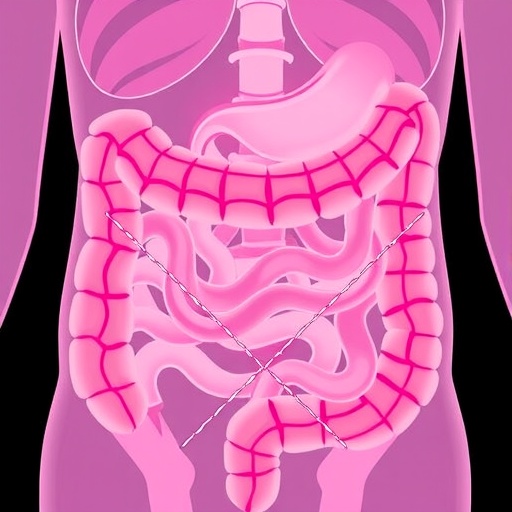
Colitis-associated colorectal cancer (caCRC) represents a compelling and increasingly significant subset of colorectal malignancies, arising predominantly in patients afflicted with chronic inflammatory bowel diseases such as ulcerative colitis and Crohn’s disease. As global incidence rates of inflammatory bowel disease (IBD) climb steadily, the population at risk for caCRC expands correspondingly, pressing the scientific and medical communities to unravel the complex biological underpinnings of this disease. Unlike sporadic colorectal cancer, caCRC emerges through a distinct pathogenic process intricately linked with chronic inflammation, epithelial injury, and dysregulated immune responses within the gastrointestinal tract. This interplay places caCRC at the nexus of inflammation and oncogenesis, offering a unique window into tumorigenesis driven by a protracted immune state coupled with genetic and environmental factors.
At the clinical forefront, caCRC often manifests after a prolonged course of intestinal inflammation, signaling a protracted evolution from inflammatory insult to oncogenic transformation. Patients with longstanding IBD face a nuanced risk landscape for caCRC, where the cumulative burden of mucosal damage, regenerative hyperplasia, and persistent oxidative stress converge to foster a carcinogenic milieu. Distinct from traditional sporadic colorectal cancer, caCRC frequently involves multifocal dysplasia and may present with flat or subtle lesions that complicate early detection. These clinical nuances emphasize the need for vigilant endoscopic surveillance and targeted diagnostic strategies tailored specifically to the inflammatory milieu of IBD-affected colons.
Delving deeper into the epithelial compartment, the tumor epithelium in caCRC displays unique molecular and histopathological features that underscore its inflammatory roots. Unlike sporadic colorectal cancer that often harbors mutations in the APC gene early in its progression, caCRC tends to accumulate a distinct pattern of genetic alterations, including early p53 mutations that precede dysplasia. Moreover, aberrations in pathways governing DNA repair, apoptosis, and cell cycle regulation reflect an adaptive response to an environment rife with inflammatory cytokines and reactive oxygen species, which exert mutagenic pressure on the epithelium. This genetic landscape contributes not only to neoplastic transformation but also to the altered behavior of cancer cells, influencing growth kinetics and invasion patterns distinctive to caCRC.
Beyond the epithelial cells themselves, the tumor microenvironment in caCRC is a dynamic and heterogenous ecosystem, heavily influenced by stromal cells that critically shape tumor development and progression. Fibroblasts, endothelial cells, and extracellular matrix components interact in a complex dialogue with the tumor epithelium, modulating pathways linked to inflammation, tissue remodeling, and angiogenesis. Stromal cells can adopt activated phenotypes that sustain chronic inflammation and promote tumorigenesis, releasing cytokines, growth factors, and matrix metalloproteinases that facilitate cancer cell proliferation and invasion. This stromal remodeling further exemplifies how chronic inflammation creates a permissive niche for cancer evolution, emphasizing the significance of non-epithelial compartments in caCRC pathophysiology.
Crucially, immune cell populations infiltrating the tumor microenvironment in caCRC serve double-edged roles, mediating tumor suppression as well as tumor promotion depending on the context and cellular milieu. Innate immune cells such as macrophages and neutrophils often skew towards pro-inflammatory, tumor-promoting phenotypes under chronic inflammatory conditions, secreting tumorigenic mediators like nitric oxide and various interleukins. Conversely, adaptive immune cells including cytotoxic T lymphocytes may exert anti-tumor effects by recognizing and eliminating neoplastic cells, although their function is frequently compromised in the immunosuppressive environment fostered by caCRC. Regulatory T-cells and myeloid-derived suppressor cells further complicate this landscape by attenuating effective immune surveillance, enabling immune evasion and tumor progression.
The gut microbiome exerts a pivotal influence on the pathogenesis of caCRC, representing a critical yet complex modulator of inflammatory and neoplastic processes. Dysbiosis, or the imbalance in microbial communities, is a hallmark of IBD and appears to amplify inflammation, disrupt epithelial barrier integrity, and modulate immune responses in ways that favor tumor development. Certain microbial species have been implicated in producing genotoxic substances or metabolizing dietary components into carcinogens, thus directly contributing to oncogenic mutations and inflammation. Moreover, microbial signaling through pattern recognition receptors triggers cascades of inflammatory cytokines and growth factors, establishing a feedback loop that perpetuates both microbial imbalance and tumor-promoting inflammation.
The heterogeneity of caCRC extends into its pathophysiological characteristics, reflecting variability in genetic, epigenetic, and environmental influences that converge to shape disease course and treatment responsiveness. Tumors may differ in their mutation spectra, immune cell infiltrates, stromal composition, and microbial associations, underscoring the complexity of caCRC as a multifaceted disease entity. This heterogeneity poses a significant challenge for therapeutic targeting, necessitating approaches that can account for individual tumor biology and the dynamic interplay between inflammation, immunity, and microbiota. Understanding the spectrum of caCRC phenotypes will be crucial for developing precision medicine strategies tailored to this unique form of colorectal cancer.
Translational implications of these discoveries in caCRC pathophysiology are profound, opening avenues for innovative therapeutic modalities that specifically address the inflammatory and immune components of the disease. Strategies aimed at modulating inflammatory pathways, restoring immune surveillance, and correcting microbial dysbiosis hold promise for improved prevention and treatment outcomes. Targeted agents inhibiting pro-tumorigenic cytokines, immune checkpoint therapies designed to reinvigorate anti-tumor immunity, and microbiome-based interventions including probiotics or fecal microbiota transplantation are under active investigation. The goal is to integrate these modalities into personalized treatment frameworks that reflect the individual’s unique inflammatory milieu and tumor biology.
The evolving understanding of caCRC calls for a multidisciplinary approach that integrates gastroenterology, oncology, immunology, and microbiology to holistically address disease mechanisms and patient management. Emerging diagnostic tools leveraging molecular and microbial biomarkers have the potential to refine risk stratification and early detection beyond conventional endoscopy. Coupling such diagnostic advances with tailored therapeutic regimens informed by comprehensive molecular profiling could revolutionize the landscape of caCRC care. This paradigm shift is essential given the substantial morbidity and mortality associated with caCRC, and the unmet clinical need for more effective prevention and therapy.
Critical to advancing caCRC research is the continued elucidation of the cellular and molecular players orchestrating the transition from chronic inflammation to malignancy. Cutting-edge technologies such as single-cell RNA sequencing and spatial transcriptomics provide unprecedented resolution into cellular heterogeneity and intercellular communication within tumors. These approaches have already begun to reveal novel stromal and immune cell subsets with distinct pro- or anti-tumor functions, as well as key signaling pathways driving tumorigenesis. Integrating these insights will refine mechanistic models of caCRC and identify new therapeutic targets, enabling a shift from empirical to mechanism-driven treatment design.
Moreover, the impact of environmental factors and lifestyle on caCRC pathogenesis is an area ripe for deeper investigation. Dietary components, smoking, and use of certain medications may modulate inflammation, microbiome composition, and genetic susceptibility, thereby influencing cancer risk. Deciphering these complex interactions through longitudinal cohort studies and experimental models can identify modifiable risk factors and preventive strategies. This knowledge can empower patients and clinicians to adopt interventions that mitigate carcinogenic risk in individuals living with IBD, ultimately reducing the global burden of caCRC.
Emerging clinical trials increasingly incorporate biomarker-driven patient selection and combinatorial treatment approaches grounded in mechanistic insights from caCRC research. Evaluating the efficacy of immune checkpoint inhibitors in concert with anti-inflammatory agents or microbiome modulators embodies a promising frontier in therapeutic development. These trials underscore the necessity for robust translational pipelines linking laboratory discoveries to clinical application. Success in this endeavor demands collaborative efforts across academia, industry, and healthcare systems to accelerate the pace of innovation in caCRC management.
In conclusion, understanding the pathophysiology of colitis-associated colorectal cancer illuminates the intricate nexus between chronic inflammation, immune dysregulation, microbial ecology, and tumorigenesis. This knowledge not only distinguishes caCRC from sporadic colorectal cancers but also reveals novel targets for therapeutic intervention and prevention. As the global prevalence of IBD escalates, addressing the challenges posed by caCRC requires a concerted, multidisciplinary commitment to research, clinical innovation, and personalized medicine. The future of caCRC care lies in harnessing mechanistic insights to develop precision strategies that disrupt the pathogenic interdependencies sustaining this formidable disease.
Subject of Research: Colitis-associated colorectal cancer (caCRC) pathophysiology related to inflammatory bowel disease.
Article Title: Pathophysiology of colitis-associated colorectal cancer
Article References:
Neufert, C., Neurath, M.F. Pathophysiology of colitis-associated colorectal cancer. Nat Rev Gastroenterol Hepatol (2026). https://doi.org/10.1038/s41575-026-01197-6
Image Credits: AI Generated
Tags: cancer risk in long-term IBD patientschronic inflammation and cancer developmentcolitis-associated colorectal cancer mechanismsCrohn’s disease colorectal cancer linkearly detection challenges in caCRCepithelial injury in colorectal carcinogenesisimmune dysregulation in caCRCinflammatory bowel disease and colorectal cancermultifocal dysplasia in caCRCoxidative stress in colorectal cancertumorigenesis driven by chronic inflammationulcerative colitis cancer risk