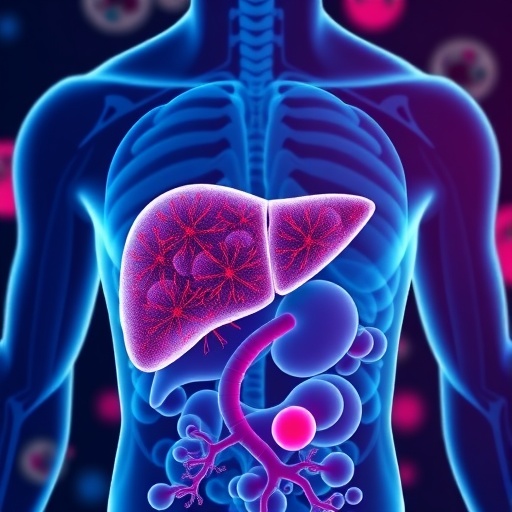
A groundbreaking study from researchers at the University of Hong Kong’s School of Clinical Medicine reveals that Resmetirom, an FDA-approved medication for metabolic dysfunction-associated fatty liver disease (MAFLD), possesses remarkable potential beyond its established liver-fat-reducing capabilities. The drug not only ameliorates hepatic steatosis and fibrosis but also holds promise as a preventive and therapeutic agent against hepatocellular carcinoma (HCC) triggered by fatty liver disease. This revelation was made possible through an intricate exploration of the molecular and cellular mechanisms underpinning liver cancer associated with metabolic dysfunction, culminating in a publication in the esteemed journal Hepatology.
Hepatocellular carcinoma ranks as the sixth most prevalent malignancy worldwide and is the third leading cause of cancer mortality, posing a significant health burden globally. The increasing incidence of obesity, metabolic syndrome, and type 2 diabetes has catalyzed a surge in fatty liver disease, which in turn escalates the risk for HCC. Epidemiological data underscore a harrowing statistic: approximately 3% of patients with fatty liver disease per annum progress to liver cancer, with the Asian continent disproportionately affected, encompassing nearly one-quarter of the population. Despite advancements in immunotherapies, including immune checkpoint inhibitors, therapeutic responses in fatty liver-associated HCC remain suboptimal, warranting urgent investigation into novel therapeutic avenues.
To interrogate the pathological crosstalk fueling this malignancy, the HKUMed team developed an innovative murine model that faithfully replicates human MAFLD and its oncogenic progression. Employing high-resolution single-cell RNA sequencing, they profiled an extensive array of liver-resident and tumor-infiltrating cells across different disease stages. This approach enabled an unprecedented dissection of the transcriptomic dynamics and intercellular signaling between hepatocytes, hepatic stellate cells, and various immune populations within the liver milieu, revealing novel oncogenic circuits.
A central discovery was the identification of the Midkine (MDK) signaling axis as a crucial oncogenic driver in fatty liver-related hepatocarcinogenesis. MDK, a heparin-binding growth factor, was found to be secreted by hepatic cells and to engage its receptor LRP1 on neighboring cells, potentiating tumorigenic processes. Elevated MDK expression correlated strongly with diminished patient outcomes, characterized by increased tumor recurrence rates and reduced relapse-free survival in non-viral, non-alcoholic etiologies of liver cancer. This discovery sheds light on a previously underappreciated molecular pathway contributing to the immune evasion and tumor promotion in MAFLD-associated HCC.
Mechanistically, the study revealed that MDK disrupts immune homeostasis within the tumor microenvironment by skewing macrophage polarization from a tumor-suppressive phenotype towards one that fosters tumor growth. The deleterious impact extends to T lymphocytes, which undergo progressive dysfunction—termed T-cell exhaustion—characterized by diminished cytotoxic capacity and aberrant self-reactivity. This immunosuppressive milieu facilitates unchecked tumor proliferation and circumvents the host’s immune surveillance mechanisms, unveiling an intricate immune escape strategy exploited by fatty liver-driven cancers.
Intriguingly, intervention with Resmetirom markedly attenuated these malignant processes in preclinical models. Beyond its known role in reducing hepatic lipid accumulation and fibrosis, Resmetirom treatment led to a substantial downregulation of MDK expression. This suppression mitigates the oncogenic signaling cascade, thereby inhibiting tumor growth. Moreover, the combination of Resmetirom with MDK pathway inhibitors produced a synergistic anticancer effect, intensifying improvements in metabolic parameters, enhancing immune cell function, and suppressing tumor development. These synergistic effects underscore the therapeutic viability of targeting both metabolic dysfunction and oncogenic signaling simultaneously.
Resmetirom’s multifaceted mechanisms also extend to modulating the tumor microenvironment, transforming it from immunosuppressive to immunostimulatory. By recalibrating macrophage phenotypes and rescuing exhausted T cells, the drug reinstates anti-tumor immunity. This paradigm shift holds profound implications for clinical management, signifying the potential to overcome the current limitations of immunotherapies in fatty liver-associated HCC. Consequently, Resmetirom could serve not only as a metabolic agent but also as an adjunct to enhance immunotherapeutic efficacy in liver cancer.
Professor Irene Ng Oi-lin, the study’s senior author, emphasized the significance of this discovery in reframing the pathogenesis of MAFLD-related liver cancer. “Our findings delineate that fatty liver-associated hepatocellular carcinoma is driven not merely by excess lipid accumulation but by a pivotal cancer-promoting pathway orchestrated by MDK and its receptor. Therapeutically targeting this axis can reprogram the immune landscape and impede tumor progression,” she remarked. This insight paves the way for precision-based, mechanism-targeted therapies.
Looking ahead, the research team is poised to validate novel biomarkers linked to the MDK pathway in larger patient cohorts, facilitating patient stratification and personalized medicine approaches. Their proposed trajectory involves clinical trials combining Resmetirom with immunotherapeutic and targeted agents to establish an innovative, prevention-focused treatment model for high-risk MAFLD patients. Such a model aims to intervene before malignant transformation, thereby reducing the incidence and burden of liver cancer.
The implications of this research extend beyond clinical applications, offering a conceptual leap in understanding the interplay between metabolic dysfunction, oncogenesis, and immune regulation in the liver. By harnessing advanced single-cell analytics and sophisticated animal models, the study exemplifies how integrating metabolic and immune-targeted therapeutics can revolutionize cancer treatment paradigms, particularly in metabolic disease-driven malignancies.
This transformative work stands as a testament to HKUMed’s commitment to pioneering biomedical research and exemplifies the power of interdisciplinary collaboration. The study was co-led by Professor Irene Ng Oi-lin and Professor Daniel Ho Wai-Hung, with key contributions from early-career researchers including Dr. Vanilla Zhang Xin and PhD candidate Tina Suoangbaji, reflecting a vibrant research ecosystem fostering innovation and translational impact.
As MAFLD and related metabolic disorders continue to escalate globally, with concomitant rises in liver cancer incidence, these findings offer a beacon of hope. Resmetirom emerges as a frontrunner in the therapeutic arsenal, not only to modulate metabolic derangements but to serve as a lynchpin in cancer prevention strategies. The ongoing efforts to translate these findings into clinical practice may herald a new era in liver disease management, profoundly altering the landscape of hepatology and oncology.
Subject of Research:
Article Title: Repurposing Resmetirom suppresses MASH-associated hepatocellular carcinoma, with mechanistic implications of MDK/LRP1-mediated metabolic reprogramming and immunosuppression
News Publication Date: 12-Jan-2026
Web References: DOI: 10.1097/HEP.0000000000001675
Image Credits: HKU
Keywords: Macrophages, Hepatocellular carcinoma, Metabolic dysfunction-associated fatty liver disease, Resmetirom, Midkine, Immune suppression, Tumor microenvironment, Single-cell RNA sequencing, Immunotherapy, Liver fibrosis, Tumor immunology
Tags: Asian population liver cancer incidencefatty liver disease and cancer progressionfatty liver disease treatmenthepatocellular carcinoma risk factorsimmune checkpoint inhibitors in liver cancerliver fibrosis therapyMAFLD and liver cancer linkMetabolic dysfunction-associated fatty liver diseasemetabolic syndrome and liver healthnovel therapeutics for HCCobesity-related liver cancerResmetirom for liver cancer prevention