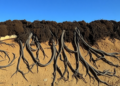
A groundbreaking study published in the journal Biochar unveils the powerful role of natural environmental aging processes, particularly freeze–thaw cycles, in enhancing the immobilization of arsenic in contaminated agricultural soils treated with engineered biochar. This revelation highlights a new frontier for sustainable soil remediation, with implications for public health, environmental safety, and agricultural productivity.
Arsenic contamination is a critical global concern, threatening ecosystems and human health due to its toxicity and carcinogenicity. Traditional remediation strategies often struggle to achieve long-lasting immobilization of arsenic in soils, especially under dynamic environmental conditions. Researchers have now demonstrated that the interaction between engineered biochar and natural aging processes such as freeze–thaw cycling can profoundly alter arsenic behavior at micro and nanoscale levels, offering a natural yet effective approach to contamination control.
The team developed a novel biochar modified with cerium and manganese, elements known for their redox and adsorptive capabilities, to target arsenic immobilization. They then applied this biochar to two common types of agricultural soil: red soil, rich in iron oxides, and black soil, known for its organic matter content. The soils underwent three distinct aging treatments mimicking realistic environmental cycles—natural aging, alternating wet-dry cycles, and freeze–thaw cycles—to explore how each condition influenced the retention and chemical form of arsenic over time.
Remarkably, soils subjected to freeze–thaw cycles exhibited the highest reduction in water-soluble arsenic, with levels decreasing by as much as 94 to 99 percent relative to untreated controls. This indicates a dramatic suppression of arsenic mobility—a key factor in its uptake by crops and leaching into groundwater. The profound effect of freeze–thaw cycles surpasses that of natural aging or wet-dry fluctuations, underscoring the unique physicochemical transformations induced by freezing and thawing in soil matrices.
At the microscopic and nanoscopic scale, freeze–thaw aging generated significant structural rearrangements in the biochar-soil composite. These cyclic temperature changes fostered the formation of “nano-bridges,” which are intimate physical and chemical connections that enhance the binding between biochar particles and soil minerals. Such nano-bridges are instrumental in anchoring arsenic molecules more securely, converting them into mineral-bound species that are stable and less likely to migrate.
On a chemical level, the cerium–manganese modified biochar facilitated multiple reactions that locked arsenic in place. The presence of cerium and manganese accelerated redox transformations, converting arsenic into less mobile valence states. Additionally, the modified biochar promoted the synthesis of stable mineral complexes with iron and cerium compounds inherent in red soils, creating robust arsenic sinks. These chemical processes did not operate in isolation but synergized with physical changes induced by freeze–thaw cycling to maximize arsenic immobilization.
An important insight from the research was the differential response between red and black soils. The red soils, rich in iron oxide minerals, exhibited stronger and more stable biochar-mineral interactions, which translated to more effective arsenic stabilization. In comparison, black soils demonstrated less pronounced immobilization, attributable to their differing mineralogy and organic content. This finding suggests that biochar amendment strategies must be tailored to soil type to achieve optimal remediation outcomes.
Beyond arsenic immobilization, biochar amendment coupled with freeze–thaw cycling yielded ancillary benefits for soil health. The treatment enhanced dissolved organic carbon concentrations, a crucial energy source for soil microbes, increased the availability of essential nutrients such as phosphorus, and stimulated enzymatic activities fundamental to nutrient cycling. These improvements signify that the approach not only mitigates contamination but also promotes long-term soil fertility and ecosystem resilience.
The progressive aging under freeze–thaw conditions also led to a continuous transformation of arsenic species, resulting in more mineral-bound and environmentally inert fractions over time. This dynamic stabilization means that the risk of arsenic re-release into the environment diminishes with prolonged exposure to natural temperature fluctuations, which are prevalent in many agricultural regions worldwide.
Corresponding author Dr. Lianfang Li emphasizes the importance of incorporating environmental aging mechanisms into soil remediation design. The study showcases how freeze–thaw processes, long regarded as mere environmental stressors, can be harnessed to amplify the performance of engineered materials like modified biochar. This paradigm shift opens new avenues for developing robust and sustainable pollution control technologies that work synergistically with natural cycles.
These findings carry profound implications amid the backdrop of climate variability. As global temperature patterns shift, understanding how fluctuating environmental factors interact with remediation agents is critical to ensuring the effectiveness and durability of soil treatments. This research illuminates that, under favorable seasonal conditions, nature itself bolsters human-engineered solutions to intractable contamination problems.
In summary, the integration of cerium-manganese modified biochar with natural freeze–thaw cycling transforms arsenic fate in soils through a combination of nano-structural, chemical, and mineralogical mechanisms. This multifaceted immobilization strategy promises safer agricultural production, reduced groundwater contamination, and improved ecosystem health, positioning itself as an innovative and eco-friendly strategy for global soil remediation challenges.
Subject of Research: Environmental remediation of arsenic-contaminated soils using engineered biochar and natural aging processes.
Article Title: Contrasting effects of three aging processes on arsenic immobilization in red versus black soils amended by cerium-manganese modified biochar: the unique role of freeze–thaw cycling in governing arsenic fate at micro/nano interfaces.
News Publication Date: 16-Feb-2026
Web References: Not provided.
References: Lyu, P., Huang, X., Li, L. et al. Biochar 8, 56 (2026). DOI: 10.1007/s42773-026-00573-4
Image Credits: Peng Lyu, Xiaoya Huang, Lianfang Li & Yan Jiao
Tags: agricultural soil health and toxic element immobilizationarsenic contamination in red and black soilsarsenic immobilization in agricultural soilsbiochar applications in toxic waste managementcerium and manganese modified biocharengineered biochar for toxic metal adsorptionenvironmental aging effects on soil chemistryfreeze-thaw cycles for soil remediationfreeze-thaw impact on heavy metal retentionnatural aging processes in soil treatmentredox reactions in soil remediationsustainable soil contamination control