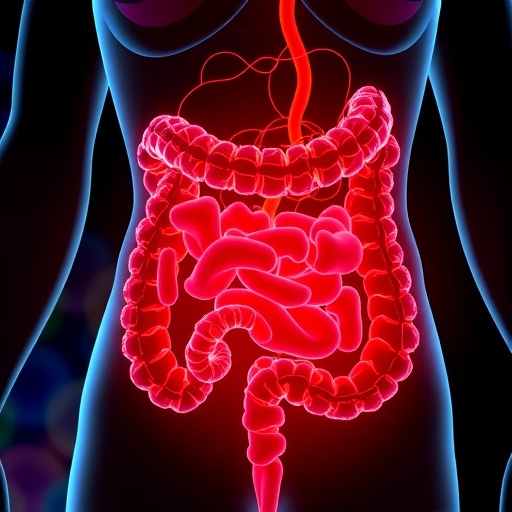
In a groundbreaking study published in Cell Death Discovery, researchers have unveiled a pivotal mechanism that links the loss of the RNA-binding protein Pumilio 2 (Pum2) to the exacerbation of colitis, a debilitating inflammatory condition of the colon. This discovery sheds new light on the intricate communication between immune cells and epithelial cells lining the gut, revealing how disruption in this crosstalk can precipitate severe inflammatory damage and cell death through necroptosis, a regulated form of necrosis.
Colitis, often marked by chronic inflammation and ulceration of the colon mucosa, arises from a complex interplay between genetic predisposition, immune dysregulation, and environmental factors. Central to maintaining intestinal homeostasis is the delicate interaction between resident macrophages—key immune sentinels—and the epithelial cells forming the barrier between the gut lumen and underlying tissues. The researchers, led by Wang, Han, and Qiu et al., focused on the role of Pum2, a post-transcriptional regulator known to influence mRNA stability and translation, in orchestrating this immune-epithelial dialogue.
The study leverages advanced molecular biology techniques, including RNA immunoprecipitation and single-cell RNA sequencing, to demonstrate that Pum2 is highly expressed in colonic macrophages and crucially modulates their function. Loss of Pum2 leads to a breakdown in the secretion of key signaling molecules necessary for maintaining epithelial integrity. Specifically, macrophages deficient in Pum2 exhibit diminished production of anti-inflammatory cytokines and growth factors that typically promote epithelial repair and survival.
This disruption in macrophage-epithelial communication precipitates enhanced epithelial vulnerability, triggering necroptosis—a programmed form of cell death distinct from apoptosis characterized by membrane rupture and inflammatory mediator release. The researchers identified increased markers of necroptosis in epithelial cells within Pum2-deficient colitis models, including heightened expression of receptor-interacting protein kinases RIPK1 and RIPK3, alongside mixed lineage kinase domain-like protein (MLKL) phosphorylation. Such necroptotic activity contributes to barrier breakdown, facilitating an inflammatory cascade that worsens colitis pathology.
Innovatively, the team employed murine models genetically engineered to lack Pum2 specifically in myeloid cells, the lineage that includes macrophages. These mice developed more severe colitis upon chemical induction, confirming the in vivo relevance of their findings. Histological analysis revealed widespread epithelial damage, immune cell infiltration, and ulcer formation compared to control mice. Restoration of Pum2 expression or pharmacological blockade of necroptosis significantly ameliorated disease severity, reinforcing the therapeutic potential of targeting this pathway.
The mechanistic insights into Pum2’s role extend beyond immune signaling modulation. RNA sequencing uncovered that Pum2 regulates a network of genes involved in cytoskeletal remodeling and junctional complex stability within epithelial cells, underscoring how its absence indirectly affects epithelial resilience. These findings highlight Pum2 as a central node linking immune cell behavior to epithelial maintenance—a concept with far-reaching implications for inflammatory bowel diseases (IBD) management.
This research expands the current understanding of necroptosis in inflammatory diseases. While necroptosis has been implicated in pathology, the upstream triggers orchestrated by immune-epithelial miscommunication had not been clearly delineated until now. By positioning Pum2 loss at the crux of this axis, the study opens avenues for developing targeted strategies that restore macrophage function or inhibit necroptosis to preserve epithelial barrier integrity.
Clinically, colitis represents a substantial burden with multifactorial etiology, often refractory to existing treatments such as corticosteroids and immunosuppressants. The identification of Pum2 as a molecular regulator offers a promising biomarker for disease progression and a novel therapeutic target. The ability to modulate macrophage-epithelial interactions could revolutionize treatment paradigms, shifting from broad immunosuppression to precise restoration of intestinal homeostasis.
Furthermore, the role of RNA-binding proteins like Pum2 in regulating immune-environment interplay underscores the importance of post-transcriptional mechanisms in health and disease. This paradigm invites further exploration into similar proteins and their influence on cellular crosstalk within various tissues, potentially unveiling universal principles applicable to other inflammatory and degenerative disorders.
The authors call for expanded research into the signaling pathways governed by Pum2 in macrophages and epithelial cells, encouraging efforts to uncover additional mRNA targets and interaction partners. Such investigations will be instrumental in refining therapeutic approaches, potentially combining Pum2 modulation with necroptosis inhibitors for synergistic effects.
In summary, this seminal study marks a significant advance in gastrointestinal immunology by elucidating how the loss of Pum2 disrupts macrophage-epithelial communication and promotes epithelial necroptosis, driving colitis exacerbation. It eloquently bridges molecular insights with clinical relevance, offering hope for innovative treatments that address the root causes of chronic intestinal inflammation rather than merely managing symptoms.
As research progresses, it will be critical to evaluate the long-term impact of targeting Pum2 and necroptosis pathways in human patients and to explore possible safety concerns related to immune modulation. Nonetheless, the work by Wang and colleagues provides a compelling narrative that redefines our understanding of colitis and sets the stage for a new era of precision medicine in inflammatory bowel disease.
Subject of Research: The role of Pum2 in macrophage–epithelial crosstalk and epithelial necroptosis during colitis progression.
Article Title: Loss of Pum2 exacerbates colitis by disrupting macrophage–epithelial crosstalk and promoting epithelial necroptosis.
Article References:
Wang, X., Han, X., Qiu, W. et al. Loss of Pum2 exacerbates colitis by disrupting macrophage–epithelial crosstalk and promoting epithelial necroptosis. Cell Death Discov. (2026). https://doi.org/10.1038/s41420-026-03041-x
Image Credits: AI Generated
DOI: https://doi.org/10.1038/s41420-026-03041-x
Tags: genetic factors in colitis severityimmune-epithelial cell crosstalkintestinal mucosal barrier disruptionmacrophage regulation in intestinal inflammationmacrophage-epithelial communication pathwaysmolecular mechanisms of inflammatory bowel diseasenecroptosis in colitispost-transcriptional regulation in immune cellsPum2 and colitis progressionPumilio 2 protein functionRNA-binding proteins in gut healthsingle-cell RNA sequencing in colitis research