A groundbreaking new study published in JAMA Network Open has shed light on the dynamics of colorectal cancer (CRC) incidence following screening colonoscopies, providing robust evidence for the development of risk-based, personalized follow-up protocols. This investigation marks a significant stride in oncology and preventive medicine, revealing that individuals with negative colonoscopy results experience a marked decline in CRC rates. The study further identifies critical demographic nuances and behavioral risk factors influencing cancer risk, with profound implications for clinical guidelines and public health strategies.
Colorectal cancer remains a leading cause of cancer morbidity and mortality worldwide, and screening programs have long been pivotal in improving early detection and survival rates. Colonoscopy, the gold standard for CRC screening, allows for direct visualization and removal of precancerous polyps, dramatically reducing cancer incidence. However, consensus on optimal intervals for surveillance colonoscopies post a negative screening result has been elusive, with current protocols largely uniform and not fully tailored to individual risk profiles.
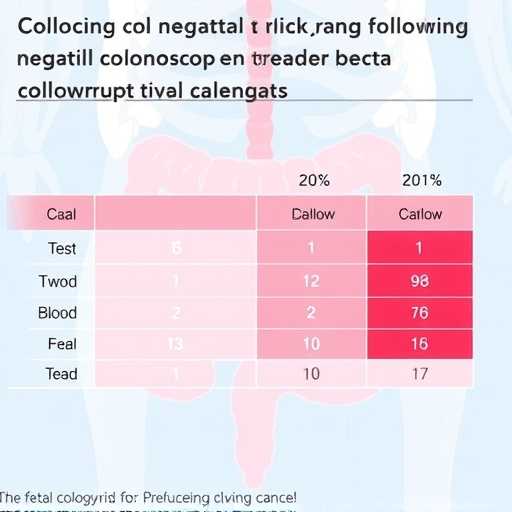
This extensive study analyzed data from a large, diverse cohort of individuals who underwent initial colonoscopy screening. Crucially, it demonstrated a statistically significant reduction in CRC incidence among those with negative screening outcomes—a finding particularly pronounced in males. Such sex-specific variation underscores the necessity for nuanced follow-up strategies that factor in biological and potentially lifestyle determinants that contribute to divergent cancer risk trajectories between men and women.
Intriguingly, the research team identified a subset of high-risk individuals who did not adhere to recommended follow-up colonoscopies. This noncompliant group exhibited elevated CRC incidence, signaling that lapses in screening adherence critically compromise early detection and intervention efforts. The findings advocate for targeted engagement and intervention strategies aimed specifically at these nonadherent populations, potentially employing behavioral science insights and health communication innovations to enhance compliance.
Beyond the immediate clinical implications, these findings challenge the prevailing one-size-fits-all screening paradigms, suggesting a movement towards risk-adapted surveillance. Such risk stratification would incorporate factors such as sex, initial colonoscopy findings, and patient adherence behavior to customize surveillance intervals, optimizing resource allocation while maximizing preventive efficacy. Implementing this individualized approach could revolutionize screening efficacy and patient outcomes.
The methodological rigor of this observational study ensures confidence in its conclusions. Comprehensive follow-up periods and meticulous adjustment for confounding variables, including demographic and clinical characteristics, fortified the validity of observed associations. This level of detail facilitates extrapolation to broader populations and integration into policy frameworks, enabling health systems around the globe to refine colorectal cancer prevention programs informed by empirical evidence.
Technologically, the study leverages advances in data science and epidemiology, showcasing how large-scale registry linkages and electronic medical records can yield insightful health analytics. Integration of longitudinal health data allows for dynamic monitoring of patient trajectories post-screening, setting a new standard for surveillance research and personalized medicine models. This pioneering approach exemplifies the interdisciplinary synergy pivotal to future medical breakthroughs.
The sex differences revealed by the study warrant further mechanistic exploration. Biological factors such as hormonal influences, genetic variability, and immune response differentials may underpin the observed disparities in CRC risk reduction. Understanding these mechanisms could catalyze new preventive strategies or therapeutic targets, offering a fertile ground for translational research bridging bench and bedside.
Behavioral aspects highlighted—the consequences of nonadherence to follow-up colonoscopies—reflect broader challenges in public health implementation. Barriers to compliance may include patient mistrust, logistical impediments, or socioeconomic factors. Addressing these requires multifaceted interventions, blending healthcare provider incentives, patient education, and systems-level reforms to foster sustained engagement in preventive care pathways.
Additionally, the study reinforces the criticality of early detection in colorectal cancer management. Negative screenings are beneficial, yet the absence of rigorous subsequent surveillance in high-risk individuals can nullify early advantages. This underscores the need for robust patient tracking systems and reminders integrated into electronic health platforms to safeguard against drop-offs in recommended care intervals.
The research also signals the potential to refine risk prediction models incorporating screening results and demographic variables. Enhanced predictive accuracy could empower clinicians to stratify patients better, tailoring surveillance and potentially integrating adjunctive molecular or biomarker tests in future protocols. Such advances might enhance precision medicine’s reach into population-level screening initiatives.
Ultimately, this study propels the medical community towards an era of evidence-based, individualized colorectal cancer prevention. By illuminating patterns of risk reduction and identifying gaps in follow-up adherence, it lays the groundwork for more efficient and effective screening programs. The resultant reduction in CRC incidence, morbidity, and healthcare costs promises substantial public health benefits.
As clinical practice evolves in response to these insights, ongoing research will be indispensable to validate optimal surveillance intervals and intervention methods. Collaborative efforts across disciplines—including epidemiology, oncology, behavioral science, and health informatics—will be paramount in translating these findings into real-world practice that saves lives and enhances patient care quality.
For inquiries, the corresponding author Dr. Hanna Heyman can be reached via email at [email protected], providing a direct line to further information and collaboration opportunities regarding this pivotal study.
Subject of Research: Colorectal cancer incidence following screening colonoscopy and risk-based follow-up strategies
Article Title: Not specified
News Publication Date: Not specified
Web References: Not provided
References: doi:10.1001/jamanetworkopen.2026.2404
Image Credits: Not provided
Keywords: Colorectal cancer, risk factors, screening colonoscopy, medical tests, disease intervention, observational studies, cancer prevention, personalized medicine, screening adherence, epidemiology
Tags: behavioral risk factors cancercolorectal cancer prevention strategiescolorectal cancer risk reductioncolorectal cancer screening guidelinesdelayed follow-up fecal occult blood testdemographic factors colorectal cancerfecal occult blood test positive follow-uplarge cohort colonoscopy studynegative colonoscopy outcomespersonalized colorectal cancer screeningrisk-based colonoscopy intervalssex-specific colorectal cancer risk