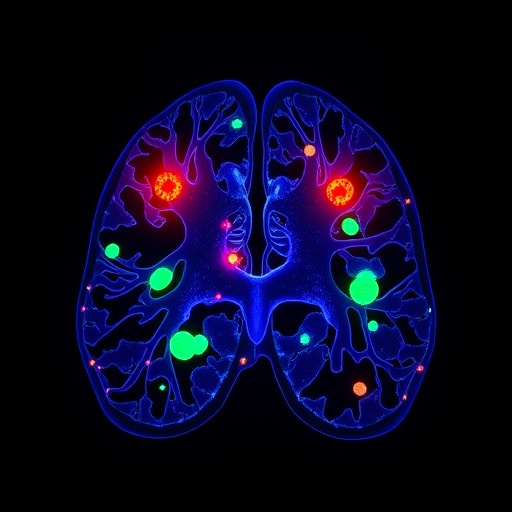
A groundbreaking study published in The American Journal of Pathology introduces an unprecedented cellular and metabolic atlas shedding light on the complex dynamics of lymph node metastasis in breast cancer. Utilizing cutting-edge single-cell RNA sequencing coupled with spatial transcriptomics, this research unravels the multifaceted interactions among malignant epithelial cells, immune cells, and metabolic pathways, offering novel vantage points for therapeutic intervention against one of the most formidable challenges in oncology.
Breast cancer continues to be a predominant cause of morbidity and mortality worldwide, ranking as the second most commonly diagnosed cancer and representing nearly a quarter of all cancer cases among women. Despite advances in diagnosis and treatment, the progression to lymph node metastasis remains a decisive prognostic factor negatively impacting survival. The precise molecular and cellular mechanisms orchestrating this metastatic cascade have remained elusive, limiting the development of targeted therapies capable of curbing metastatic spread effectively.
In a landmark effort, researchers integrated single-cell RNA sequencing data from 78 paired primary breast tumor and lymph node metastases samples, comprising an astonishing total of over 360,000 individual cells. This immense dataset enabled the identification of ten major cell types within the tumor microenvironment, including epithelial cancer cells, various immune subsets, and stromal components. Crucially, the spatial transcriptomics approach preserved the anatomical context of gene expression, facilitating the mapping of cellular interactions in situ and advancing comprehension of the metastatic niche architecture.
The study’s foremost revelation centers on early disseminated cancer cells (EDCs)—a distinctive epithelial subpopulation distinguished by enhanced metastatic and invasive traits. EDCs demonstrated pronounced metabolic reprogramming characterized by activated glycolytic pathways and hypoxia-responsive elements, which potentiate their survival and proliferation under adverse microenvironmental conditions. This metabolic plasticity enables EDCs to subvert immune defenses and thrive during dissemination to lymph nodes.
Beyond their intrinsic properties, EDCs engage in a sophisticated dialogue with the immune milieu, primarily orchestrated by M2-polarized macrophages and lymphocytes. These macrophages secrete cytokines such as CCL22 and CXCL12, fostering an immunosuppressive microenvironment that dampens anti-tumor immune responses and supports tumor cell evasion. This triadic crosstalk sets the stage for malignant transformation and sustains metastatic colonization, emphasizing the pivotal role of immune modulation in breast cancer progression.
Spatial transcriptomic analyses underscored that these interactions are not diffuse but rather concentrated within discrete regions at the invasive front of lymph node metastases. Such spatial compartmentalization accentuates the heterogeneity of the tumor microenvironment and underscores the relevance of microanatomical context in therapeutic targeting. The presence of these specialized niches reveals new potential vulnerabilities that can be exploited for more precise treatment modalities.
Leveraging these mechanistic insights, the investigators identified several tyrosine kinase inhibitors (TKIs), including pexidartinib hydrochloride and sunitinib malate, that selectively inhibit pathways crucial to M2 macrophage function, notably targeting the colony-stimulating factor 1 receptor (CSF1R). By impairing the immunosuppressive actions of these macrophages, such pharmacological agents demonstrate promising capabilities to halt or reverse lymph node metastasis, heralding a new class of adjunctive therapies in breast cancer management.
Both pexidartinib and sunitinib have established safety profiles in other oncologic contexts, bolstering the translational potential of repurposing these drugs against breast cancer metastasis. This promising overlap between existing therapeutics and newly discovered molecular targets accelerates the potential for clinical application, circumventing the lengthy traditional drug development pipeline.
Despite these advances, further research is imperative to dissect the metabolic vulnerabilities intrinsic to EDCs and to integrate comprehensive clinical datasets that validate these findings in patient populations. A systems biology approach combining metabolic profiling with immune landscapes will be crucial for developing synergistic intervention strategies that can effectively disrupt metastatic progression.
This study exemplifies the transformative power of single-cell and spatial multi-omics technologies to decode the complexity of tumor ecosystems in unprecedented detail. By unveiling the cellular heterogeneity and metabolic reprogramming events that underpin lymph node metastasis, the research charts a transformative course toward precision oncology, enabling the design of therapies tailored to the spatiotemporal dynamics of metastatic breast cancer.
Looking forward, the integration of such multi-dimensional datasets into clinical decision-making has the potential to redefine therapeutic regimens, enhance prognostic capabilities, and ultimately improve outcomes for breast cancer patients afflicted with metastatic disease. The study represents a milestone in understanding how cancer cells manipulate their environment and evade immune surveillance, highlighting new avenues for intervention that leverage metabolic and immune crosstalk.
As breast cancer continues to pose a significant global health challenge, innovations that decode tumor microenvironments at such granular levels are poised to shift paradigms in cancer treatment. This work not only deepens fundamental biological understanding but also accelerates the translation of genomics-driven discoveries into actionable clinical therapies designed to thwart metastasis at its earliest and most vulnerable stages.
The American Journal of Pathology’s publication of this integrative study underscores the critical role of advanced imaging and transcriptomic modalities in cancer research. By illuminating the cellular choreography of metastasis through novel lens, this research paves the way for more effective, personalized, and targeted interventions aimed at improving survival and quality of life for millions worldwide affected by breast cancer.
Subject of Research: Cells
Article Title: Deciphering the Cellular and Metabolic Landscape of Lymph Node Metastasis in Breast Cancer Using Single-Cell and Spatial Multi-Omics
News Publication Date: March 2, 2026
Web References:
https://doi.org/10.1016/j.ajpath.2026.01.002
References:
Zhu et al., The American Journal of Pathology, 2026. DOI: 10.1016/j.ajpath.2026.01.002
Image Credits: The American Journal of Pathology / Zhu et al.
Keywords: Breast cancer, lymph node metastasis, early disseminated cancer cells, tumor microenvironment, single-cell RNA sequencing, spatial transcriptomics, metabolic reprogramming, M2 macrophages, immunosuppression, tyrosine kinase inhibitors, precision oncology, metabolic-immune crosstalk
Tags: breast cancer lymph node metastasiscancer cell and immune cell crosstalkimmune response in cancer metastasismalignant epithelial cell interactionsmetabolic pathways in breast cancermolecular mechanisms of cancer spreadnovel therapeutic targets in oncologyprognostic factors in breast cancer metastasissingle-cell RNA sequencing in cancerspatial transcriptomics in oncologytargeted therapies for metastatic breast cancertumor microenvironment cell types