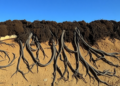
In agricultural landscapes, the infiltration of pesticides into aquatic ecosystems poses a severe threat to biodiversity and human health alike. While riparian buffers—vegetated strips of land adjacent to water bodies—are widely recommended as a mitigation strategy by institutions such as the U.S. Department of Agriculture, their effectiveness in filtering pesticide contamination has remained ambiguous. A pioneering study led by researchers at Penn State University now sheds light on the nuanced dynamics governing pesticide transport in karst terrains, revealing that these natural buffer zones may only be partially effective depending on the chemical and hydrological pathways involved.
The research team conducted an extensive observational study over the 2023 growing season in Halfmoon Creek, a small agricultural stream nestled within a 24-square-mile karst watershed in central Pennsylvania. Karst landscapes, defined by their highly permeable soluble bedrock riddled with fractures, sinkholes, and subterranean conduits, present a complex hydrological environment where surface and groundwater flows are intricately intertwined. This geological complexity strongly influences the movement of agrochemicals and challenges traditional assumptions about mitigation efficacy.
Sampling water from five strategic points along the stream, the team tested for two common herbicides, Atrazine and Simazine—both s-triazine chemicals—alongside four neonicotinoid insecticides widely employed as seed treatments for corn and soybeans: Clothianidin, Imidacloprid, Thiacloprid, and Thiamethoxam. These substances represent some of the most prevalent agents in modern crop protection regimes, making their environmental trajectories critical to understand in detail.
The findings were striking: Simazine, Atrazine, and Clothianidin were detected in an overwhelming majority of water samples, signaling near-constant contamination throughout the growing season. However, the transport pathways diverged sharply among these compounds. Atrazine and Clothianidin exhibited clear associations with periods of high stream flow, indicating that their mobilization is primarily driven by surface runoff events. In contrast, Simazine’s presence was relatively independent of streamflow fluctuations, underscoring its transport predominantly through groundwater pathways facilitated by the karst system’s subsurface conduits.
These divergent behaviors indicate fundamental differences in how pesticides interact with hydrological processes. Surface runoff transports dissolved or particulate-bound pesticides overland, where vegetative buffers can intercept and reduce pollutant loads through physical filtration, adsorption, and biotic degradation mechanisms. Conversely, pesticides like Simazine that seep deep into the soil profile may exploit the rapid underground water transport characteristic of karst regions—often bypassing surface buffer zones entirely and entering streams virtually unimpeded.
The implications for pesticide management are profound. While riparian buffers remain a vital best management practice for curtailing sediment and nutrient loads—as well as certain pesticides reliant on surface pathways—their protective value is limited against groundwater-vectored contaminants. This delineation is especially critical in karst watersheds, where hydraulic connectivity through fractures and conduits allows pollutants to traverse considerable distances underground, sometimes re-emerging in streams located well downstream of buffer installations.
Heather Preisendanz, professor of agricultural and biological engineering and the study’s principal investigator, emphasizes the necessity of tailoring mitigation strategies to the chemical and landscape context. “Buffers can act as effective screening tools for pesticides transported by overland flow, but they are less capable of intercepting groundwater-vectored agrochemicals,” she said. “Successful reduction of pesticide pollution demands a comprehensive understanding of hydrological transport processes, especially in complex karst environments where traditional surface-based approaches may be insufficient.”
This research builds on an ongoing three-year project funded by a $750,000 grant from the USDA National Institute of Food and Agriculture, aiming to elucidate the overall capacity of vegetation to counteract water pollution originating from agricultural lands. By coupling rigorous water sampling with hydrological analyses relating pesticide concentrations to streamflow regimes, the team has provided a nuanced framework for evaluating pesticide fate within diverse watershed settings.
Beyond the immediate findings, the study underscores the challenges posed by chemical mixtures in the environment. The coexistence of herbicides and insecticides with variable physicochemical properties and mobility profiles complicates any “one-size-fits-all” approach to mitigation. Adaptations could include landscape-scale management integrating buffer zones with subsurface interventions, improved pesticide application practices minimizing deep infiltration, or the development of new agrochemicals designed with environmental transport considerations in mind.
The presence of neonicotinoids such as Clothianidin, detected in 75% of samples, also raises concerns about ecological ramifications beyond water quality. Neonicotinoids have been implicated in pollinator declines and broader ecosystem disruptions, making their pervasive detection in agricultural waterways particularly troubling. The study’s insights into their surface runoff-driven transport pathways provide critical information for designing mitigation measures that could better protect sensitive non-target organisms.
The karst setting further complicates mitigation planning because of the rapid and direct groundwater connections between distant fields and streams. Pollutants introduced far upstream may appear downstream with minimal dilution, circumventing localized buffer protection and challenging regulatory frameworks that focus on site-scale interventions. Accordingly, landscape-scale monitoring and cross-jurisdictional collaboration become essential for comprehensive water quality management in karst regions.
Collaborators on the project include Henry Kibuye, a doctoral student specializing in agricultural and biological engineering, who conducted much of the water sampling and data collection. Additional contributors comprise Tyler Groh, assistant research professor and watershed management extension specialist, and Tameria Veith from the USDA Agricultural Research Service. Their combined expertise integrates engineering, hydrology, and agricultural sciences to address the multifaceted challenges of environmental contamination.
In the face of intensifying agricultural production pressures and increasing awareness of chemical pollution’s ecological impacts, this research provides a timely call for refined, science-based mitigation approaches. It challenges assumptions about the universality of riparian buffers and highlights the critical role of landscape geology and hydrology in shaping pollutant fate. Moving forward, policymakers, farmers, and conservationists must recognize these complexities to develop resilient and effective strategies for protecting water resources from pesticide contamination.
This study represents a significant advance in environmental quality research by explicitly linking pesticide transport dynamics to karst hydrogeology, offering a template for similar investigations in other vulnerable regions worldwide. Its methodological rigor and practical insights elevate our understanding of how chemical pollutants navigate agricultural watersheds and inform the design of interventions with real-world efficacy.
The intricate interplay of agriculture, geology, and hydrology revealed here exemplifies the challenges of environmental stewardship in human-dominated landscapes. It underscores the essential need for interdisciplinary collaboration to reconcile food production with ecosystem health, ensuring sustainable outcomes for present and future generations.
Subject of Research: Not applicable
Article Title: Neonicotinoid and s-triazine pesticide transport dynamics in a small karst agricultural watershed
News Publication Date: 23-Feb-2026
Web References:
U.S. Department of Agriculture Riparian Buffers Initiative
Halfmoon Creek Watershed EPA Visit
Karst Aquifers Overview, USGS
Journal of Environmental Quality Article DOI
References:
Kibuye, H., Preisendanz, H., Groh, T., & Veith, T., “Neonicotinoid and s-triazine pesticide transport dynamics in a small karst agricultural watershed,” Journal of Environmental Quality, 2026.
Image Credits: Penn State
Keywords: Pesticides, Riparian Buffers, Karst Hydrogeology, Atrazine, Simazine, Neonicotinoids, Agricultural Runoff, Groundwater Transport, Water Quality, Environmental Pollution
Tags: agrochemical transport in karst watershedsAtrazine and Simazine herbicide impactbiodiversity threats from pesticideseffectiveness of riparian buffershuman health risks from agricultural pesticideskarst terrain hydrologymitigation strategies for pesticide runoffneonicotinoid insecticides and water pollutionPenn State University pesticide researchpesticide contamination in aquatic ecosystemspesticide infiltration in agricultural landscapespesticide pathways in karst regions