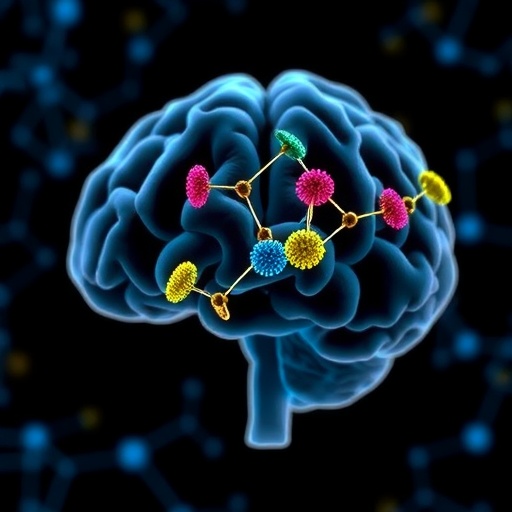
In a groundbreaking development at the frontier of neuropharmacology and ion channel research, a team of scientists has unveiled a novel class of macrocyclic inhibitors targeting the TRPC5 ion channel with unprecedented potency and selectivity. This advancement represents a significant leap forward in the design of next-generation therapeutics for neuropsychiatric disorders, particularly depression and anxiety, by leveraging the latest structural biology and computational drug design methodologies.
Ion channels have long been recognized as crucial modulators of cellular excitability and signaling, making them prime candidates for targeted drug development. However, the landscape of ion channel pharmacology has been hindered by challenges related to the structural complexity of binding sites, many of which are lipid-occupied, expansive, and planar, complicating the design of small molecules that can selectively modulate channel function without off-target effects. This is especially true for the transient receptor potential canonical 5 (TRPC5) channel, predominantly expressed in the brain and implicated in mood regulation.
Researchers have now employed a structure-guided macrocyclization approach to surmount these obstacles, effectively harnessing recent advances in cryo-electron microscopy (cryo-EM) to resolve high-resolution structures of TRPC5 in complex with novel ligands. The resultant macrocyclic compounds, particularly one designated JDIC-127, exhibit picomolar-level inhibitory activity with an IC50 of 374 picomolar, a staggering 200-fold improvement in potency compared to the benchmark inhibitor HC-070. This degree of potency heralds a new era of ion channel modulation, wherein minute concentrations of drug candidates can achieve highly selective inhibition, potentially minimizing side effects.
Macrocyclic structures confer unique advantages in drug design by constraining the conformational flexibility of ligands, thus enhancing binding affinity and specificity. JDIC-127’s macrocycle stabilizes its active conformation, facilitating precise interactions within the lipid-rich binding pocket of TRPC5. Notably, these interactions predominantly involve unique residues lining the S5 and S6 helices of the channel, a critical region contributing to gating and ion permeability. Such targeted engagement underpins the compound’s exceptional selectivity, drastically reducing cross-reactivity with homologous TRPC isoforms and other ion channels.
The elucidation of these binding interactions was achieved through an integrative approach, combining high-resolution cryo-EM data with advanced computational modeling. This synergy enabled the rational design of macrocycles tailored to exploit subtle structural distinctions within the TRPC5 lipid-binding domain. The methodology surmounts the traditional barrier posed by broad, flat, lipid-occupied sites that resist classical small-molecule binding modalities, thereby opening new avenues in ion channel pharmacology.
Beyond the biochemical and structural facets, JDIC-127 has demonstrated robust preclinical efficacy, aligning with its biochemical profile. Animal models of depression and anxiety exhibit amelioration of symptoms upon administration, suggesting that selective TRPC5 inhibition can modulate neurophysiological pathways underpinning these complex disorders. These findings invigorate the therapeutic potential of TRPC5-targeted agents and present JDIC-127 as a valuable pharmacological tool for dissecting TRPC5’s role in the central nervous system.
This research epitomizes the potential of macrocyclization as a transformative strategy in drug discovery for challenging targets. Unlike conventional linear molecules, macrocycles can effectively occupy and stabilize conformations within lipid-interacting domains, a feature previously difficult to exploit pharmacologically. Consequently, the study offers a conceptual and practical framework for extending this design paradigm towards other members of the TRP channel family and beyond, potentially addressing a spectrum of disease states linked to ion channel dysfunction.
Furthermore, the study underscores the critical integration of structure-based drug design with cutting-edge experimental approaches like cryo-EM, which has revolutionized our understanding of membrane protein pharmacology. The detailed structural insights into TRPC5-ligand complexes provide a template for iterative refinement, improving drug-like properties and enabling precision medicine approaches in neuropsychiatric therapeutics.
Importantly, the selective inhibition profile demonstrated by JDIC-127 mitigates concerns related to off-target ion channel modulation, a common hurdle in developing central nervous system drugs. This selective engagement minimizes perturbation of physiological ion currents mediated by related channels, thereby reducing adverse effects and enhancing clinical translatability.
The implications of this work extend beyond academic inquiry, signaling a promising trajectory for pharmaceutical development focused on TRP channels—known to be involved in diverse physiological processes including sensation, vasoregulation, and metabolic regulation. By paving the way for the rational design of selective macrocyclic inhibitors, this research bolsters the pipeline for innovative drugs addressing not only neuropsychiatric conditions but potentially cardiovascular and metabolic diseases as well.
In sum, the reported structure-guided design and functional validation of JDIC-127 epitomize a milestone in ion channel drug discovery. By exploiting the conformational rigidity and enhanced binding kinetics conferred by macrocycles, combined with precise structural characterization, this study offers a blueprint for overcoming long-standing challenges associated with lipid-occupied channels and achieving therapeutically viable selectivity and potency.
As this research progresses towards clinical validation, it heralds a new class of molecular tools with the capacity to modulate neuronal excitability with unprecedented precision. The promise of JDIC-127 extends to refining our understanding of TRPC5’s physiological roles and providing a foundation for developing efficacious antidepressant and anxiolytic treatments, with broader implications across neuropharmacology and medicinal chemistry.
Subject of Research: Structure-guided drug design of highly selective macrocyclic inhibitors targeting the TRPC5 ion channel for antidepressant therapy.
Article Title: Structure-guided design of picomolar-level macrocyclic TRPC5 channel inhibitors with antidepressant activity.
News Publication Date: 2026 (exact date not specified).
Web References: DOI link – http://dx.doi.org/10.1016/j.apsb.2025.10.028
Keywords: TRPC5, Ion channel, Structure-based drug design, Macrocyclization, Selectivity, Cryo-EM, Antidepressant, Anxiolytic
Tags: antidepressant drug developmentcomputational drug design methodologiescryo-electron microscopy applicationshigh-potency pharmacological agentsion channel pharmacologymacrocyclic inhibitors for TRPC5mood regulation and ion channelsneuropharmacology advancementsneuropsychiatric disorder treatmentsselective ion channel modulationstructure-guided drug designTRPC5 channel targeting