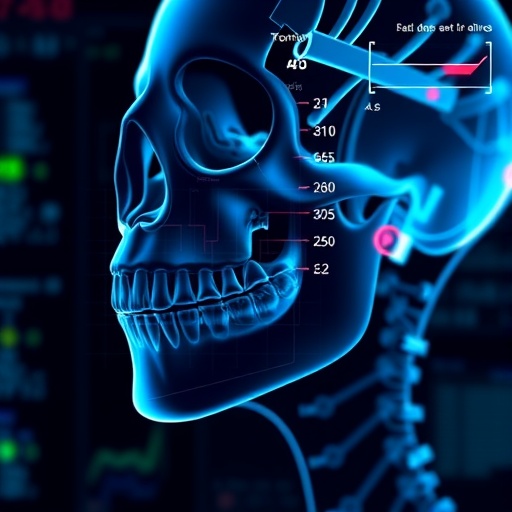
In the evolving landscape of forensic science, one of the most complex and nuanced challenges continues to be the accurate assessment of age, particularly in living individuals. This challenge holds substantial consequences in both legal and humanitarian contexts. Recently, groundbreaking developments have emerged from the research community, spearheaded by Palmela Pereira, whose work integrates artificial intelligence (AI) into forensic dental age estimation processes. The implications of this research herald a transformative leap in how age assessment is conducted, promising unprecedented accuracy and reliability.
Forensic dental age assessment traditionally hinges on the meticulous evaluation of dental development and wear patterns to approximate an individual’s age. This technique is pivotal in numerous scenarios including immigration, criminal justice, and identification of unknown persons. However, despite decades of practice, the existing methodologies grapple with significant limitations ranging from observer bias to variability in developmental timelines across populations. The advent of AI-powered decision support systems aims to address these limitations by infusing computational precision and standardization into the assessment process.
Palmela Pereira’s 2026 study, published in the International Journal of Legal Medicine, introduces a pioneering framework that leverages artificial intelligence to enhance decision-making accuracy in dental age estimation for living individuals. Central to this approach is the deployment of machine learning algorithms capable of analyzing complex dental imagery and correlating developmental benchmarks with probabilistic age ranges. These AI models are trained on extensive datasets, enabling them to discern subtle morphological features that may elude human experts.
Diving deeper into the technological underpinning, the AI methodology employs convolutional neural networks (CNNs) adept at image recognition and feature extraction. By processing panoramic dental radiographs, the system can evaluate parameters such as tooth mineralization stages, root translucency, and pulp chamber size—all critical markers in age determination. This level of granularity permits a highly nuanced, data-driven interpretation that not only increases accuracy but significantly reduces subjective variability.
Moreover, the integration of AI facilitates the automation of preliminary assessments, accelerating the forensic workflow and alleviating the burden on dental age experts. This rapid processing capacity is particularly valuable in high-volume settings such as border control or mass disaster victim identification, where timely age verification is critical. The AI-supported decisions are accompanied by confidence metrics, ensuring that human assessors can gauge the reliability of automated estimations and make informed judgments.
Beyond technical prowess, Pereira’s work emphasizes ethical dimensions intrinsic to forensic age assessment. Employing AI introduces a level of transparency and replicability that traditional subjective methods cannot guarantee. The system’s decision-making criteria are explicitly defined and can be audited, which is crucial in legal contexts where assessment outcomes influence individual rights and state policies. The study advocates for standardized criteria to be universally adopted, ensuring fairness and consistency across jurisdictions.
Importantly, this research also highlights the adaptability of AI models to diverse populations. Given the variations in dental development influenced by genetics, nutrition, and environmental factors, a one-size-fits-all approach is inadequate. The machine learning algorithms are designed with transfer learning capabilities, allowing them to recalibrate based on regional demographic data. This adaptability enhances the global applicability of AI-based forensic age assessment, a significant stride toward equitable justice.
The implications of AI-driven dental age estimation extend into societal and humanitarian realms. For instance, accurately determining the age of unaccompanied minors seeking asylum helps ensure the proper application of child protection policies. Misclassification can have dire consequences, such as wrongful detention or denial of essential services. By refining the precision of age assessments, the AI system supports more humane treatment aligned with international legal standards.
While the promise of AI integration in forensic age estimation is immense, Pereira acknowledges the necessity of rigorous validation and continuous refinement. The research delineates comprehensive testing protocols, including cross-validation with traditional expert evaluations and longitudinal studies to assess predictive accuracy over time. This cautious approach underscores scientific integrity and seeks to foster confidence among forensic practitioners and legal stakeholders alike.
Training and implementation represent another focal point. The research outlines the need for specialized training programs to ensure that forensic professionals can effectively interpret and utilize AI-generated outputs. Equipping practitioners with the skills to question and understand AI reasoning is essential to prevent overreliance and to maintain critical oversight. Such educational initiatives will be pivotal in harmonizing human expertise with machine assistance.
The transformative potential of AI in forensic dental age assessment unveiled by this research invites broader consideration of how artificial intelligence can redefine forensic sciences as a whole. From fingerprint analysis to DNA profiling, the infusion of sophisticated algorithms promises to introduce greater standardization, efficiency, and transparency. However, this transition also demands ethical vigilance, regulatory frameworks, and interdisciplinary collaboration to balance technological benefits with societal values.
In conclusion, Palmela Pereira’s seminal work marks a significant milestone in the quest to enhance forensic age assessment methodologies through AI decision support. By proposing standardized criteria for living individuals that leverage advanced machine learning techniques, this research sets a new benchmark for accuracy, fairness, and operational efficiency. The deployment of such systems could reshape legal processes and humanitarian interventions worldwide, underscoring the profound impact of technology-driven innovation in forensic sciences.
As AI continues to permeate complex fields traditionally dominated by human intuition, the forensic community stands at the cusp of a paradigm shift. Embracing these advancements with measured optimism and rigorous scrutiny will be essential to unlock their full potential while safeguarding justice and human dignity. This study not only opens new frontiers in dental age assessment but also exemplifies the transformative power of artificial intelligence in service of society’s most pressing challenges.
Subject of Research: AI decision support in forensic dental age assessment for living individuals.
Article Title: AI decision support in forensic dental age assessment: proposed criteria for living individuals.
Article References:
Palmela Pereira, C. AI decision support in forensic dental age assessment: proposed criteria for living individuals. Int J Legal Med (2026). https://doi.org/10.1007/s00414-026-03723-2
Image Credits: AI Generated
DOI: https://doi.org/10.1007/s00414-026-03723-2
Tags: advancements in forensic researchage estimation techniquesAI decision support systems in age estimationartificial intelligence in forensic sciencechallenges in estimating age of living individualscomputational precision in forensicsforensic dental age assessmenthumanitarian aspects of age assessmentlegal implications of age assessmentobserver bias in dental evaluationsPalmela Pereira’s contributions to forensicsstandardization in forensic methodologies