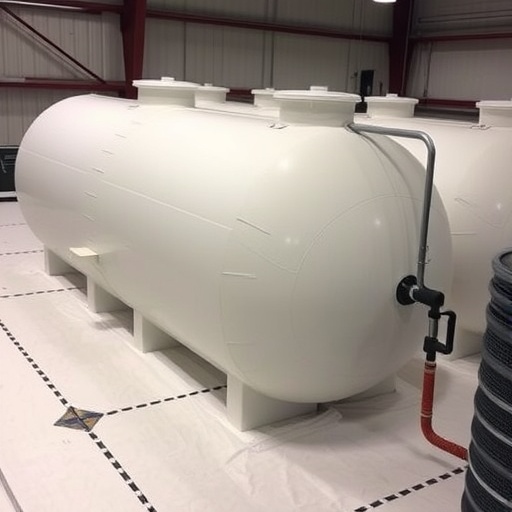
In recent years, the field of composite materials has garnered significant attention, particularly within the aerospace and automotive industries. This interest is driven by the demand for more efficient, durable, and lightweight solutions that can withstand extreme environmental conditions. One area of crucial focus in this domain is the performance of adhesive materials used in cryogenic applications. A groundbreaking study spearheaded by Kaveh, Razzaghi, and Dalir aims to explore the resilience of adhesive performance under such extreme conditions, taking significant strides toward enhancing composite tank technology.
Composite materials, created from two or more constituent materials with different physical or chemical properties, combine the best attributes of each component to create a superior material. However, when it comes to utilizing these composite tanks for cryogenic applications, the integrity of the adhesive used in bonding these materials becomes critically important. Any degradation in adhesive performance at low temperatures may lead to catastrophic failures, which necessitates comprehensive evaluations of these adhesive systems.
The study uncovered that various adhesive formulations respond differently to low-temperature conditions. Researchers utilized a range of testing methods, including tensile strength evaluations and shear tests, to gauge how well different adhesives performed when exposed to cryogenic temperatures. The scientists simulated conditions akin to those experienced in space applications, where temperatures can plummet to extreme lows. The findings indicated that traditional adhesives often lose their effectiveness, compromising the structural integrity of composite tanks.
This study featured multiple adhesive types, including epoxies and urethanes, each chosen for their specific mechanical properties. By subjecting these adhesives to cryogenic conditions, the researchers aimed to trace the relationship between temperature shifts and adhesive performance. Their observations highlighted a notable decrease in adhesion strength for specific adhesives exposed to prolonged cryogenic temperatures, underscoring the urgency of this research in safety-critical applications.
The authors further discussed the potential mechanisms leading to adhesive failure under these conditions. One major factor identified was the thermal contraction differentials between the adhesive and the composite materials, which can induce stresses and lead to bond failure. Additionally, the inherent brittleness of certain adhesives at low temperatures was identified as a significant contributor to reduced adhesion performance. These insights have profound implications for the design and selection of adhesive materials in future composite tank applications.
Another crucial aspect covered in the study was the importance of selection criteria for adhesives intended for use in cryogenic environments. The researchers provided guidance on choosing compatible materials based on their thermal expansion coefficients and mechanical properties. This comprehensive analysis not only benefits material engineers but is also vital for developers in the composite industry striving for innovations in cryogenic tank designs.
Moreover, the study aims to pave the way for future research that could formulate new adhesives specifically tailored for cryogenic conditions. Insights gained from this work are instrumental for material scientists seeking to innovate beyond the limitations of existing adhesive technologies. By developing specialized formulations, researchers can potentially enhance the durability and reliability of composite tanks utilized in various industries, encompassing aerospace and energy storage applications.
The paper’s contributions extend beyond technical evaluations as it fosters discussions on the regulatory requirements for materials used in safety-critical environments. As the aerospace industry evolves, understanding what makes an adhesive suitable for extreme conditions becomes imperative not merely for performance but also from a regulatory compliance standpoint. The implications of this research could influence manufacturing standards and material selection guidelines moving forward.
The evaluation of adhesive performance under such extreme conditions also opens avenues for interdisciplinary collaborations among chemists, materials scientists, and engineers. These professionals can leverage findings from this research to develop innovative solutions that meet the industry’s stringent demands. The collaborative efforts could lead to breakthroughs that increase the viability of composite materials in various practical applications.
It is prudent to consider how these advancements in adhesive technologies could affect the lifecycle and recyclability of composite tanks. As industries aim for sustainable practices, understanding the disassembly and recycling of materials once adhesive properties have deteriorated plays a critical role in mitigating waste. Innovations in adhesives that allow for easier disassembly could transform how composite tanks are approached in terms of life cycle assessment and environmental impact.
Additionally, the implications of enhanced adhesive performance can be expanded into medical applications. With the rise of biocomposite materials utilized in medical devices, ensuring adhesive integrity under various temperature conditions will be critical for patient safety and device efficacy. The potential ripple effects of the Kaveh et al. study could transcend the original scope and influence advancements in other fields.
Lastly, this research is timely as it aligns with global initiatives to advance technology that can be relied upon in particular environments. It represents a substantial leap forward in our understanding of how materials behave under challenging conditions, creating safer, more reliable, and efficient systems. The ongoing quest for scientific discoveries in material performance is crucial not only for immediate needs but also for anticipating future challenges in various industries.
As we continue to innovate, studies such as this one serve as critical cornerstones in the relentless pursuit of progress and safety in technology.
Subject of Research: Evaluation of adhesive performance under cryogenic conditions for composite tanks
Article Title: Evaluation of adhesive performance under cryogenic conditions for composite tanks
Article References:
Kaveh, A., Razzaghi, A., Dalir, M. et al. Evaluation of adhesive performance under cryogenic conditions for composite tanks.
AS (2025). https://doi.org/10.1007/s42401-025-00390-w
Image Credits: AI Generated
DOI: 10.1007/s42401-025-00390-w
Keywords: Adhesive performance, cryogenic conditions, composite tanks, aerospace applications, material integrity, thermal contraction, adhesive formulations.