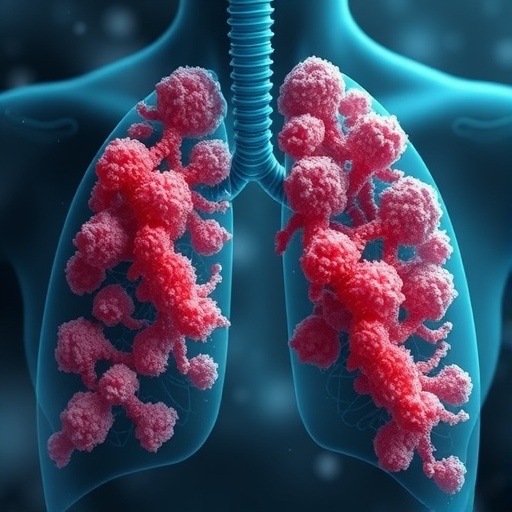
In a groundbreaking study soon to be published, researchers have unveiled a vital connection between salivary microbial signatures and the effectiveness of immune-checkpoint inhibitor monotherapy in patients diagnosed with advanced non–small cell lung cancer (NSCLC). This innovative research, led by a team of experts including Cavaliere, Fogolari, and Iuliani, explores the intricate world of microbes residing in human saliva, suggesting that these microorganisms might serve as key predictors of therapeutic outcomes for patients undergoing immunotherapy.
Researchers have long understood that the composition of the human microbiome plays an essential role in influencing numerous physiological processes, including immune responses. The study under consideration proposes that specific bacterial populations within saliva can be correlated with the body’s response to cancer treatments, particularly those that manipulate the immune system. This idea marks a paradigm shift in understanding how microbial ecosystems may affect cancer therapy efficacy.
The potential of using saliva as a diagnostic tool for predicting treatment response would significantly simplify current practices. Traditionally, clinicians rely on tissue biopsies, blood tests, and imaging studies, which can be invasive and uncomfortable for patients. The accessibility of saliva offers a less invasive alternative, making it an attractive option for ongoing monitoring of patient health and treatment response during therapy.
This recent investigation centers on the prominent role of Actinomyces, a genus of bacteria prevalent in human saliva. The researchers identified a distinctive microbial signature that included Actinomyces as a crucial indicator of how well patients might respond to immune-checkpoint inhibitors. Patients exhibiting higher levels of this bacterium in their saliva showed more favorable responses to treatment, thereby underscoring the importance of the salivary microbiome in guiding therapeutic strategies.
The implication of these findings could be transformative for clinical oncology. If future studies validate the researchers’ findings, oncologists could utilize salivary tests to personalize treatment plans based on the individual microbiome profiles of patients. Such personalized medicine could improve outcomes, reduce side effects, and increase the likelihood of treatment success.
Furthermore, this research opens the door to more comprehensive studies that delve deeper into the relationship between microbiome composition and cancer therapies. Researchers are now prompted to explore how other microbial signatures may interact with therapies beyond immune-checkpoint inhibitors, looking at a wide spectrum of cancer treatments available today. This holistic approach to studying the microbiome could pave the way for novel therapeutic developments and synergistic treatment strategies.
Despite the promising nature of this study, researchers cautioned that further investigation is needed to establish causal relationships fully. While the correlation between salivary microbial signatures and treatment responses is evident, the underlying mechanisms driving this relationship require additional scrutiny. Understanding how these organisms interact with host immune systems and the medications used in therapy will be paramount in evolving treatment approaches.
The current findings also come against the backdrop of an expanding body of literature that recognizes the significance of the microbiome in health and disease. As this field of research gains momentum, it becomes increasingly clear that the utilization of microbiota in clinical decision-making could revolutionize patient care—not just in oncology but across various medical disciplines.
In parallel with these advances, health practitioners must also consider the implications of the discovered microbial signatures. If future research substantiates these findings, screening salivary compositions could become a standard practice in oncology clinics, assisting physicians in tailoring more efficient treatment regimens while minimizing unnecessary interventions.
As researchers await peer-review and publication of this study in the Journal of Translational Medicine, the excitement within the scientific community is palpable. The prospect of integrating salivary microbial analysis into clinical oncology reflects a broader trend towards precision medicine, where treatments are increasingly customized to the unique biological characteristics of individual patients.
This study also highlights a fundamental truth about cancer therapy: it cannot be one-size-fits-all. The variation in treatment responses underscores the complexity of cancer biology and emphasizes the need for informed, adaptable treatment strategies. As research continues to uncover the role of the microbiome, it merges the boundaries between traditional medical practices and burgeoning fields such as microbiology and immunotherapy.
In essence, the research conducted by Cavaliere and colleagues offers a compelling narrative on the interplay between the salivary microbiome and cancer treatment. As we position ourselves for a future where traditional oncology may embrace innovative breakthroughs like this one, the collaboration between different scientific disciplines will be critical in transforming these ideas into robust clinical tools.
As the medical community stands on the precipice of significant advancements in cancer treatment monitoring, the outcomes of research such as this may well shape the landscape of how we understand and treat complex conditions like non-small cell lung cancer. Researchers and clinicians alike are eager to delve into the mechanisms behind these findings, as the answers they uncover could ultimately lead to better, more personalized care for those battling cancer.
The journey from research discovery to clinical implementation is always challenging, fraught with hurdles and necessary validations. However, this study’s revelations concerning salivary microbial profiles open a promising new chapter in cancer treatment, encouraging innovative thinking and proactive approaches to patient care in oncology.
Subject of Research: Novel microbial predictors of immune-checkpoint inhibitor monotherapy response in advanced NSCLC
Article Title: Salivary microbial signature highlighting actinomyces as a predictor of immune-checkpoint inhibitor monotherapy response in advanced non–small cell lung cancer
Article References:
Cavaliere, S., Fogolari, M., Iuliani, M. et al. Salivary microbial signature highlighting actinomyces as a predictor of immune-checkpoint inhibitor monotherapy response in advanced non–small cell lung cancer.
J Transl Med (2026). https://doi.org/10.1186/s12967-025-07570-4
Image Credits: AI Generated
DOI:
Keywords: Microbiome, Saliva, Immune-Checkpoint Inhibitors, Non-Small Cell Lung Cancer, Personalized Medicine