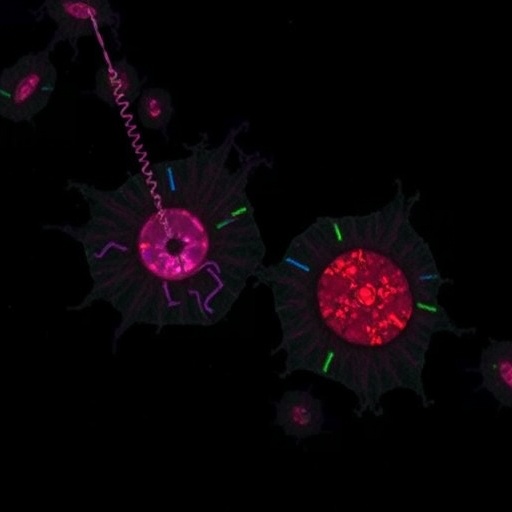
In a recent groundbreaking study published in Journal of Translational Medicine, researchers led by Zhu et al. have unveiled the intricate dynamics of extracellular vesicle DNA within recipient cells through a revolutionary imaging technique known as single-molecule localization microscopy (SMLM). This illuminating work delves deep into the role of extracellular vesicles (EVs) as mediators of cellular communication, unveiling the complexities of biological information transfer at the molecular level. By focusing on how these vesicles carry and deliver DNA, the study offers new pathways for understanding disease mechanisms and therapeutic interventions, particularly in cancer biology and regenerative medicine.
Extracellular vesicles are tiny membrane-bound sacs released by cells, containing various biomolecules, including proteins, lipids, and nucleic acids. For years, these vesicles have garnered attention for their significant role in cell-to-cell communication, functioning as vehicles to transfer genetic material among cells. However, despite their apparent importance, the details surrounding the exact content and functionality of EV-derived DNA have remained relatively elusive. Zhu and colleagues’ innovative application of SMLM promises to bridge this knowledge gap, providing enriched perspectives on how EVs function in a myriad of biological processes.
SMLM is a highly advanced imaging technique that surpasses the diffraction limit of conventional fluorescence microscopy. By precisely localizing individual fluorophores, researchers can achieve unprecedented spatial resolution that allows for the visualization of molecular interactions and dynamic cellular processes. In this study, the authors utilized SMLM to investigate the presence and localization of DNA within EVs and their subsequent delivery into recipient cells, leading to revelations about the pathways through which genetic information is transferred and utilized.
The findings from Zhu et al. underscore the remarkable ability of EVs to act as carriers for functional DNA, which can ultimately influence the behavior of recipient cells. This discovery sheds light on the biological significance of EVs in various contexts, ranging from physiological processes to pathological conditions such as cancer. By analyzing the spatial distribution of EV-associated DNA, the researchers highlighted crucial interactions between EVs and target cells, elucidating the molecular mechanisms underlying these interactions.
Moreover, the implications of this study could extend far beyond basic research. The understanding of extracellular vesicle-mediated DNA delivery opens new avenues for therapeutic interventions. The potential to harness this mechanism for gene therapy is particularly thrilling. Imagine using engineered EVs as vehicles to deliver therapeutic genes directly into diseased cells, effectively targeting malignancies or genetic disorders. Such approaches could transform traditional treatment paradigms and offer more precise and effective solutions for patients battling a variety of diseases.
This research not only lays the groundwork for future studies on EVs but also paves the way for the development of novel biotechnological applications. The implications of this work in precision medicine cannot be overstated, as the ability to visualize and manipulate EVs could lead to unparalleled advancements in diagnostics and therapeutics. Using SMLM to study the behavior and function of EVs can ultimately drive innovations in drug delivery systems, presenting opportunities to create personalized medicine solutions that are finely tuned to individuals’ needs.
In the context of cancer research, the role of EVs as mediators of tumor biology is a burgeoning field of study. The findings from Zhu et al. could play a critical role in elucidating how cancer cells manipulate EVs to promote tumor growth, metastasis, and immune evasion. By understanding how EVs function as messengers of genomic information, researchers can devise strategies to intercept these communications, potentially thwarting cancer progression. This represents a paradigm shift in how scientists approach malignant diseases and their treatment.
On an immunological front, the study also positions EVs as participants in immune modulation. The delivery of specific DNA sequences via EVs could alter immune responses, paving the way for new immunotherapy strategies. The ability to fine-tune immune cell functions through EV-mediated genetic exchanges could lead to novel approaches in vaccine development and autoimmune disease management, showcasing the multifaceted nature of extracellular vesicles in diverse biological systems.
As exciting as these findings are, they also invite caution regarding the complexities of extracellular vesicle biology. The interactions between EVs and recipient cells are influenced by numerous factors, including the type of cells involved, the environment in which they operate, and the timing of the interactions. Thorough investigation into these variables is essential to fully understand the potential consequences of EV-mediated DNA transfer, particularly in the context of therapeutics.
In conclusion, Zhu and colleagues’ pioneering exploration into the SMLM imaging of EV-derived DNA provides a critical foundation for future studies in this captivating area of research. As scientists continue to unveil the complexities of extracellular vesicle biology, the potential to transform our understanding of cell communication and therapeutic interventions grows exponentially. This research not only carries significant implications for the field of translational medicine but also inspires a new era of innovation in biomedicine, where the manipulation of EVs might one day revolutionize how we approach treatment across a spectrum of diseases.
The advancements reported in this study reaffirm the importance of interdisciplinary collaboration in scientific research. Engaging experts from various fields, including molecular biology, biophysics, and bioengineering, will be paramount to unraveling the layered complexities of EV functionalities. As the scientific community continues to come together to explore these themes, the synergy of diverse insights may ultimately lead to breakthrough discoveries that change the landscape of modern medicine.
With ongoing research and innovation in microscopy techniques and biomolecular studies, we are poised to illuminate even more hidden facets of life at the molecular level. The commitment of researchers like Zhu and their team inspires hope for practical applications of their findings, translating knowledge into tangible benefits for society. As we endeavor to understand the subtleties of life through such research, the horizon for advancements in biology, therapeutics, and the overarching quest for health becomes ever more promising.
Subject of Research: Extracellular vesicle DNA imaging in recipient cells using single-molecule localization microscopy.
Article Title: Single-molecule localization microscopy imaging of extracellular vesicle DNA in recipient cells.
Article References:
Zhu, X., Chetty, V.K., Ghanam, J. et al. Single-molecule localization microscopy imaging of extracellular vesicle DNA in recipient cells.
J Transl Med (2026). https://doi.org/10.1186/s12967-025-07563-3
Image Credits: AI Generated
DOI: 10.1186/s12967-025-07563-3
Keywords: Extracellular vesicles, DNA delivery, single-molecule localization microscopy, cancer research, therapeutic interventions.
Tags: advancements in microscopy for biological researchcellular communication via extracellular vesiclesextracellular vesicle DNA imagingextracellular vesicles in genetic material transferimplications of EV-derived DNA in health and diseaseinnovative imaging techniques in biologymolecular dynamics of extracellular vesiclesregenerative medicine advancementsrole of EVs in disease mechanismssingle-molecule localization microscopy applicationstherapeutic interventions in cancer biologyunderstanding biomolecule transfer in cells