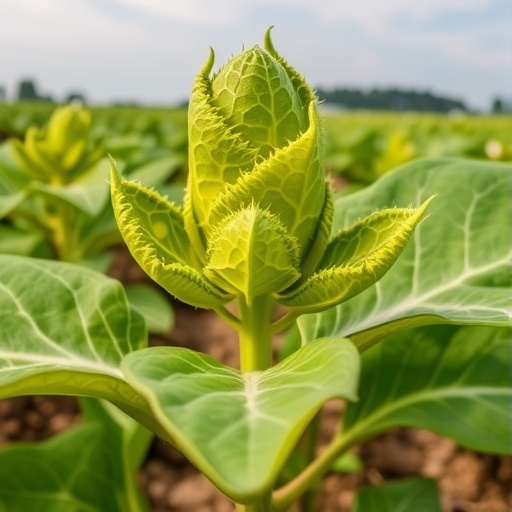
In a groundbreaking study published in BMC Genomics, researchers have unveiled the remarkable potential of the transcription factor AtDREB1A in enhancing drought tolerance in tobacco plants (Nicotiana tabacum). The necessity for genetically modified crops that can withstand harsh environmental conditions has never been greater, especially as global climate change presents new challenges for agricultural sustainability. This innovative research paves the way for developing resilient crop varieties that not only survive but thrive in drought conditions, which could revolutionize farming practices worldwide.
The pursuit of drought-resistant crops has gained momentum in recent years due to the increasing frequency and intensity of droughts across various regions. The study conducted by Malik, Saeed, and Badshah et al. emphasizes the Ectopic expression of the AtDREB1A transcription factor, known to play a crucial role in the plant’s response to abiotic stress conditions. Their findings suggest that integrating AtDREB1A into the genetic makeup of tobacco could significantly improve the plant’s ability to endure prolonged periods without water, which is invaluable for maintaining crop yields amid changing climate scenarios.
Understanding the molecular mechanisms behind drought resistance is paramount in the field of agricultural biotechnology. The transcription factor AtDREB1A is part of a larger family of DRE-binding proteins involved in the complex network of stress-response pathways. These proteins act at the transcriptional level, regulating the expression of numerous downstream genes that contribute to cellular dehydration tolerance. Through their research, the authors demonstrate how the enhanced expression of AtDREB1A in tobacco cells leads to physiological changes that better equip the plant to deal with water scarcity.
Drought stress affects plants not only at the surface level but also fundamentally alters their developmental biology and metabolism. Under normal conditions, plants maintain a delicate balance of water and nutrient uptake; however, under drought stress, this balance is disrupted. The study indicates that ectopically expressed AtDREB1A triggers a cascade of protective mechanisms, including the synthesis of osmoprotectants, which help maintain cellular integrity during periods of low water availability. These adaptations are essential for sustaining metabolic functions that would otherwise succumb to drought stress.
In the experimental framework, the researchers employed a combination of genetic engineering techniques to manipulate the expression levels of AtDREB1A in tobacco plants. The results were quite striking, with modified plants exhibiting significant improvements in growth and survival rates compared to their non-modified counterparts under drought conditions. The positive impact of AtDREB1A expression on root development and leaf water retention capacity highlights the multifaceted benefits of this transcription factor in managing water stress.
The implications of these findings are profound. As farmers struggle to combat the adverse effects of climate volatility, the potential application of AtDREB1A in crops could provide a lifeline, helping farmers to sustain productivity even in arid conditions. This research lays the groundwork for further advances in genetic modification that could extend beyond tobacco to staple crops such as wheat, rice, and maize, which are crucial for food security globally.
However, while the promise of biotechnology in creating drought-resistant crops is exciting, it is essential to address the regulatory, environmental, and ethical considerations surrounding genetically modified organisms (GMOs). The introduction of new genetic traits into crops must be carefully evaluated for unintended effects on ecosystems and on human health. As the scientific community continues to explore gene editing technologies, including CRISPR and others, the pathway to bringing these future crops to market must involve transparent discussions and robust safety assessments.
Moreover, the socio-economic implications of adopting drought-resistant crops must be taken into account. Farmers often bear the brunt of the consequences when adverse weather conditions strike, and improved crop varieties could alleviate some of the burdens they face. Nonetheless, accessibility to new technologies and the costs associated with adopting genetically engineered crops will be pivotal in determining their success and integration into global agriculture.
Collaboration among scientists, policymakers, and agricultural stakeholders will be crucial in advancing this research from the laboratory to the field. Through interdisciplinary partnerships, the knowledge generated from studies like the one conducted by Malik et al. can be effectively translated into practices that enhance agricultural productivity in the face of climatic challenges.
Moreover, this research opens avenues for exploring other transcription factors and signaling pathways that could contribute to stress tolerance in plants. Continual advancements in the understanding of plant biology could lead to the identification of additional genes that play key roles in drought response, further enhancing the genetic toolbox available to breeders and biotechnologists.
In conclusion, the study by Malik, Saeed, and Badshah et al. represents a significant step forward in the quest for sustainable agriculture amid climate change. Their focus on the ectopic expression of AtDREB1A in tobacco serves as a powerful reminder of the potential that lies within plant molecular genetics. By harnessing the capabilities of transcription factors like AtDREB1A, we can envision a future where crops are not merely survivors of adverse conditions but are robust producers capable of feeding the world despite the growing threats posed by an unpredictable climate.
As the agricultural community continues to grapple with the impact of drought on food security, innovative approaches grounded in scientific research will be essential. The ongoing exploration of genetic pathways and the integration of biotechnological advancements into crop management practices can lead to substantial improvements in agricultural resilience and sustainability, ensuring that we can meet the demands of an ever-growing population even in the face of climatic adversity.
Subject of Research: Drought tolerance in tobacco through ectopic expression of AtDREB1A.
Article Title: Ectopic expression of transcription factor AtDREB1A confers increased tolerance against drought stress in tobacco (Nicotiana tabaccum).
Article References:
Malik, Z.A., Saeed, N.A., Badshah, S. et al. Ectopic expression of transcription factor AtDREB1A confers increased tolerance against drought stress in tobacco (Nicotiana tabaccum).
BMC Genomics (2025). https://doi.org/10.1186/s12864-025-12277-3
Image Credits: AI Generated
DOI:
Keywords: Drought tolerance, AtDREB1A, transcription factor, genetic engineering, tobacco, climate change, agricultural sustainability.
Tags: abiotic stress response in plantsagricultural biotechnology innovationsAtDREB1A transcription factorclimate change and agriculturedrought resistance in tobacco plantsEctopic expression in plantsenhancing crop resilience to droughtgenetically modified crops for drought toleranceimproving crop yields under drought conditionsmolecular mechanisms of drought resistanceNicotiana tabacum genetic modificationsustainable farming practices