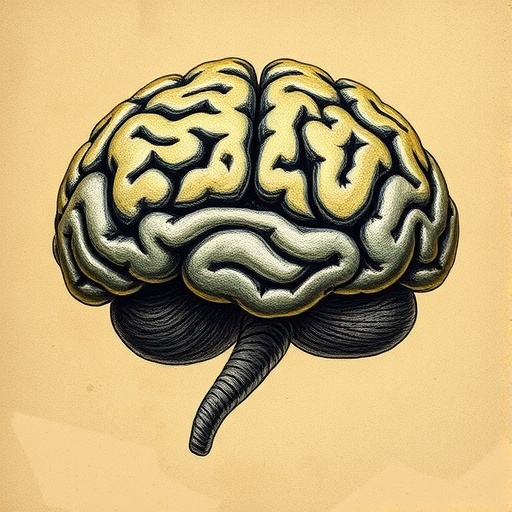
A groundbreaking new study has profoundly reshaped our understanding of lead exposure and its impact on human evolution, revealing that the toxic metal’s influence extends back nearly two million years. Contrary to the prior consensus that lead poisoning is primarily an industrial-era issue, this international research collaboration demonstrates that our hominid ancestors faced intermittent lead exposure throughout their evolutionary history. This ongoing environmental challenge may have played a pivotal role not only in shaping brain development and social behaviors but also possibly influencing the emergence of language—a hallmark of modern human cognition.
This pioneering research, published in the prestigious journal Science Advances, utilized a multifaceted approach combining fossil geochemistry, experimental neuroscience, and evolutionary genetics to explore how ancient lead exposure impacted hominid brain evolution. The investigation employed cutting-edge laser-ablation techniques to examine mineralized teeth from a diverse set of specimens spanning multiple hominid species. By scrutinizing tooth enamel and dentine growth layers, researchers identified distinct “lead bands,” clear chemical signatures indicating episodic absorption of lead during critical periods of childhood development.
Notably, this body of work involved a broad range of hominid species, including Australopithecus africanus, Paranthropus robustus, early Homo species, Neanderthals, and anatomically modern Homo sapiens. The presence of lead exposure across such an expansive timeline and phylogenetic range disrupts the traditional narrative of lead being primarily a modern hazard linked to mining, industrial processes, and leaded fuels. Instead, environmental sources—including volcanic activity, soil, and water contamination—were likely recurrent contributors to lead uptake, alongside endogenous mobilization of lead stored in bone during physiological stress or illness.
The implications of these findings extend far beyond environmental toxicology. Professor Renaud Joannes-Boyau, leading the Geoarchaeology and Archaeometry Research Group at Southern Cross University, emphasizes that this persistent interaction with a potent neurotoxin inevitably influenced the trajectory of hominid neurological and behavioral development. The evolutionary pressure exerted by intermittent lead exposure may have shaped cognitive capacities and social structures, engendering adaptations that contributed to survival in complex and variable environments.
To probe the mechanistic effects of lead on neurodevelopment, the research team developed brain organoids from human stem cells—three-dimensional cellular models that recapitulate human brain architecture and function. These organoids were genetically engineered to carry either the modern human variant of the gene NOVA1 or the archaic variant characteristic of Neanderthals and other extinct hominids. NOVA1 is a critical regulator of alternative splicing during neural development and has been implicated in modulating gene expression in response to environmental insults such as lead exposure.
Exposure of the archaic NOVA1 organoids to lead induced pronounced disruptions in the function and expression of FOXP2, a gene centrally involved in the development of speech and language circuits in the cortex and thalamus. In contrast, organoids harboring the modern human NOVA1 variant exhibited a mitigated response, suggesting a protective evolutionary adaptation. This finding offers a compelling hypothesis that the modern human NOVA1 allele may have evolved as a neuroprotective mechanism against the deleterious neurological effects of environmental toxins, thereby supporting enhanced cognitive and communicative abilities.
Professor Alysson Muotri of UC San Diego, a leading expert involved in this study, highlights the extraordinary nature of these results, which suggest that the interaction between environmental pressures such as lead and genetic evolution may have been a critical driver in the rise of human-specific traits. Such selective pressures may not only have contributed to our species’ survival advantage but also to the refinement of complex behaviors, including language—a defining characteristic separating modern humans from their closest evolutionary relatives.
In addition to the neurogenetic insights, comprehensive proteomic and transcriptomic analyses revealed that lead exposure in archaic brain organoids perturbed multiple molecular pathways involved in neurodevelopmental regulation and social cognition. The alteration of FOXP2 expression specifically implicates environmental neurotoxins as potential modulators of the evolutionary trajectories of brain circuits underlying social communication, suggesting that the long history of lead exposure could have been a subtle but potent evolutionary force.
The study further illuminates the interplay between genetic adaptation and environmental toxicity in shaping hominid brain evolution, offering a novel paradigm for understanding how external chemical pressures might have facilitated inter-species competition. The observed greater susceptibility of Neanderthal genetic variants to lead’s harmful effects may help explain, in part, why modern humans ultimately outcompeted their archaic cousins, underscoring an evolutionary advantage conferred by genetic resilience to environmental neurotoxins.
This research was enabled by state-of-the-art facilities spanning continents—from the Geoarchaeology and Archaeometry Research Group’s laser ablation instrumentation in Lismore, Australia, to Mount Sinai’s exposomics laboratories in New York and stem cell models developed at UC San Diego’s Sanford Stem Cell Institute. Together, these institutions combined evolutionary archaeology, molecular biology, and experimental neurotoxicology to decode a complex evolutionary enigma lying hidden in fossilized teeth and contemporary cellular models.
Although lead exposure today primarily results from industrial and anthropogenic activities, it continues to pose a severe global health risk, especially for children. The discovery that susceptibility to lead toxicity is a legacy inherited from our deep evolutionary past serves as a sobering reminder of the pervasive influence of environmental toxins on human biology and development. It emphasizes the necessity for continued vigilance in reducing lead exposure and understanding the lasting biological consequences carried across millennia.
By bridging paleoanthropology, genetics, and environmental medicine, this study reframes lead exposure not simply as a modern hazard but as a fundamental component of the evolutionary journey of the human lineage. It highlights the dynamic interaction between genes and environment that has shaped, and will continue to shape, the biological identity of our species. This integrative perspective opens avenues for future research into how ancestral environmental challenges have influenced contemporary vulnerabilities and resilience.
Professor Manish Arora, co-author and Vice Chairman of Environmental Medicine, reflects on the broader implications of this work, noting that investigating the evolutionary roots of environmental exposure responses can offer novel insights into modern disease susceptibility. Understanding genetic adaptations to harmful exposures may yield new pathways for therapeutic intervention in neurological and developmental disorders linked to toxins.
In conclusion, this landmark study not only rewrites the history of lead exposure but also deepens our understanding of the co-evolution of hominid biology and environment. As we continue to encounter toxic exposures in an increasingly industrialized world, appreciating the evolutionary context of these interactions equips humanity with a richer framework for addressing public health challenges and preserving neurological health for future generations.
Subject of Research: Human tissue samples
Article Title: Impact of intermittent lead exposure on hominid brain evolution
News Publication Date: 15-Oct-2025
Web References: https://doi.org/10.1126/sciadv.adr1524
Image Credits: J Gregory @2025 Mount Sinai Health System
Keywords: Evolutionary biology, Human health
Tags: ancient lead exposure effectsenvironmental challenges in evolutionevolution of language in humansfossil geochemistry and neurosciencehominid species analysishuman brain evolutionimpact of lead on social behaviorlaser-ablation techniques in researchlead absorption in childhood developmentlead poisoning in hominidsScience Advances publication findingstoxic metals and cognition