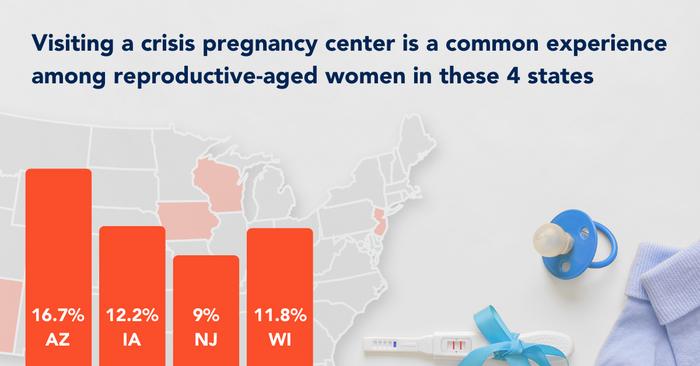

A recent study published in the open-access journal PLOS One sheds light on the prevalence of visits to crisis pregnancy centers (CPCs) among reproductive-aged women across four U.S. states. Conducted by Maria Gallo and colleagues at The Ohio State University, this comprehensive research offers valuable new insights into a largely understudied phenomenon. The findings reveal that a significant proportion of women with a history of pregnancy or pregnancy testing have accessed CPCs for pregnancy-related support, raising important public health and policy questions amid ongoing changes in the reproductive healthcare landscape.
Crisis pregnancy centers are typically organizations that present themselves as supportive resources for pregnant individuals but often operate outside the realm of licensed medical care. Instead, CPCs promote specific ideological missions centered on discouraging abortion, blocking access to contraception, and advocating for abstinence outside of marriage. Despite their frequent portrayal as medical clinics, these centers are frequently unlicensed and do not adhere to standardized medical or safety practices. This mismatch between perception and reality can potentially mislead women seeking trusted reproductive health information or care.
Before this study, there was limited empirical data on how many women actually visit CPCs, making it difficult to understand the scale of their influence on reproductive health outcomes. The research team tackled this gap by analyzing data collected between 2018 and 2020 from the “Surveys of Women” — a large, population-representative survey dataset encompassing nearly 9,000 adult women in Arizona, Wisconsin, Iowa, and New Jersey. These four states provided a diverse cross-section of women, enabling a nuanced examination of patterns in CPC attendance.
.adsslot_WCSKEXd9an{width:728px !important;height:90px !important;}
@media(max-width:1199px){ .adsslot_WCSKEXd9an{width:468px !important;height:60px !important;}
}
@media(max-width:767px){ .adsslot_WCSKEXd9an{width:320px !important;height:50px !important;}
}
ADVERTISEMENT
The study focused on women who either had been pregnant or had ever tested for pregnancy, as these groups are most likely to seek the services CPCs advertise. Among these women, the rate of CPC attendance for pregnancy-related care varied notably by state. Arizona showed the highest prevalence at just over one in five women (20.2%), while New Jersey exhibited the lowest rate, with roughly one in nine women (11.6%) reporting CPC visits. Wisconsin and Iowa showed intermediate levels at approximately 14% each. These figures indicate that, collectively, between 12% and 20% of women with relevant pregnancy experience engaged with CPCs, which is a strikingly high prevalence.
Interestingly, the analysis revealed that CPC attendance was not significantly associated with common demographic factors such as age, race, ethnicity, or socioeconomic status. This finding suggests that the reach of these centers crosses diverse populations rather than targeting or being frequented exclusively by particular groups. This wide modern footprint highlights the pervasive nature of CPCs and their embeddedness in reproductive healthcare-seeking behaviors in the affected regions.
The timing of this research is critical. The measurement of CPC attendance occurred before the landmark Dobbs decision significantly reshaped access to abortion and reproductive healthcare in the United States. As states continue to impose restrictions and alter the healthcare landscape, understanding baseline patterns of where women obtain pregnancy-related information and support is essential for assessing the evolving role and influence of CPCs going forward.
The study authors emphasize that, although CPCs often position themselves as safe, supportive environments, their lack of medical licensure and their association with misleading and inaccurate health information pose serious risks. Because CPCs do not have to follow evidence-based medical and safety standards, they are not appropriate sources for medical care or counseling related to pregnancy. This warning is crucial for healthcare providers who may encounter patients who have previously attended CPCs and may have been exposed to misinformation requiring correction.
The new data also challenge assumptions that CPC visits are uncommon or isolated events. As the authors comment, attending a CPC is far from rare; it ranges from about one in eleven women in New Jersey to one in six women in Arizona. This frequency implicates CPCs as a substantial factor in the reproductive health information ecosystem, making awareness of their presence vital for medical professionals, policymakers, and advocates alike.
Moreover, the study underscores the misconception among the public that CPCs are medical clinics akin to federally qualified health centers or abortion providers. This false equivalence can delay or deter timely and appropriate care, leaving pregnant individuals vulnerable to narratives that may not support their health, autonomy, or decision-making. The research highlights the importance of increased transparency about the nature and limitations of CPCs.
Given recent legislative trends towards increasing public funding of CPCs in certain states, the findings raise further concern about resource allocation. Public monies supporting facilities that offer ideologically driven and medically nonstandard care may indirectly impact the quality and accessibility of comprehensive reproductive healthcare. Policymakers should harness these data to critically evaluate the roles CPCs play within broader health systems.
For clinicians, the implications are clear: awareness that a substantial number of pregnant patients may have engaged with CPCs means that open dialogues about information sources and potential misinformation are essential parts of patient assessment and education. Correcting false narratives and providing evidence-based care should be viewed as critical in improving pregnancy-related outcomes.
In sum, this investigation provides a detailed snapshot of CPC attendance that was previously lacking in the literature. By leveraging robust survey data from four states, the study quantifies the extent to which reproductive-aged women have interacted with centers known for controversial practices and messaging. These findings serve as a key foundation for future research and public health strategies aimed at safeguarding reproductive rights and health in an era of shifting policy and care environments.
As reproductive healthcare continues to be politicized and contested, understanding who turns to CPCs, and why, will inform better protective measures for pregnant individuals. This work by Gallo and colleagues advances that understanding by highlighting the significant and underappreciated prevalence of CPC use, stressing the need for vigilance among healthcare providers and policymakers alike.
Subject of Research: Not applicable
Article Title: Prevalence of crisis pregnancy center attendance among women in four U.S. states
News Publication Date: 4-Jun-2025
Web References: http://dx.doi.org/10.1371/journal.pone.0324228
References: Yang TJ, Smith MH, Kavanaugh ML, Ricks JM, Gallo MF (2025) Prevalence of crisis pregnancy center attendance among women in four U.S. states. PLOS One 20(6): e0324228.
Image Credits: OPEN, CC-BY 4.0
Keywords: Crisis pregnancy centers, reproductive health, pregnancy care, misinformation, unlicensed clinics, pregnancy testing, women’s health, reproductive rights, health misinformation, public funding, health disparities, reproductive healthcare policy
Tags: access to reproductive healthcareCrisis pregnancy centers usageempirical research on CPC visitsideological missions of crisis pregnancy centersimpact of CPCs on abortion accesspregnancy testing and counselingpublic health implications of CPCsreproductive health supportreproductive healthcare landscape changesunlicensed medical care in pregnancywomen’s experiences with CPCswomen’s health and pregnancy