
A groundbreaking discovery has emerged from the halls of Universidad Carlos III de Madrid (UC3M), where researchers have developed a revolutionary method to create uniform oil lenses on water surfaces. This innovative technique promises to enhance our understanding of emulsion behaviors in fluids, paving the way for numerous applications that could impact various fields, from environmental science to food technology. The research offers a fresh perspective on how oily substances interact with water, shedding light on the complexities of fluid dynamics.
The concept of creating these oil lenses was initially serendipitous. During what began as a routine experiment aimed at producing a thin film of oil on water, the researchers encountered an unexpected outcome; instead of a smooth coating, they observed the formation of uniform droplets. This surprise sparked a deeper investigation into the phenomenon, leading to the development of a methodology that could have implications far beyond their original experiment.
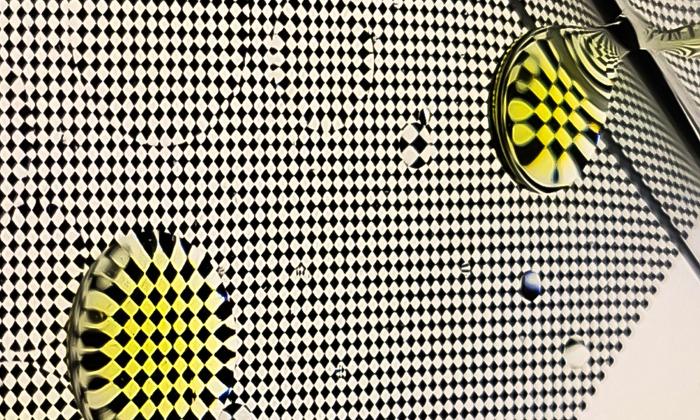
The process of generating these liquid lenses revolves around the interaction between a glass plate and water. By immersing the plate vertically into the body of water, a small rise occurs at the water’s surface, creating a meniscus—a liquid micro-toboggan effect. This unique formation acts as a conduit for the oily substance injected via a syringe. Upon contact with the meniscus, the oil is drawn downward, breaking apart into identical droplets, each exhibiting a monodisperse nature. Such a technique mirrors the behavior of water droplets cascading from a faucet, providing a visual metaphor for this fascinating fluid dynamic process.
High-speed imaging played a critical role in analyzing the dynamics of these liquid lenses. Utilizing cameras capable of capturing 50,000 frames per second, researchers meticulously documented the rapid fragmentation of the oil into individual droplets. This verification method was crucial, allowing scientists to unravel the complexities of the droplet formation process, which is fundamentally governed by the interplay of gravity, surface tension, and fluid behavior.
The implications of this discovery extend into various domains, particularly environmental science. Researchers believe that understanding the mechanisms behind oil droplet formation could provide insights into oil spill behavior on ocean surfaces. Given the ever-present risk of oil spills and their catastrophic environmental impacts, this new knowledge could contribute to the development of more effective mitigation and cleanup strategies, ultimately protecting marine ecosystems and coastal communities.
Beyond environmental applications, the technique opens avenues for innovation in the textile industry. By manipulating the properties of water-repellent surfaces, this research could lead to advancements in the creation of waterproof fabrics. The findings suggest potential methodologies for producing coatings that enhance the durability and functionality of outdoor apparel, such as jackets and footwear. Such improvements could provide consumers with better protection against the elements while maintaining comfort and style.
In the food industry, the implications of these oil lenses are equally promising. The researchers theorize that the ability to create consistent oil droplets could facilitate the formulation of healthier food products. For instance, food scientists could explore ways to produce low-fat dairy alternatives that maintain desirable textures and flavors by efficiently incorporating controlled amounts of water and air into their formulations. Such innovations could lead to healthier options in a market increasingly concerned with nutritional value.
This research, now published in the esteemed journal Physical Review Letters, represents a collaborative effort that highlights the importance of interdisciplinary approaches in scientific inquiry. The work was undertaken by a dedicated team from UC3M, along with contributions from esteemed colleagues at the University of Twente in the Netherlands. The study received funding from Spain’s Ministry of Science and Innovation and the European Union, showcasing a commitment to advancing scientific understanding through international collaboration.
The creativity inherent in this discovery can inspire future research directions and methodologies. As scientists delve deeper into the properties of emulsions and fluid dynamics, they may uncover new principles that can be applied to various industrial processes. The reproducibility and simplicity of the technique could empower researchers and innovators worldwide to explore its applications in lab and commercial settings, effectively democratizing access to this cutting-edge research.
Furthermore, the educational potential of this discovery should not be overlooked. The simplicity of the technique, which could potentially be replicated in rudimentary settings, provides an excellent opportunity for educational institutions to engage students in hands-on experiments that demonstrate fundamental principles of physics and fluid dynamics. Such educational initiatives could cultivate a new generation of scientists equipped to tackle the challenges of tomorrow.
In conclusion, the innovative technique for creating uniform oil lenses on water surfaces marks a significant advancement in fluid dynamics research. By shedding light on the mechanisms that govern the formation of monodisperse droplets, the researchers propel forward our understanding of emulsions and their multifaceted applications across industries. This discovery not only holds promise for environmental and industrial advancements but also underscores the dynamic interplay between serendipity and scientific inquiry.
Subject of Research: Uniform oil lens formation on water surfaces
Article Title: Innovative Technique for Creating Uniform Oil Lenses: Implications for Science and Industry
News Publication Date: October 2023
Web References: N/A
References: Champougny, L., Rodríguez-Rodríguez, J., Bertin, V., Snoeijer, J.H. Interfacial Dripping Faucet: Generating Monodisperse Liquid Lenses. Physical Review Letters. 133, 254001. December, 2024.
Image Credits: UC3M
Keywords
Oil spills, Environmental methods, Industrial research, Fluids, Ocean physics, Emulsions
Tags: advancements in fluid surface sciencedroplets formation in fluid experimentsemulsion research breakthroughsenvironmental applications of emulsionsfluid dynamics in emulsionsimpact on food technologyinnovative oil-water interactionsoil lens formation methodologiesserendipitous scientific discoveriesunderstanding fluid behaviorsuniform oil lens creation techniquesUniversidad Carlos III de Madrid research