Researchers are turning to zebrafish to unlock the secrets of place cells, which play a crucial role in forming mental maps of space, social networks, and abstract relationships. Until now, place cells have only been found in mammals and birds, leaving the question of how other species internally represent the external world largely unanswered. A team of researchers at the Max Planck Institute for Biological Cybernetics has now found the first compelling evidence for place cells in the brain of the tiny larval zebrafish.
Researchers are turning to zebrafish to unlock the secrets of place cells, which play a crucial role in forming mental maps of space, social networks, and abstract relationships. Until now, place cells have only been found in mammals and birds, leaving the question of how other species internally represent the external world largely unanswered. A team of researchers at the Max Planck Institute for Biological Cybernetics has now found the first compelling evidence for place cells in the brain of the tiny larval zebrafish.
When we explore an unfamiliar city, we use various cues – landmarks, a sense of how far we have walked in one direction, perhaps a river we cannot cross – to create an internal map of our environment. Deep in the brain, in a structure called the hippocampus, a set of place cells play a key role in building our internal maps of the external world. These place cells fire when we are at specific locations in space and can self-organize into an array of different mental maps.
That much is known for mammals, including humans, and even for birds. However, the existence of place cells in other species is controversial. A group of researchers at the Max Planck Institute for Biological Cybernetics in Tübingen (Germany), led by Jennifer Li and Drew Robson, has now found the first conclusive evidence for place cells in zebrafish.
Recording the entire brain during natural behaviour
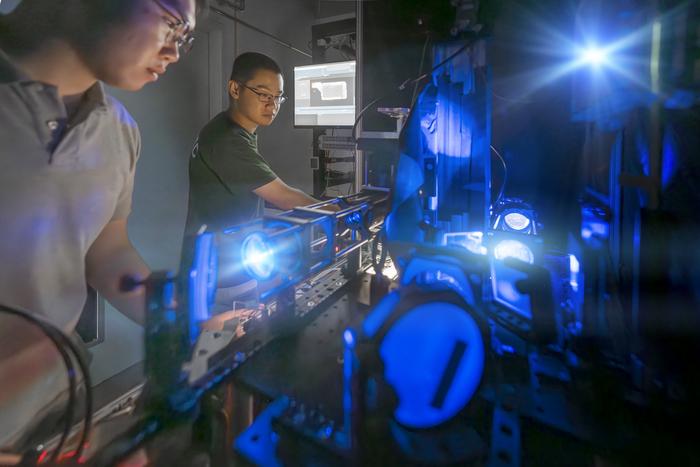
The researchers recorded the brain activity of young zebrafish as they explored their environment. These fish are completely transparent when they are only a few days old, making it possible to look into their tiny brains, which contain only 100,000 cells. One can even make individual active neurons light up using fluorescent calcium indicators, since all neuronal activity is associated with fluctuations in calcium ion concentrations. An earlier key invention of Li and Robson was essential for observing brain activity during navigation: tracking microscopes that move with the freely swimming fish.
Using this experimental design, the team analysed what spatial information is encoded in each neuron in the fish’s brain. They identified a population of about 1000 place cells in each fish, most of which only fire when the animal is in a specific location, while a few respond to more than one area. “Collectively, the place cell population encodes spatial information,” explains Jennifer Li. “From the firing patterns of the place cells, we were able to decode the location of each fish over time – with an error of just a few millimetres.”
Strikingly, most of the place cells were located in the telencephalon, an area of the zebrafish’s forebrain, whose precise function has been a source of debate for several decades. “The high concentration of place cells in the telencephalon potentially confirms the longstanding conjecture that this brain region is a functional analogue of the mammalian hippocampus, in miniature,” comments Drew Robson.
A flexible mechanism that integrates different inputs
However, Li and Robson needed additional evidence to conclude that the cells they had identified were indeed an analogue to mammalian place cells. The first feature to be tested was whether place cells use self-motion or external cues. In terms of human experience, a cue such as “I’ve been walking straight ahead at a brisk pace for about a minute” relies on self-motion, whereas “I can see the Eiffel Tower” is an external cue. In a series of experiments, the researchers manipulated both sources of information – taking the fish out of their environment and placing them back, removing landmarks, or rotating the behavioural chamber. They found that the fish integrate both external and self-motion cues to create their internal maps – just like we do.
Not only do the fish appear to refine their spatial representation map as they become more familiar with an unfamiliar environment, but they can also adapt to change: they use the same neuronal circuits to remember a second environment. When returned to their initial surroundings, they do not have to map it from scratch, but can partially recover the representation map they created previously. Thus, the place cell population exhibits a flexible memory system, a further hallmark of mammalian place cells.
An emerging model organism for a complex neuronal network
The authors of the study plan to use zebrafish as a new model organism to unravel the mysteries of place cells. In addition to their role in creating mental maps of space, these cells are also crucial for forming maps of social networks and abstract relationships, as well as for memory and planning. While mammalian place cells have been intensively investigated since their Nobel Prize-winning discovery more than 50 years ago, scientists still do not fully understand the neural networks that generate place cells or how they support such a wide range of mental functions.
The primary challenge has been the sheer complexity and size of mammalian place cell networks, which make it extremely difficult to study the entire network simultaneously. In contrast, the larval zebrafish brain is one of the smallest biological systems capable of generating place cells. Robson concludes: “Using this new minimal model, future studies can potentially trace all of the inputs to each place cell and create detailed models for how place cells acquire all their unique properties.”
Journal
Nature
DOI
10.1038/s41586-024-07867-2
Article Title
A population code for spatial representation in the zebrafish telencephalon.
Article Publication Date
28-Aug-2024